At the start of 2020 I joined another of Chris Head’s excellent stand-up comedy courses, hosted at the Old Coffee House in Soho. This one was for new material development for non-beginners (I wouldn’t go so far as to call myself an experienced stand-up although several of my course mates were comedians with a lot of gigs behind them).
Little did any of us anticipate what was to come in March 2020.
Fortunately we managed to complete the taught part of the course but the end-of-course showcase was scheduled for 17th March (St. Patrick’s Day) and, in his infinite wisdom, our great leader of a prime-minister decided to tell the whole country the evening before that they should not visit pubs, clubs, restaurants or, in fact, any social gathering due to the spread of Coronavirus. In keeping with his directionless dithering, it wasn’t until the end of that week that the government put any legal direction (requiring compensation for the affected businesses) behind this “advice”.
Nevertheless, the damage was done and the showcase had to be cancelled at very short notice.
In the light of the subsequent pandemic, perhaps the cancellation of our showcase seems like small beer and myself and many of my coursemates thought that it would be a small casualty of the damage that the lockdowns caused to the hospitality and entertainment industry (never mind compared with the cost in human terms of the pandemic). Various of us ended up far from London anyway (Naomi went back to New Zealand, where she’s hopefully avoided the worst of the virus but isn’t likely to be allowed to pop back for a quick trip to England any time soon. Pete was already building Nightingale Hospitals in his day job as an army officer and he was due to be posted up to Catterick, I seem to remember.)
But while we knew Chris was a nice chap, we didn’t expect him to remember the cancelled showcase when things started to get back to some sort of “normal” in mid-2021. Yet he did — and he booked the show at one of London’s best comedy venues, The Bill Murray in Islington. This pub/club is where many of the stars of the comedy world do new material shows and the night after our show, Nina Conti was due to perform.
So six of us from the (ahem) experienced course and six from Chris’s beginners course took to the Bill Murray stage on 18th October 2021 — nineteen months and a day after it was originally scheduled. The overall standard of all the comedians, after such a long hiatus, was amazingly good
I can’t say that my act featured all new material but there’s a few Coronavirus references. It was professionally videoed and you’ve probably already seen it at the top of the post.
So, I managed to do a stand-up slot in the middle of the pandemic in front of a live audience!
I did a relatively topical five minutes with a few reasonably good taste Coronavirus jokes thrown in as well (most thought up on the day of the performance). The Cavendish Arms invested in a lot of hi-tech video equipment to help run remote and socially distanced live-streamed performances and a benefit of this means a very professionally put together video for the performers — with lots of camera angles.
Here it is:
It was a five minute spot on Monday 14th December at the last Comedy Virgins show before the government imposed Tier 3 Coronavirus restrictions on London, thus banning all such live entertainment (and pretty much banning all fun and socialising).
This is terrible news for venues like the Cavendish Arms, which (as can be seen on the below video) has gone to great lengths to ensure a socially distanced, Covid-safe environment. All audience members are kept within a household or bubble and are separated by transparent screens.
Capacity is massively reduced (to about a third) and the audience is instructed not to cheer or shout out (unthinkable for stand-up routines in normal times). The government hasn’t quite managed to stop people laughing yet but the small audience and subdued atmosphere means that laughs are rarer than usual in these venues.
Thanks to Jon for being my bringer and if you want to ensure that stand-up comedy venues like the Cav (as the pub is know for short) are around after the pandemic then please support them. Those who aren’t familiar with the London stand-up scene might not realise what an important role that the Cav has played a huge role in nurturing the early careers of some very famous stand-up comedians. It’s often said (although it’s difficult to find confirmation online) that the likes of Rometh Ranganathan and Rob Beckett were regular performers a few years ago. I was on the same bill as Tez Ilyas when I appeared there a year or two ago — and now he’s on the telly too!
I contributed to the Cav’s crowdfunding appeal in the first lockdown and with government support being particularly spiteful towards pubs, they might need to do similar again.
A video of me continuing to attempt to do stand up comedy (do I never learn?)
This one was in January at Funny Feckers, a great night organised and MC’d by Wes Dalton, who I’d met on one of Chris Head’s courses a couple of years ago. Wes is a great MC and it was fantastic to get a spot on one of his nights — he takes a lot of trouble to get a good selection of acts for each of his shows.
Sadly, this was one of the last nights held downstairs in the cellar of the Constitution Pub by the canal between Camden and St. Pancras. It was absolutely packed and there was a great atmosphere. The pub was sold to a developer and suddenly closed.
Many thanks to Jon and Anna who came along on the night to support me.
At this festive time of year, why not buy an ideal stocking-filler sized collection of my short stories.
It’s been out since earlier this year but the first story, Gluten Tolerant, is seasonally themed. It’s filled with aromas of baking stollen that waft through the chilly air that precedes a Bermondsey snowfall. Meanwhile things get a lot hotter in the artisan bakery overnight.
In addition to the title story there’s six other short stories of mine that have been selected and performed by Liars’ League, the award-winning spoken word evening.
Read about:
A Bermondsey baker whose dough isn’t the only thing to rise one snowy evening
An intern’s impromptu elevator pitch for the most calamitous disaster movie ever
The misadventures of a yummy mummy with a dating app
DIY adult movie-making in IKEA featuring a selfie-stick
Naked photography in a hipster’s Shoreditch loft kitchen
The petrol-headed rage of a spurned, knife-wielding opera singer
Lovesick rapping from the dock by a guilt-ridden, Premier League hard-man.
This volume collects the texts of the 10-15 minute stories that were memorably read by actors at the award spoken-word evenings in London, Leicester and Hong Kong.
Even better, buy a copy for yourself. It’ll be the ideal companion to sneak away with after Christmas dinner to avoid the relatives re-establishing battle lines over Brexit after the truce over Brussels sprouts. With seven stories at no more than two thousand words, it’ll help the Christmas pudding go down smoothly.
Gluten Tolerant won’t cost you a load of dough, it’s available at a mere £3.99 for the paperback and £1.99 on Kindle at Amazon here.
A round-up the rest of the performers I saw in my intensive two days in Edinburgh — highlighting the aspects of comedy that appeared to be strongest in each.
Just These Please Pre-Performance at Edinburgh
Performance
I saw the sketch show by Just These Please at the Gilded Balloon Teviot during a convenient and relatively clash-free lunchtime. It was a four-handed, fast-paced show of the type I’ve seen recorded in the BBC Radio Theatre several times — except this bunch performed without scripts in their hands and no leeway to corpse and fill in with retakes at the end. So credit to them all for performing the show so seamlessly. I thought their darker material (shades of dark, given the performance time!) was more promising — especially the polite middle-class people meeting dog walking after anonymous encounters at suburban orgies (although it was interesting material to present before one o’clock in the afternoon).
I don’t know much about the backgrounds of the four performers but they seemed all terribly well-spoken and reminded me slightly of the Footlights College team in the University Challenge episode of The Young Ones (stellar company as that included Emma Thompson, Stephen Fry, Hugh Laurie and, er, Ben Elton).
I was puzzled over why their signature team look appeared to be over-sized lounge suits. Perhaps there’s an elaborate double bluff going on — “people think we’re rather posh so we’ll try to get in on the joke and be ironic by sartorially portraying ourselves as knowingly twee”. I’d like to think it’s a tribute to the great leader of ill-fitting, suit-wearing comedians, Alexei Sayle in his prime, but somehow I don’t see the two acts comfortably co-existing.
Nevertheless, there’s a very limited amount of busking and improvising that can be fallen back on in a collective show like this so these four really had to know their material inside-out and appeared to pull it off with ease.
Narrative
Maisie Adam is an easeful performer with a charming, Yorkshire persona — and not necessarily from straight-down-the-pit. As she points out, middle-class people are known to exist in Yorkshire. (Perhaps Waitrose has even made it there.) In the early part of the show she kept the audience entertained with a mixture of anecdotes about her upbringing and framed this around a loose theme of people getting caught for transgressing (Hugh Grant and Mick Jagger’s mug shots were on a washing line) and then partially redeeming themselves by being honest and owning their shame, rather than persisting with the lie. She made allusions to the current bunch of disgracefully shameless liars occupying both 10 Downing Street and the White House and it seemed a cop-out at the time, it appeared she was too nervous of compromising her scatty persona to press that obvious conclusion home. It almost felt immoral that she didn’t.
At this point, with the set apparently swerving direction and missing targets that appeared to have been set up, it became clear that Adam was preparing the audience for a big narrative reveal — the kind of twist that makes the earlier references and their arrested development much more explicable. Another interesting dead end (perhaps well avoided) was when she mentioned a case where two parents had left their children briefly unattended on a foreign holiday (and, no, it wasn’t that one).
And then about three-quarters of the way through the set (at the point where the third act would begin in a classical narrative arc) she made a big, personal reveal. It wouldn’t be fair to describe the twist any further but it put the previous forty-five minutes into clear context. This was a comedian structuring her hour meticulously — a far cry from one-line joke tellers — and obviously revelling in her freedom from the constraints of five or ten minute slots.
Cowgate Preparing for a Heavy Evening under the South Street Viaduct
Cultural References and Incongruity
Olga Koch‘s background has given her a well-stuffed repository of cultural references to mine for her sets. She was born in Russia (and has a Russian family), she was educated in the US and has lived and is now presumably based in the UK. Much of the set was composed of humorous cultural contrasts, such as traditional Russian attitudes to women.
She’s also unusual in that she studied computer programming at college — a speciality that shouldn’t (and didn’t used to) seem unusual for a young woman but she found herself very much in the minority among stereotypical male computer nerds.
The theme of her set was loosely based around the binary concepts found in computer science — particularly the if/then conditional operator where the logic can only proceed in one of two ways depending on whether a condition is true or false.
It’s a profound concept — perhaps not that easy to explain to a comedy audience expecting jokes but one that actually does underlie the way much comedy actually works. Often jokes are structured around contradictions, especially when there’s a sudden switch between two mutually exclusive interpretations (“A man walks into a bar. Ow! It was an iron bar.”).
The if/then construct also represents the point at which hard decisions need to be taken. It’s the opposite of the idea of having your cake and eating it. It’s where the Orwellian concept of maintaining two fundamentally incompatible beliefs hits the natural laws of logic. Again, this principle underlines much comedy — often satire where the laughs are generated by the audience’s awareness that the hypocrisy, lies and double-standards of the subject (take a certain newly undemocratically installed prime-minister for instance) mean that what’s being said is the opposite of what’s truly believed. But it also applies to basics like the banana skin (man walks towards banana skin, we know he’s going towards it, the humour is that we know it’s impossible to have two incompatible states in which he both steps on the skin and stays upright, at the moment of the slip he switches condition as in an if/then statement and it’s the irrevocability of this that’s amusing).
But fortunately for the audience, Olga didn’t go into any of this analytical stuff in great detail. She just concentrated on being funny.
Halfway House, Fleshmarket Close
Working the Audience
By logistical chance I was one of the first to line up for Joanne McNally‘s show, The Prosecco Express. (Being an Edinburgh newbie meant I didn’t realise that the Assembly Studios were actually re-purposed university lecture rooms and that the consequent layout means that the queues were in different places to the rooms.)
Being one of the first to be admitted, I had that terrible dilemma of entering any empty auditorium without an allocated seat-plan but particularly so for stand-up comedy. Do I dare go and sit at the front? This question was made all the more difficult as Joanne McNally was already on the stage ad-libbing comments about the entering audience. In the end I decided to be brave and sat at the front, although not in the centre.
There’s an interesting dynamic with comedy audiences — with most of the audience members quite fearful of “being embarassed” by being “picked-on” by the comedian on stage. There’s an interesting contradiction if the same people are asked whether they’d ever try their hand at stand-up. Apart from the initial terror of public speaking, most people say they’d be terrified of being heckled.
For some people these fears tend to dissipate with experience — it’s said that budding stand-ups need to get the experience of dozens of gigs under their belts in which they don’t get heckled to develop the confidence to deal with infrequent occurrences. There’s also a type of regular audience member who enjoys (and comes to expect) some interaction with the comedian. It’s part of the skill of the MC to read an audience, identify those who want to join in and also (and this is crucial for the enjoyment of everyone else) to frame the exchanges in the form of simple (yes/no) or predictable answer questions to which a prepared or improvised response can be given that emphasises who has the upper hand in the situation. (The MC also performs a vital function in identifying suitable targets for the other acts on the bill, who’ll often stand at the back assiduously taking notes.)
The more subtly this can be achieved the better — but in the end there’s a reason why a stand-up comedian is invariably given a microphone, is brightly lit and (usually) elevated above the audience, even in a small room. It’s because the billed comedian is the person in control — the one the audience has given its prior consent to be entertained by. If it turns into a free-for-all then why not save the admission fee and go down to the nearest Wetherspoons in the evening where there’s probably no shortage of unfunny loudmouths waiting to share their obnoxious views?
Joanne McNally worked her audience well. I can understand why she chose to watch them file in — subtly performing her own MC intelligence gathering. In the end I was glad I sat on the front row. I was put on the spot a couple of times, gamely offering up responses that were neither outrageously embarrassing nor cringeing with the attention (so she concentrated on more productive targets). At various points she stepped off the (admittedly low) stage to stand right up against the front row and I was able to observe how she used her presence to manage the audience — facial expressions, gestures, body posture.
She’s a confident performer — she’s regularly on the telly in Ireland — and her interrogative style mostly worked well for her material. This centred around confessional themes of relationships, sex and friends embarking on different life-stages that the title suggested might be up for discussion after a bottle of two of prosecco. I thought she was straying into potentially risky territory with a couple of the questions she fired at the audience (one related to partner’s genitals) and she did seem momentarily floored when an audience member shot back a reference to some of her own most risque subject material when asked a question later.
I also was a little disappointed that the subject of prosecco itself was manifested in little more than a flute of the fizzy stuff as a prop which was mostly untouched during the show. But I guess she was enjoying her engagement with the audience too much to worry about that.
I came across one show at Edinburgh via the unconventional route of the BBC Radio 4 Food Programme special episode on food and comedy, which was timed to coincide with the festival and presented by George Egg (whose maniacal cookery using power tools I’ve seen live before).
Alistair Williams was trailed as performing comedy with a message — about eating good food — or at least avoiding the nutritional disaster area of highly processed food. Given the background of this blog, it was something that appealed to me. His show How to Lose Weight and Be Less Racist was at a time that fitted in my schedule so I decided to go along to Just the Tonic at the Caves — a warren of a venue hidden away under the arches of South Bridge.
Niddry Street opposite the Caves, Edinburgh
I was quite impressed with Williams as a performer. He had a confident stage presence that verged on cockiness without quite crossing into that territory although his blokey persona never dropped to expose any of the personal vulnerabilities that truly endear a performer to the audience.
I was far more interested in the food part of his 60-minute set. The gist of this was the ultra-simplified notion that eating any amount of “real” food won’t make you fat whereas gorging on processed pap will. (This doesn’t stand up to any real scientific scrutiny — for example, fruit is very high in sugar — but the general point is true in that unprocessed food tends to be high in fibre and fibre fills you up.)
Traditional Scottish Food That Eclipses McDonalds in the Nutritional Hall of Shame
I was surprised that his set didn’t explore any connections between the two subjects in the show’s title (it was difficult to imagine what those connections would be but surely that was the teaser). At one point he looked at his watch and said something like: “We’ve got twenty or so minutes left, I suppose I’d better do more on the less racist bit.” In the end there was very little that connected the two topics in the show’s title, except that they seemed to be the two subjects that Williams habitually covers. I doubt whether if I’d been looking through the normal listings whether I’d have chosen to go to a show with that title had it not been for the Food Programme’s endorsement. (Generally comedians’ shows’ titles seem self-indulgent to me — especially as they often recycle material from a previous show — and make little impression.)
Although the set seemed to avoid any overt controversy or provocation in the non-food related parts of the show there was a section when his confident persona suddenly played the indignant victim of unfair reviews and comments of previous Edinburgh shows. (Why bring up past reviews early in the show when the audience wants to be in a position to make its own judgement? Railing against past criticism on stage rarely seems to end well). Laughs were generated by the stand-up techniques of selective exaggeration and status flipping — but still a defensive choice of subject matter.
Having mostly enjoyed the show but feeling like I’d been missing something in the way of context, I later searched for Williams online. There was surprisingly little in the way of reviews, especially recent ones. Yet all seemed to be explained when I came across the only search result from a national newspaper (if it can be called that) — the Daily Express — praising Williams for a routine that apparently had an audience cheering (remember that verb) when he compared a no-deal Brexit with deciding to leaving Burger King.
Yes, it’s that easy — if only teams of international negotiators weren’t so much part of the elite that they don’t know how to walk through a door. And forget all those details like citizens’ rights, borders, trade and other irritating trivia. And being part of an international union of nations is as transactional as buying a burger (quite a telling analogy). Again, this is a routine stand-up trick — make a far-fetched comparison and work it to the point of ridiculousness — except the comparison in this one is so asinine and inappropriate. A more accurate comparison would be trying to leave Burger King with a Whopper you’d not paid for (suddenly not so funny).
Of course, it’s not the absurdity that the Express celebrates but ‘s that the laughs are being generated because of an underlying hostility towards the butt of the joke (ostensibly Theresa May but also, it’s obvious to extrapolate, everyone who opposes a no-deal Brexit — most likely the vast majority of the Edinburgh fringe audience). This wasn’t a one-off. His YouTube channel and Twitter account appear to concentrate much more on this sort of material, possibly trying to play to the market for comedians with contrarian viewpoints than food.
I don’t particularly have a problem with comedians who self-identify as right-wing (and there seems to be plenty of people in the food and drink industries I associate with who aren’t exactly left wing). There don’t seem to be many good right-of-centre comedians around at the moment but there certainly have been in the past. I’m not particularly a fan of overtly left-wing comedians either, unless there’s some irony and self-ridicule in their routines. I found the “bit of politics” ostentatiously left-wing rants of the likes of Ben Elton in the 1980s to be obnoxious. A comedy tutor made the very perceptive point that a comedian should be very wary of being cheered (for making political points an audience might want to show its agreement with) as opposed to getting laughs. Getting genuine laughs is much harder than sloganeering to the converted.
So I went to see a comedy set that promised, and partially delivered, an interesting take on food but was left afterwards with an element of distaste in my mouth. Alistair Williams did some good material on the nutritional inadequacies of the likes of McDonalds. It’s a shame he doesn’t concentrate on this and also take his Burger King analogies off the online menu.
James Meehan’s Set at Cabaret Voltaire Prior to the Show
Two stand-up performers I saw at Edinburgh delivered sets with a theme in common — “escaping” a profoundly working-class background in the geographical backwaters of middle-England to become comedians living (in Kelly’s case at least) in London’s insalubrious neighbourhoods. But it’s London, so it’s relative.
In Tamsyn Kelly’s case, she comes from the nearest council estate to Land’s End — the contrast with the middle-class, Rick Stein postcard fudge-packet version of Cornwall was probably what hooked me when I saw her show recommended in the Evening Standard and I booked it in advance.
Seeing James Meehan was down to serendipity. I’d come out of Monkey Barrel, having seen Olga Koch (of whom more in another post) and walked along Cowgate collecting flyers. I don’t know if it was the person handing out the flyer, the flyer itself or me looking up the show online but I was interested enough to turn around at head back to Cabaret Voltaire — like the Caves an amazing subterranean warren of vaulted brick rooms. (I seem to have picked up he was a fellow Lancastrian somewhere along the way.)
Both shows were predominantly autobiographical — and both dealt with some bleak aspects of growing up in places marginalised and forgotten. Both comedians referenced cruel characters from their upbringing who’d been (possibly) brutalised by their upbringing. Neither did so with sentimentality — James Meehan performed some warts-and-all character sketches of people with indefensible attitudes from his the scene of his Leyland upbringing (framed as the worst online dating videos ever).
Not that either show was depressing or flat — there were plenty of laughs in both. There was a great audience participatory callback in Meehan’s show involving the world’s worst sex toy. Tamsyn Kelly ended her show in a way that was as far from self-pitying as is imaginable.
Both displayed an honest and appealing wit — and first-hand insight — into what divides the country into (some might say) a vibrant London and “the left behind” (if that can be interpreted as unsentimentally as possible. The shows made the point that privilege enjoyed by the likes of Boris Johnson, Jacob Rees-Mogg, Jack Whitehall and a large number of similar others in the creative industries certainly doesn’t extend to any substantial percentage of the British population.
Both stand-ups used material to show that characters from their backgrounds could react to this either in a moronic or actually rather dignified way. Both comedians delivered amusing and though-provoking hours of stand-up with no sense of time-dragging or repetition, using visual aids and innovative changes of structure to vary the pace.
I finally made it to Edinburgh for the fringe this year!
So many people had recommended it to me over the years — and now I see the reason why. It was only a fleeting visit of two days — and, even then, because of the expense of accommodation, I stayed in a hotel a distance away from Edinburgh that would have constituted a respectable London commute. (Because of the travel I wasn’t able to join some of the late night events, such as my ex-tutor Kate Smurthwaite’s Late With Kate, which I would have liked to have gone along to.)
Even so, I managed to squeeze in eight shows over two days, almost all comedy. Even if you stayed for the full duration it would only be possible to take in a tiny sample of the thousands of shows on offer. Only by walking around and seeing virtually every public surface plastered with posters is it possible to comprehend how many different venues and acts are competing for the audience’s time.
The official Fringe programme also makes this point — it’s almost telephone directory size — putting many a Thomson local (of days gone by) to shame.
Thankfully there’s a useful official Fringe website and mobile phone app that allows a prospective fringe-goer to search for shows, enter them into a useful day-by-day planner and book tickets online (with lots of physical ticketing points).
I didn’t want to pre-plan too much — I imagined before I arrived that there would be lots of opportunities to grab flyers and spontaneously pitch up at rising stars’shows. Nevertheless, I didn’t want to leave everything to chance and so browsed various online recommendations from the likes of the London Evening Standard, The Arts Desk, the Guardian, the Independent, the Times, Chortle and various others.
I wasn’t particularly interested in seeing established performers that I already knew — or could probably go and seek out on tour or in London in the near future. The type of act I was most interested in were those who were “emerging” — those gathering a reputation and who were on an upward trajectory. I also wanted to see at least as many women performers as men,
I’m not a reviewer but I’ll try to sum up my thoughts about the performers I saw in a couple of posts following this one. Overall, I was pretty satisfied with my choices, although it felt a little like sticking a pin in the catalogue. Many of my decisions were driven by time. As you may expect, the most established acts tended to play in the 8/9pm slots — so any sensible up-and-coming act would work around that and either go for a later or earlier slot. Because I was looking at the emerging acts, my most difficult decisions were around who I’d see at 4-7pm — and there were so many that clashed or had too little time to travel between venues.
In the end, I enjoyed a very concentrated programme of shows that took in many of the most atmospheric comedy venues — especially those in the arches of the North/South and George IV Bridges — like the Caves, Monkey Barrel and Cabaret Voltaire.
Not having visited before, I didn’t realise that many of the countless venues were repurposed teaching spaces from Edinburgh University. Lining up for a show at the “George Square Studios” was a little like the last time I waited outside a university examination room (actually only about ten years ago before any comments about long memories!).
Teviot Venues
Maybe it was the brevity of my visit or that I didn’t venture too far out of the main Old Town venues but I was surprised at the corporate feeling of the Fringe — most performers that came to my attention (either personally or via posters) were linked to promoters or groups like Soho Theatre. (I go to Soho Theatre quite a lot but I know where to find them the rest of the year.)
I had the possibly naive notion that there might even be Open Mic events that could be rolled-up to on the night. Perhaps there are but I didn’t come across any. Given the performer to venue ratio, it seems that the venues have the upper hand — and many in the centre had at least seven or eight different performances during a single day.
But my time in Edinburgh didn’t completely pass without me enjoying a bit of the limelight. I went along to Naomi McDonald’s show Copycat — it was unscheduled and driven purely by her posters (see below). I was picked out of the audience and spent a few minutes on stage being a straight-man to a selection of Naomi’s character impressions.
Naomi is a superb vocal mimic — particularly when she sings — and I thoroughly enjoyed her show and the large and varied cast of characters of whom she performs.
Over the spring I took the brilliant Logan Murray’s stand-up course and met a dozen or so fantastic comedians and made some wonderful friends — and we continue to meet up afterwards.
The course ended with a showcase evening at the excellent Museum of Comedy, which was videoed and very generously shared by Mandy Moore.
Here’s my bit — I’m managing to trim myself down to five minutes a bit better these days. It appeared to go down quite well with the audience on the night. I have to credit the amazingly supportive Logan with quite a few of the jokes, having had a one-to-one session with him in the run-up to the show.
I’d recommend Logan’s course to anyone — and obviously many people have done so as they’re invariably sold out several months ahead. However, he’s hilarious to work with and an irrepressible source of jokes.
In the run-up to the Christmas Liars’ League event, authors were asked to nominate some of their favourite seasonal stories — and to write a short blog on why they were chosen.
I did a piece, which was published on the Liars’ League website in December. It’s Posy Simmonds’ latest graphic novel, Cassandra Darke. I’ve loved Posy’s work for a long time — ever since her chronicling in of the Weber family’s attempts to live a politically correct existence (in the good old days when the phrase was more innocent and not politically charged).
The video from December’s Liars’ League London event of Amy Neilson Smith’s brilliant reading of my story Glutent Tolerant is now on YouTube — the embedded video is below. Imho, Amy perfectly nailed my narrator’s voice and I love her voicing of the baker’s northern tones.
It was a wonderful night, full of festive bonhomie, and with another four excellent stories on the bill (see the Liars’ League YouTube site). There was a fantastic turnout of supportive friends, including Guy, Sue, Laura and Mike from my City University course, but it was also lovely to see Anna there whom I’d met at the London Writers Café Christmas party last year.
Should you want to read the transcript rather than hear Amy’s superb reading then it’s available in full here on the Liars’ League website.
I have another winning story at Liars’ League London.
It’s called Gluten Tolerant and will be read on 11th December at the Albany, Great Portland Street by the wonderful actor, Amy Neilson Smith. I went to the rehearsal on Sunday night and I’m sure she’s going to nail it brilliantly. It appears to be the first story on so arrive early if you want to hear it.
Doors open at 7pm for a 7.30pm start. Being the Christmas event it’s going to be a very jolly occasion. Please come along if you’re in the area — but if you’re not able to make it then there should be a video posted fairly soon.
Having got a taste for going out on stage in front of a rowdy audience of (almost) complete strangers on Kate Smurthwaite’s City Academy courses, I followed up with another course with renowned stand-up comedy director, Chris Head.
This was at the dedicated comedy pub, The Bill Murray, in Islington — part of the same management as the famous Camden Head. While I was doing the course in the upstairs room some big names in the comedy world (Nish Kumar, Daniel Kitson, etc.) were appearing on the stage in the room below — the stage which I graced myself in our end-of-course gig (see below).
My First Venture into Stand-Up Comedy, The Comedy Pub, Leicester SquareAt the start of this year I did something I thought I’d never do — enrolled on a stand-up comedy course.
And even more daunting than practicing and performing a few attempts at stand-up in a classroom situation in front of a tutor and other students was that the course included a ‘showcase’ performance for all the newbie students to perform their routines. Add into the mix that it was at a “real” comedy venue to a real audience. All this after a whole six weeks of study.
My reasons for taking the course were partly logical and partly just a hell-of-it idea to push myself well out of my normal comfort zone.
The logical justification was that I’d written short stories that had seemed to get a few decent laughs when performed by professional actors at Liars League. And, in general, my writing often has a habit of veering off in search of the humorous.
So, in theory, it wasn’t a huge leap to try my hand at writing the sort of material that might work in some types of stand-up.
The big problem was getting up and performing it.
That’s where the comfort zone thing came in. Talk to most people and they’ll say one of their biggest fears is public speaking. If it’s public speaking without notes to an audience that might include hecklers who expect you to be funny then it’s ten times worse. Many people have told me that having a go at stand-up is their worst nightmare.
In some ways stand-up is the opposite of writing — it’s performed in real-time, often with elements of improvisation, delivered in a uniquely personal style and involves direct interaction with an audience (unlike theatre, there’s no ‘fourth wall’). Writing distances the personality of the author, can be paused and re-read and is a solitary activity for the reader. Unsurprisingly, then, as a means of communication, writing often suits personalities on the introverted end of the scale, probably including me too.
But there are also similarities. Along with attending the course, I’ve read a few books about stand-up technique and by stand-up comedians. Sara Pascoe in her recent book Animal (it defies categorisation as it’s part memoir, part biology/psychology, part humour) makes a perceptive point — both authors and stand-ups effectively tell their audiences/readers to sit down and listen to/read their words for a long period. They’re not conversations. In her words, they’re both about showing off. Both stand-ups and authors of books have a story they ‘re insisting on telling the audience.
And as well as the general principle, many storytelling techniques are common to both genres, etc, etc.
Well, that was the psychological lifebelt I was clinging to — as the showcase performance at the end of the course started to move closer.
Mike on the MicThere are many stand-up courses available, taught in contrasting formats. The course I took was with City Academy (who do a lot of other courses in the performing arts, for actors/dancers/etc.) over six Monday nights, with the seventh week being the showcase.
The tutor was (and remains) Kate Smurthwaite. Since doing the course I’ve seen Kate interviewed all over the place, often about gender and feminist issues. She’s been on Sky News and became internationally famous a few weeks ago for showing her unshaven armpits on This Morning. She also even achieved a high accolade from the perspective of some of the posts on this blog — by being a guest on the Jeremy Vine show on Radio 2.
Besides her punditry in the media, Kate is also a professional comedian, touring her own shows and with writing credits such as Have I Got News For You. I found her a very broad-minded and supportive tutor, generating a rapport with all the students. She offered a good grounding in some of the practical aspects of starting off in stand-up comedy and provided positive, constructive feedback.
The other students were a diverse bunch (in terms of humour, especially) yet it was amazing how quickly we built up a shared sense of camaraderie. Perhaps it was the shared prospect of being thrown to the hecklers in the end-of-course showcase that helped us bond? Or maybe the ‘loosener’ improvisation exercises during the class — after which nobody can remain a shrinking violet.
There were some excellent budding comedians in the class. Each session was as entertaining as turning up to a comedy night in your own exclusive club.
So how did the showcase night at the Comedy Pub (near Leicester Square) go? Taking myself out the equation, I thought everyone on the bill completely nailed their performances — i was on towards the end and watched with trepidation because everyone else’s practising and adrenaline obviously paid off.
Relieved Coursemates Celebrating After The Showcase at the Comedy Pub (top row: Adam, Rob, me, Kate; middle: Karolina, Mandy; front: Chantelle, Dave, Ian. Nick was missing from this photo.)So, how did my career as a stand-up turn out? You can judge for yourself. Virtually all of my performance at the Comedy Pub near Leicester Square was recorded on the video below. I couldn’t bring myself to watch it again for a week but then I relented and thought it wasn’t too awful — so put it up on YouTube for posterity.
You can actually hear the audience laughing — and in mostly the right places. It was a pretty friendly bunch, generally friends and family of the performers (thanks very much for the great turnout from my supporters). If you listen carefully you can hear my heckler (a Chilean woman who was a friend of one of the other students who was apparently joining in because she liked me!). If you have any comments please leave them at the end of the post.
Was that night the beginning and end of my stand-up career?
Surprisingly, no. I know I’m not going to be the next Michael McIntyre, nor do I really have the desire to be (for one thing the slog involved in working ones way round the circuit is equivalent to writing a novel — and with a lot less tea and sitting down).
Nevertheless, I enjoyed the live performance experience and receiving that instant feedback from the audience , both during the the course and in the showcase itself.
In fact, I enjoyed it enough so to subject myself to more!
I joined up on Kate’s City Academy follow-on stand-up course, along with five other of the beginners’ course Monday students and others from the parallel Wednesday course, which Kate also taught. Sadly that course has no performance at the end but it’s meant to get students to a standard where they can venture out into the world of stand-up gigging with a five minute set.
It was my birthday a few weeks ago and my old school friend, David Wilkinson, sent me a most unusual and interesting present. It was a link to the YouTube video below.
It’s part of a series of videos uploaded by Geoff Marshall (who seems to the main presenter) in which he visits the least used railway station in an increasing number of counties.
And in this instalment, the seventh, he visits Buckinghamshire’s least used station, which happens to be the one that I use most frequently — Little Kimble.
He travels to Little Kimble from Marylebone, changing at Princes Risborough on to the famous (to train spotters, anyway) bubble car train that runs on the single track branch line to Little Kimble — and that I regularly use.
It’s worth watching the video to get a realistic impression this tiny train and the one platform station with zero facilities (it’s not even got a ticket machine) that I currently use virtually every day.
Geoff and his local guide from Aylesbury have a few interesting anecdotes about the station too, although they seem stumped for anything to do once they arrive there. An even more local guide, like me, would be able to point out that there’s a pub within about 15 minutes walk, although at the time of day they visited, they’d have to wait about three hours before it opened. There’s no shops or anywhere to get coffees, etc.
In the summer, the pub would be less than ten minutes walk away over a field, several stiles and a few footpaths. It’s similar with my shortest route to and from the station, which is now (and for the next two or three months) ankle-deep in mud in places.
That it’s so easy to reach this tiny country station in under an hour from Marylebone station (there are erratically timed direct trains using slightly more modern rolling stock too) shows the contrast between rural and urban that is a significant driver of conflict in the novel.
On top of everything else that happened in 2016, it wasn’t a great year for my blog posts. I’ve managed to update the blog at least once a month for the past few years but since my post on the EU referendum at the end of June, I’ve only managed one more — an overdue review of Isabel Costello’s debut novel (albeit a long one).
Looking back, despite my best intentions, I’m still not exactly sure why I’ve not managed to keep up the previously modest level of posting activity. It’s probably prioritisation by default as I’m still writing and doing just as much interesting stuff in between. There’s also been various developments with the novel that I’m not really able to publicly blog about on here.
But one thing I’ve kept doing, mainly because it’s nowhere near as time-consuming as blogging, is taking lots of photos.
So in the spirit of a picture telling a thousand words here’s a photographic run through 2016 with a bit of commentary along the way
Perhaps one reason for being distracted from blogging is that I’ve spent the past year working in Soho. For example this place is just around the corner…
Beer Porn @ Brewdog Soho
…and even though it’s no longer the groovy Swinging Sixties, there are enough spontaneous ‘happenings’ around where I work for me to have grabbed the odd evocative photo, like this one…
Swinging Soho July 2016
I walk past this iconic place almost daily (it was interesting to see it featured in The Apprentice this year)…
Liberty at Night
…and along here often too (and at the moment it’s worth walking to the end of Carnaby Street to the pop up shop set up by the V&A Museum in association with their You Say You Want A Revolution Exhibition).
Carnaby Street
And there’s plenty of things to be distracted by nearby — like the amazing Christmas angels in Regent Street…
Regent Street Angel, Christmas 2016
…or just weird London scenes like this.
Oxford Street, Summer 2016
Sometimes it’s been restorative to occasionally get away from it all and lie (albeit briefly) under a tree on a patch of grass in one of those rare summer lunchtimes.
The Best View of London on a Summer Lunchtime
I don’t say much here about the ‘day job’. Until late 2015 that was partly because I might have been taken out and shot if I said too much! OK. That was meant to be a gross exaggeration about working in a government ministry but the way Theresa May’s government is treating its civil servants then perhaps it’s not. Nevertheless, I have a hazy recollection that I may have signed the Official Secrets Act, not that I had access to much secret stuff but I did work almost literally at the heart of government. I walked daily through the doors of a large ministry — one that was often on the front page of the newspapers — and shared lifts with cabinet ministers.
While I wasn’t exactly Sir Humphrey, I was given invaluable direct experience of the the way government works.
And in terms of writing benefit, I gained insider knowledge of the criminal justice system, through working with the police, HM Courts and Tribunals system ( even doing some work for those seditionary “enemies of the people” in the UK Supreme Court).
It’s all fantastic material should any of my future novels head in the direction of crime or politics.
The organisation where I now spend most of my nine-to-five working hours couldn’t be more different. I won’t go into specific detail but it’s a media-tech company (hence the Soho base) and uses a lot of clever technology to encourage people to pay money to look as absurd as the people below…
The Future of Entertainment?
(Apparently the gun isn’t on sale yet.) Actually, the VR (Virtual Reality) experience is so immersive that these people won’t care how they look from the outside. I’ve tried VR and it’s convincing. I predict that the technology could be on the cusp of going mainstream. And don’t take my word for it — creating a VR game was another activity to be featured on this season’s Apprentice.
2016 produced some unexpected recognition for my writing — non-fiction this time.
I was elected (or admitted or whatever they do) to full membership of the British Guild of Beer Writers. It might seem surprising to some that this organisation even exists but it has a few hundred members, including household names and virtually every author of a book on beer or pubs or contributor on the subject to any broadsheet newspaper or TV or radio broadcast.
I was elected to full membership on the basis of published examples of my writing (which I don’t tend to talk about much on this blog) so it’s a huge honour to be in the company of so many illustrious and expert writers in that field.
Being a member of the guild let me rub shoulders with the movers and shakers of the beer writing world at their awards ceremony, including the odd, hairy beer-loving celebrity.
Two Hairy People
But even though my blog posts may have slipped off the radar, I’m still writing a lot of fiction, even on holiday in France (see below).
Writing by the River Dronne in France
I could get used to that lifestyle.
With various things happening with The Angel (which, as it’s a book, have been invariably slow moving) , I’ve been hard at work on another novel. A heavily adapted version of the new novel’s opening even won a prize in the Winchester Writers’ Festival Writing Can Be Murder crime writing awards this year.
I’ve kept in touch with many writing friends, enjoying their successes, for example, with winning stories at Liars’ League and other writing -related developments that can’t be blogged about. I’ve also kept up my involvement with the RNA (see previous post) and received another great critique from their New Writers’ Scheme.
By providing a series of non-negotiable deadlines every few weeks, my membership of a writing group in London has proved invaluable. I’ve propped myself up and carried on writing well into the early hours on several occasions by working on a piece from the new novel. In the summer I carried on once or twice for the whole night — going to bed (briefly) once that sun had risen.
The standard of my fellow writing group members is generally excellent (one reason why I burn the midnight oil to try to make my submissions at least presentable) and we’re very fortunate that the group is run by someone who’s a professional writing tutor at City University and novelist.
The group’s feedback is excellent — both illuminating and honest — although not usually as brutally frank as the comment below.
Honest Feedback
I’ll save details of the current work-in-progress for another post. However, the next few photos might give a clue about some some of the things I’ve been doing that could act as background research for the world of the novel.
Here’s a shot of a pile of books waiting to be read…
Books for Research 1
…and below is another example of my methodical approach to shelving books (Owl Song At Dawn is an excellent novel published this year by my old City University creative writing tutor, Emma Claire Sweeney, who organises Something Rhymed — see earlier post).
Research 2
I’ve not been to any music concerts quite as jaw-dropping at Kate Bush’s Before the Dawn (whose recording of the shows was released a few weeks ago and allowed me to relive sitting right in front of the spectacle — and the sonic battering of Omar Hakim’s drums — listen to the extended version of King of the Mountain on the CD and you’ll know what I mean).
But during the year I’ve been to see a couple of other giants of music from the past thirty or so years. Most recently I saw Nile Rodgers, also at the Hammersmith Apollo, who performed an incredibly energetic set of hits by Chic, Sister Sledge, Diana Ross and others (several of which I heard a few days later being played from loudspeakers in Hyde Park’s Winter Wonderland) and he also played an obscure favourite of mine, Spacer, originally by French singer, Sheila B.
Nile Rodgers, Hammersmith Apollo, 23rd December 2016
Seeing Bruce Springsteen live has been one of those bucket list items I’ve always wanted to experience so I took my opportunity when he played Wembley Stadium in June along with 80,000 or so others. Elsewhere in the stadium were Bruce fans and writing acquaintances (and tweeters) Louise Walters (whose second novel is published imminently) and Pete Domican.
Springsteen’s stamina and his rapport with a stadium audience are awesome. He played from around 6.30pm to just before 10pm, non-stop. The sound where I was sitting in the south stand was fairly ropy but I was more dumbfounded by the behaviour of the people in the (not very cheap) seats around me. As can be seen from one of the earlier photos, I like a pint of beer, but many of the mostly middle-aged, middle-class audience seemed to treat the Springsteen show like a visit to a very expensive pub — possibly reliving their rose-tinted memories of some student bar. They constantly shuttled to and from the very expensive Wembley bar and then, inevitably, to the toilets. While loudly declaring their devotion to ‘The Boss’, some dedicated fans danced with their backs to the stage and got so drunk they either had to leave before the end. Some wouldn’t have remembered it anyway.
Springsteen,Wembley, June 2016
I was a little dubious in advance about another music-related experience in the summer — visiting the Latitude Festival in Suffolk in July. I wanted to go mainly to see Grimes: who’s nothing to do with the music genre grime, but a hugely innovative and original musician from Canada whose music defies any easy description — being both catchy and experimental — and mainly, but not exclusively, electronic.
It was described as one critic as being simultaneously like everything you’ve ever heard reassembled and remixed in a way which sounds like nothing you’ve ever heard before. That strikes me as something interesting to aspire towards in writing.
What massively impresses me about Grimes is that, with the exception of a couple of guest vocalists, she writes, sings, plays all the instruments, produces and engineers her recordings. I never get bored listening to her most recent album, the brilliant Art Angels . ‘Don’t be boring’ is another great rule of thumb.
Her live performance was equally original and self-reliant, accompanied by only a couple of dancers and her recent collaborator, Hana, on guitar (on left in photo below).
Grimes at Latitude, July 2016
While waiting for Grimes, I had an unexpected opportunity to see Slaves, a two man guitar and drum modern-punk group. While the group themselves would be unlikely to dispute that their music is the opposite of subtle, their performance was amazingly good humoured (with songs about commuting like Cheer Up London or fat-cat bankers ‘Rich man, I’m not your bitch man‘) and created such an engagement with the audience that the FT reviewer described it as ‘life affirming’.
Before Slaves I was blown away by an electrifying performance by Christine and the Queens. Along with Art Angels, I must have listened to Chaleur Humaine (Christine and the Queen’s debut album) more than any others this year. I went to one of their two shows at Brixton Academy in November for a repeat of the live experience.
Brixton
I’ve always had a fondness for French electronic music (Air are another of my favourites). When Héloïse Letissier (Christine is her alter-ego) announced ‘Welcome to the French disco!’ at the start of Science Fiction, one of my favourite tracks, it seemed an appropriate riposte to the narrow-minded bigotry and xenophobia that has scarred other aspects of 2016 which far too many despicable politicians and newspaper editors spent much the year cultivating.
Christine and the Queens are inclined to do unexpected cover versions live and I had the spine-tingling moment of serendipity when they covered Good Life by Inner City, at the time of its release in the late 1980’s a much-underrated track, but one of those tracks everyone seems to know — maybe because of the almost improvised vocal line that wanders where it’s least expected? But I guess Christine and the Queens may have picked it as an antidote to all 2016’s other shit?
At the other end of the socio-political spectrum to Slaves’ music, I’d been wary of Latitude’s reputation as the Waitrose of music festivals — with rehabilitated hippies regressing to the behaviours they liked to say they indulged in their youths. And, indeed, during the day there was indeed a scattering of baby-boomer types trying to press-gang their extended families into enjoying the festival in a conspicuously worthy way.
Boomer grandchildren were transported around in flower-garlanded trolleys like this one…
Starting Them Young at Latitude
…and as it got later the place became more like a pop-up Center Parcs, except the vegetal aromas in the forest weren’t coming from wood burning fires. Eventually as the night wore on and the older people retired to their luxury tents the sound-systems and DJ sets attracted large, bouncing swathes of younger people, like moths to the flashing lights.
Wandering through the woods I came across a series of artists’ nstallations — and immediately recognised the brightly-coloured faces of David Shillinglaw’s work (whose studio I visited a couple of years ago with Love Art London). He’s an exceptionally friendly person and showed me around his unmistakable collection of positively painted sheds, which transformed into a music sound-system after dark.
David Shillinglaw’s Exhortation at Latitude 2016
I’d visited Latitude for the music but was most impressed by the festival’s showcasing of all types of art. When I first arrived I stopped off at the the literary arena to listen to an author interview with the Bailey’s Prize winner, Lisa McInery. It was a nice touch to have a bookshop on site.
Coming a few weeks after the EU referendum result, Latitude was a refreshing distraction that emphasised the pleasures found away from the poisonous and vindictive political atmosphere. Ironically, the industries represented by Latitude — art, music , comedy, dance, theatre and literature — are those in which the UK is an undisputed world leader (reflected in much of the content of this blog over the past few years) but seem undervalued by the closed-minded, xenophobic, anti-intellectual, expert-dismissing philistinism of the pro-leave bigots.
The opposite of a huge festival like Latitude is the proverbial gig in the back of a pub. I spent a fascinating evening in July on the Camden Rock’n’Roll Walking Tour, led by Alison Wise. Covering the amazing musical heritage of a relatively small part of London between Camden Town tube station and the Roundhouse near Chalk Farm.
I was especially pleased that we stopped off in several pubs on the way. Each pub had a strong association with one of Camden’s music scenes through the last few decades. The Hawley Arms was Amy Winehouse’s local (with the likes of the Libertines as regulars), The Good Mixer was where the leading Britpop bands hung out, the areas around Dingwalls and Camden Lock have many punk associations and the Dublin Castle in Parkway launched the careers of Madness and many other early eighties bands.
Dublin Castle, Camden
And here’s me with Molly from Minnesota (the only time I’ve ever met her) inside the Dublin Castle in a photo taken by Alison at the end of the tour.
A Pint with Molly from Minnesota in the Dublin Castle
It’s surprising how many of Alison’s tours round Camden and elsewhere are filled by tourists from overseas rather than native Brits or Londoners. Even though I’d worked in Camden for five years a while ago I still learned a lot from the tour — all relevant for writing purposes too. Alison also does Bowie Soho tours and album cover pub crawls which I’m sure are excellent.
I’ve read a lot of books over the year, although nowhere near as many as I’d intended. I’ve worked my way through a lot of musical biographies and autobiographies, including Chrissie Hynde’s frank Reckless, the bizarre Paul Morley prose of Grace Jones’s I’ll Never Write My Memoirs and the beautifully written (and non-ghosted) Boys In The Trees by the wonderful Carly Simon.
A few Sunday Times bestselling blockbusters have also made it on to my reading list, mostly out of curiosity to understand the reasons for their success. After having read them, in most cases, I’m not much the wiser.
So I’ve been busy, enjoying lots of new experiences and taking many more photos than those above. It’s even more worthwhile then those experiences to settle into the subconscious, interact and collide and spark off little bits of unexpected inspiration I can later use in my writing. And to help the process, there’s nothing like taking a bit of time out and reflect.
So the last photo in the post was taken on a long walk between Christmas and New Year s the sun was setting over the Chilterns — a hopefully prescient, peaceful image to usher in 2017.
Rarely can a novel have been so appropriately titled as Isabel Costello’s Paris Mon Amour. The city is so evocatively described it becomes one of the characters (Paris: Mon Amour, perhaps?). Also, the novel explores the contrasting romantic mores of two French men (Paris. Mon Amour, maybe?)
Paris Mon Amour by Isabel Costello
I’ve blogged before about the pleasure of seeing friends’ novels being transformed from Word documents e-mailed around as drafts to professionally published finished article. When Isabel announced that she’d got a publishing deal, I wrote a post about Paris Mon Amour as being one of these deserved successes. Now I’d like to pass on a few thoughts about the novel in a belated review.
First of all, it’s a compelling read. One problem with reviewing the novel is avoiding spoilers and, while the premise of the Paris Mon Amour is well advertised to anyone looking at the blurb, the way the events unfolded towards the end of the novel certainly took me by surprise (in a good way).
As well as an enthralling plot, I loved the quality of the writing. One benefit of being something of a writing workshop veteran (through many course and writing groups) is that I appreciate excellent prose: I was constantly impressed by this novel’s standard.
Isabel’s prose in this novel isn’t the sort that draws attention to itself in a showy way but it possesses a definite elegance — avoiding the repetitions and banalities that subconsciously drag down more workaday novels. It also reflects the restrained but classy character of Paris as a city. There were certain turns of phrase — like “it flipped the catch on my imagination” that I found refreshingly inventive.
As might be inferred from the title, one of the book’s strengths is its depiction of Paris as a city. Alexandra, the half-British, American-raised ex-pat narrator, is a perfect guide to Paris for the non-native. This is a master stroke. Alexandra is as knowledgeable as a Parisian about the city’s geography but she still has the eyes of the outsider, which allows her to provide illuminating descriptions to the reader who’s not quite so familiar.
The novel captures an elusiveness about Paris. I’ve visited the city on numerous occasions but I feel it’s much more inscrutable than most cities. I’m less able to mentally picture how to get from A to B than in many places I’ve visited far less frequently, for example Berlin or San Francisco.
Perhaps it’s those numbered arrondissements — they seem like a code that only seems to yield its secrets to those who’ve lived in the city. With Alexandra, at least from the geographical perspective, the reader feels in safe hands.
Paris could be the only setting for this story as, like the city itself, the plot lies at the intersection of sensuousness and culture.
Paris Mon Amour tells the story of an intense, passionate affair through both the heart (and other more erogenous parts of the body) and the head. Isabel has a degree in modern languages and while, through Alexandra, she wears her erudition lightly, the characters use, for example, the poetry of Baudelaire to articulate their feelings.
Paris is the city of love and French is the de facto language of love. The sprinkling of French language dialogue in the novel (translated where necessary) works well to set the place. Also, as a novel written in English, the French works well to evoke the heightened sexuality th both the principal characters feel once they’ve embarked on their illicit affair.
For those of us lacking fluent French, the odd phrase hints at the exotic and unknown world that Alexandra is entering.
Isabel wrote a much-commented-on post on The Literary Sofa about Sex Scenes in Fiction. It was so thought-provoking I wrote my own my response to it. The careful thinking she put into that post is evident in Isabel’s expert handling of the sexual relationships between the characters in Paris Mon Amour.
What makes the novel feel so authentic is that much of the protagonists’ motivation stems from their mutual unadulterated sexual attraction (or perhaps that should read very adulterated?) .
As in real life, characters in the novel make reckless decisions, often knowingly, because they’re unable to physically resist the object of their desires. To acknowledge that people are subject to such pure, undiluted desire is genuine and realistic. It’s a refreshing change from novels that might try to rationalise attraction by over-compensating with a character’s likeable, non-sexual attributes.
Conversely, a couple can be matched perfectly in social and intellectual terms, but if they’re not getting along physically then all other types of compatibility are in jeopardy.
Sexual motivation is just as important (if not more) than any other driver of a character’s behaviour. The tricky thing is that it’s intrinsically far more difficult for a writer to convey sexual attraction than more rational motivations
Isabel achieves this goal through some impressively economical writing.
(I’m not an enthusiast about borrowing the visual term ‘sex scene’ to describe fiction but there’s not a concise equivalent term that I’m aware of in writing so I’ll bear with it.)
There must be at least a dozen ‘sex scenes’ told from Alexandra’s point of view, both with passionate Jean-Luc and her less pulse-racing husband Philippe. The novel is frank in depicting intimate physical details that would never be seen on post-watershed British TV or in mainstream films. Only a few art-house films, quite often French ones, don’t shy away from depicting the messiness of sex. Thankfully one of the strengths of the written word is its ability to use its direct connection with the mind of the reader to describe and explore personal experiences that get little exposure in other genres.
As an aside, it’s baffling why the mention of even perfectly straightforward sex remains a peculiarly Anglo-Saxon taboo. The reasons why so many people are buttoned up about one of life’s most universal experiences people is a topic for a blog post (or entire blog) of their own.
While Paris Mon Amour is candid, the effect is almost always achieved using one carefully chosen phrase or sentence. I’d guess that the sexually explicit content of the novel would come to no more than a couple of pages, if all cut and pasted into one place.
Erotica this isn’t but the writing is genuinely erotic, through its sparing use of tantalising details — a case of less is more – and every detail advances the plot and revelation of character. Nothing is gratuitous.
While the narration means that sex is described from Alexandra’s first person perspective, I found it engaged me from the perspective of a male reader (particularly as I’ve written similar content myself). Through Alexandra’s narration, Isabel’s writing strikes empathy with her male characters. As I mentioned in this post , in any healthy relationship, it seems vital to try to appreciate the physical enjoyment of one’s partner but there’s also an elusive impossibility about being able to authentically experience what the other feels.
While Alexandra’s physical appearance isn’t described in exhaustive detail, one key question at the heart of the novel is whether Jean-Luc, a good-looking, twenty-three year-old man, who seems to have no problem seducing women of his own age (and younger) would find Alexandra irresistibly attractive. This ties in with a theme in the novel that will inevitable resonate more strongly with women readers – female fertility.
At the opening of the novel, we learn that Alexandra is self-consciously aware that she’s entering her forties — that threshold where she worries that the underlying source of her attractiveness to men (the outward signs of fertility) might be waning. By contrast, her considerably older husband, while not sexually attractive, is still presumably potent in reproductive terms.
I can’t speak for Jean-Luc but I have no problem in finding women over forty to be very attractive and, if I try to cast my mind back to my own early twenties, I think that’s always been the case. There are far more important factors at play than age when it comes to sexual attraction.
The novel has a very stylish cover photograph of a vase of shattered lilies (see above). It complements the classy prose and elegant setting but also, as book covers tend to do, it serves to position the novel in a certain genre. I guess this would be upmarket women’s fiction, although my own enjoyment of the novel suggests it’s capable of appealing well beyond an exclusively female audience. I’d suggest Paris Mon Amour also sits firmly in the ‘book club’ category.
One reason for this is the novel’s subtlety. Plot details that later take on large significance are slipped into the narrative almost (but not quite) without the reader noticing — a skillful technique that repays a second reading. I had that satisfying feeling that I was stealthily picking up subtly buried clues about possible duplicitous behaviour of one of the protagonists and my suspicions were confirmed towards the end of the novel. To say any more would be to give away spoilers.
Finally, it’s ironic that the novel was published in the same month as the EU referendum when certain parties attempted to incite divisions and to assert willfully misleading falsehoods about our European partners .While Paris Mon Amour shines a fascinating light on differences between cultures, it’s a welcome reminder of how a shared appreciation of the love, passion and humanity ought to unite us all.
Paris Mon Amour is published as an ebook by Canelo and is available from all the usual platforms.
Haddenham Village Green, June 2016, No Murders As Yet
In some ways the novel featured in this blog could be interpreted as a love letter to this country. Much of it is set in the England of shady country lanes lined with cottage gardens and of thatched pubs on village greens serving real ale under indomitable oak trees.
If you have a strange feeling you’ve seen the village idyll in the photo above somewhere before then it’s because you probably have. I took it on Haddenham village green a couple of weeks ago. It’s a village a few miles from where I live which is frequently used for film and TV. It’s a staple location for Midsomer Murders, which is phenomenally popular abroad – apparently the most popular TV programme in Sweden.
This is the vision of this country we export to the world. It’s peaceful, gentle and tolerant. It’s the inspiration for The Shire in The Lord of the Rings, Constable paintings and Thomas Hardy novels. Generations have treasured the romance of the British landscape and the values it represents. And it still exists.
Alongside that bucolic version of England, the novel also celebrates the vital, ever changing cosmopolitan buzz of London and our other major cities – the likes of Shoreditch, Hackney Wick and Digbeth. These are places where the fabric of the area is transformed into a permanent arts festival (see the photo I recently took just off Brick Lane below – the artist who painted the famous crane is Roa – a Belgian).
Artists at Work, Hanbury Street, Brick Lane, May 2016
This type of amazing street art, which is renewed on an almost daily basis, is merely the visible manifestation of a culture that attracts young, creative innovators from around the world. They bring an amazing energy that powers initiatives from web start-ups and craft beer breweries. One industry where Britain punches way above its weight is the creative industry.
Both contrasting visions of Britain complement each other – in fact, they depend on each other. Creativity benefits from a bedrock of tolerance and stability. Traditional Britain is prevented from becoming stale, insular and inward-looking.
Similarly, the two principal characters in the novel view Britain from these different perspectives. Despite his flair for cooking inventive, internationally inspired food, James is as solidly British as roast beef and Yorkshire pudding.
Kim views the country through the eyes of an outsider. A passionately Anglophile German, she is more fluent and accurate in English than most native speakers. In common with other young Europeans she views the Second World War as something out of her school history books but nevertheless she immensely respects Britain’s pivotal role in creating the peaceful, civilised Europe of the post-war era.
She adores English eccentricity, humour and imagination — and she falls deeply in love with an Englishman who symbolises all the values she admires about this country – values that were celebrated with such unforgettable verve during the London 2012 Olympics (about which there are many posts on this blog).
While remaining a proud German, she sees views herself principally as a European and a Londoner. One of the questions asked in the novel is where will she decide to call home.
The country in my novel is something to be immensely proud of. However, I’m fearful that after this week’s EU referendum, my novel might need to be re-categorised as historical fiction – as the start of L.P. Hartley’s The Go-Between famously says: ‘The past is a foreign country. They do things differently there.’
if you want only to read about writing and the novel and itself then stop here – or possibly skip to the final paragraph or two.
However, as the setting and characters demonstrate, questions of national identity thrown up by the referendum strike at fundamental themes in the novel.
I rarely comment on politics on this blog, nor in normal circumstance would I want to bang on about my views. I’m extremely interested in politics but my views aren’t extreme. However, aspects of the way this referendum campaign has been conducted have made me angry enough to write the following long blog post. And if you have the patience to wade through it you might discover, if you’re interested, something about the life experiences on which I’ve partly based my views on the referendum.
My sole previous political blog post was written way back in January 2013 on the same EU referendum subject. My views on the referendum itself have barely changed from those I expressed in that entry, which was prompted by David Cameron’s announcement of what must have seemed at the time to be a clever wheeze to give him an easy life in parliament. Read it here. Much of it has turned out to be quite prescient, particularly when I anticipated the tone of the debate.
However, I don’t think I expected to be so depressed by the shrill and personal tone of this EU referendum debate. Most fundamentally, it seems very un-British. Lying, mud-slinging, personally insulting opponents rather than discussing arguments have no place in the Britain that I’ve grown up in and written about with fondness. The repugnant tone, which seems to have its roots in the poisonous atmosphere of US politics, is hopefully an aberration – a mass neurosis like the 2011 riots that will pass and be buried in history.
Cameron has gambled badly, trying to present himself as both a Euro sceptic and a pragmatic Europhile and has allowed the Leave campaign the opportunity to present the EU as the source of virtually every problem the country faces.
Meanwhile, the Remain campaign has pushed a negative narrow economic message about the risks of leaving, rather than the benefits of staying, which has allowed its opponents to label genuine concerns as ‘Project Fear’. Jeremy Corbyn could have done a much better job of explaining the benefits that the EU has introduced for employees (holiday pay for one thing).
While the EU is by no means perfect, it’s not responsible for the extraordinary catalogue of misery that its detractors claim.
If this was a referendum with a question that would allow us to opt out from the brutal, economic insecurity caused by globalisation and the capricious power of global capital then I would certainly be campaigning to leave. The novel starts with James rejecting the pointlessness of his job, which merely seems to shift vast sums of money from account to account in a multi-national bank.
Several years after the economic turmoil of 2007-8, many in this country people still justifiably feel disenfranchised and disadvantaged. And I’ve been one of them. I suffered redundancy as a result of the credit crunch and I know what it feels like to have dependants to support and a mortgage to pay – and no foreseeable source of income.
Perhaps it’s this experience but I wouldn’t want my vote to increase the likelihood of putting anyone else in that position (if that’s what I judged the consequences might be).
Tacita Dean Remain Poster (http://www.strongerin.co.uk/art)
I respect and share many of the genuine concerns that have attracted people to some of the arguments put forward by the Leave camp. But in almost all of these cases I have not seen any convincing plans or evidence that walking out of the EU into the unknown will do anything to solve these concerns. In fact, the likelihood is that the UK would be in a worse position after leaving the EU with respect to most of them.
Even the issue of immigration, which I agree that mainstream political parties have ineffectively addressed, is unlikely to be addressed by leaving the EU. We can’t change the geography that places us twenty miles across the channel. As for the idea we have open borders with the EU, the last few times I’ve driven to Europe (I last went in April), I’ve had my car searched inside and out for stowaways and the passport checks on the UK side have been extremely thorough.
Although I have an MBA, which means I’ve had some education in economics, finance and the way businesses operate, I wouldn’t claim to know much at all about the workings of international trade deals and negotiations. But because I don’t, I’ve read extensively about the pros and cons of EU membership.
I would particularly recommend The Economist’s very balanced coverage. They have a free downloadable 20-page PDF guide on their website which contains a wealth of impartial data. Unlike most of the national papers that have come out on the Leave side, The Economist is independent of any influence from a proprietor.
Nevertheless, despite the magazine’s editorial stance usually being sympathetic to the liberal, free-trade wing of the Tories who are campaigning for Brexit, they are unequivocal that the UK should remain. One of their columnists predicts the consequences of implementing the many contradictory claims made by the Leave campaign would be disastrous both for Boris Johnson and company and the country:
“It will be fatal for their careers, and for the reputation of British politics in general, if they follow the economically sensible course only to face a huge outcry from nativist voters who feel that all those promises on immigration have been betrayed again. Even aside from the economic consequences of a Leave vote (and read this LSE demolition of the Brexit case), the immediate future for Britain could be very ugly indeed.”
I could write hundreds of blog posts further expanding on my views on the referendum and the conduct of the campaign – and I may well do in the next few weeks. However, I want to present a largely positive case for why I believe Remain is by far the most desirable outcome.
In my previous blog post I described how I worked for many years travelling extensively in Europe representing the interests of the UK division of a large multi-national company to its German owners and I describe the often tortuous process involved.
The Germans may have been autocratic and slow to make decisions but their business made more money than the UK’s and German profits probably kept the UK division in business in certain years. And it’s my experience of negotiating with Germans that makes me sceptical that they’d make the UK a generous leaving settlement. But we cooperated and made it work. I couldn’t have done that job if I’d needed to apply for a visa for every 19-hour long day I worked when I flew on a day trip to Europe.
Despite our many differences, I made some great friends of decent, friendly Europeans of all nationalities. And we shouldn’t underestimate the importance and influence of the English as the business language of Europe. It gives us a natural advantage as mediators and conciliators.
I love travelling to Europe. I love experiencing European culture. As a British tourist, I also like the convenience of the Euro. However, I was sceptical about the UK joining the single currency (as I believe that financial and political policy are too inextricably linked). But we’re out of the Euro and can never be forced to be part of it. Fact. (Ironically, the most plausible way that the UK would end up in the Euro would be to leave the EU and then to be forced to accept the currency as price of being readmitted if everything went disastrously wrong.)
I don’t love the EU as an institution. Some of its officials appear almost as insufferably arrogant as the UK politicians who have been most vocal in the referendum debate. The EU should have made far more of a positive case about how it values the UK as a member (but then it would have been shouted down for ‘interference’).
Germany’s economic dominance is also a potential concern. Chancellor Merkel didn’t consider the consequences for other EU countries in last year’s asylum seeker crisis. But the UK is an essential counterweight to Germany inside the EU.
The decision making process may be sclerotic and opaque. The ability of national parliaments to veto major decisions makes the process slow but it also means that the UK can veto the Leave campaign’s apocalyptic visions of a European army or Turkey’s accession.
The EU is far from perfect. But they’re our neighbours. We will need to live alongside Europe whatever the referendum decision. Having suffered from inconsiderate neighbours myself, I know how preferable it is to compromise in order to coexist peacefully. As A.A. Gill’s brilliant article in last week’s Sunday Times magazine said, leaving the EU on the unrealistically rosy terms painted by the Leave campaign would be like trying to negotiate a divorce with your ex that still entitled you to have sex every weekend.
I’ve worked in central government and have seen the EU’s influence for myself. For three years in the last government I worked in the HQ of the Ministry of Justice in Petty France, Westminster. I shared lifts with Ken Clarke and listened to Chris Grayling’s droning staff addresses. I worked alongside senior civil servants. I was involved with prisons, H.M. Courts and Tribunal Service and electronic tagging among other areas – exactly the things the tabloids say we’ve lost control over.
I visited the UK Supreme Court, the Royal Courts of Justice, the Law Commission and met the people who literally write the laws of the land (they have special software to do it).
How much meddling by unelected EU bureaucrats did I encounter? None. My work was seen by ministers and senior judges. No one from the EU had any involvement whatsoever. In a department of maybe a hundred people, one person did a part-time role in which she travelled to Brussels occasionally to inform them about what we were doing. That was it.
Perhaps there are other areas of the Ministry and the legal system where there’s more EU influence but of the areas where I have first-hand experience, the EU influence was negligible. Don’t believe what you read in the papers.
A decade or two ago, claims of an incipient European super-state might have been more credible. But the UK has opted out of the two most fundamental aspects of EU integration.
We’re not in the Euro and we’re not part of the Schengen passport-free agreement. The UK hasn’t been ordered around and humiliated. It’s achieved extremely significant concessions and I’d anticipate this is the way the EU will evolve – an inner core of the Eurozone with the remainder in a looser federation. If the debate was more honest, I believe many Leave voters would realise we don’t need to “take back control” because we never lost it in the first place. Nor is there any prospect of doing so.
Unlike the majority of voters, I’ve also lived outside the EU. I’ve spent almost a year each living in both Australia and the US. There was a huge amount of red tape involved in obtaining visas, social security numbers, driving licences and so on to live in the US. California was a wonderful place to live but you wouldn’t want to be ill there without any health insurance. One of the many underrated virtues of EU membership is the reciprocal free health cover in all member states.
One of the many unknowns about leaving the EU would be what happens to such benefits enjoyed by ex-pats. The NHS would be faced with the biggest crisis in its history if hundreds of thousands of pensioners returned from Spain because they were no longer entitled to free Spanish health care at exactly the same time the EU nationals who form a large part of the NHS work force would be leaving — voluntarily or not. The Spanish prime minister has said ending reciprocal healthcare is a possibility. It’s certainly something that would have to be negotiated.
While I’ve had considerable experience of other countries and cultures, I’ve always had a deep-seated, possibly irrational belief, that this country is the best place in the world to live and that to call yourself British is something to be proud of – that, on balance, we’ve contributed hugely to what’s good in the world – culturally, diplomatically, scientifically, artistically and in so many other spheres. When I hear the opening of Vaughan Williams’ Five Variants of Dives and Lazarus, which is based on timeless British folk melodies, I feel a connection with the country deep in my core that seems to reach back centuries (listen below).
I was born and brought up in the north-west. Some of my family has roots in the north-east. I went to university in Birmingham. I live in the south-east and work in London. I’ve experienced the incredible diversity of people and culture in this country.
And most of all I’ve valued the country’s tolerance, the people’s politeness and their fundamental sense of justice and fairness. This is a place that has always welcomed others and I’m disgusted that some immigrants who make a positive contribution to society have been made to feel unwelcome just by the tone of the referendum debate. Imagine how they’d feel if we voted to leave. The electorate can’t pick and choose the immigrants we want to avoid offending (“oh, we didn’t mean you“). Put it this way, if I lived in Europe and all I heard in the media was about whether they wanted to “take back control” from foreigners I think I’d start looking at my options. And, as always, the people with the most skills will have the most options.
Large parts of the country – London and the labour intensive farming businesses in the east of England – depend on EU migrants as their workforce. Imagine the red tape and bureaucratic interference involved in forcing companies to get government approval (to count the Australian-style points) to employ EU nationals – businesses already complain the process for non-EU nationals is holding them back.
It’s been said that the EU referendum is as more a vote about how what kind of a country the UK wants to be and how it sees its place in the world rather than the specifics of the relationship with the EU.
If so, I desperately hope that the country doesn’t opt to change into a place that nurtures the small-minded, vindictive, divisive nastiness we’ve witnessed in the last few weeks. It would undermines all that’s good about British values.
I don’t think a Leave vote would be an apocalyptic disaster. In fact, I suspect we’d end up with some messy compromise that gave us single market access without any say in it and still needing to pay the EU and accept free movement of labour. It would be a worse deal than we have at the moment, achieved through a period of needless divisiveness. It’s the subtle, insidious damage that would be done to the character of the country I’ve set my novel in that most concerns me.
Both campaigns have been culpable by exaggerating. This has obscured the fact that are honourable people with great integrity on both sides. Nevertheless, I believe any objective observer would judge the majority of the self-serving, spiteful vitriol to have originated from certain dark parts of the Leave campaign. Allied to a reluctance to engage with objective facts, this coarsens the whole debate. Once the touch paper is lit all sides get angry. I’ve seen the most appalling abusive trolling on Facebook and Twitter of people who are merely expressing their opinion.
There’s such a weight of opinion, ranging from all twenty Premier League clubs through to J.K. Rowling (who wrote a good piece today about how she recognises the techniques she uses to create fictional villains being employed by Leave), all major UK car manufacturers, the Governor of the Bank of England and the President of the United States on one side of the argument. All the other side can do is dismiss the judgements as those of ‘experts’ (as if that discredits them) or to retort ‘they would say that anyway’. To me that suggests the rational, logical argument doesn’t seem that finely balanced. Desperate people resort to desperate measures.
In a general election the voters are usually remarkably effective at working out which party represents their best interests. This referendum is unprecedented. People have no historical reference points.
When it’s a battle between ‘the grass is greener’ and ‘better the devil you know’, it’s a conflict between emotion and reason. And having apparently failed on the economic argument, the Leave campaign has chosen to inflame the basest of emotional responses with its inflammatory rhetoric on immigration.
I’m scared that good people are being manipulated and deceived by cynical opportunists into voting for something that will undermine what’s great about this country. Everyone is entitled to vote according to their conscience and without intimidation – it’s what a democratic society is founded upon. Equally, however, democracy fails when voters are blatantly misled and when an extremely complex question is twisted into a debate that merely sets one group of people against another.
Returning to writing, which is what this blog is meant to be about, I’ve been considering alternative titles for the novel. I’m undecided at the moment so won’t reveal my favourite here. However, it relates to accidentally inflicting an injury on yourself due to a lack of concentration in a domestic setting (how’s that for a crossword clue?) – and dealing with the painful consequences. Not a bad metaphor for the EU referendum, although with that decision the damage would last decades rather than hours.
Boris Johnson once said his view on cake was that he was ‘pro-having it and pro-eating it’. That seems to sum up his failure to address any of the difficult choices the country would need to make to fulfil the incoherent and contradictory claims made by the Leave camp.
If something sounds too good to be true, it probably is. Don’t be fooled. We might not have a chance to be fooled again.
Dog and Rabbit Remain Poster (http://www.strongerin.co.uk/art)
My ex-tutor from the City University course, Emma Sweeney, has been running a blog Something Rhymed, with her colleague Emily Midorikawa. Its theme is the exploration of friendships between pairs of female writers and the support they’ve given each other, often in the face of hostility or exclusiong from a male literary establishment.
The writers are drawn from all eras, including relatively well-known pairings such as Charlotte Brontë and Elizabeth Gaskell to the more unusual like Ruth Rendell and Jeanette Winterson. The blog posts have been written by Emily and Emma themselves and a selection of guest writers.
The initiative has been so successful that a book based on the blog is in the works, A Secret Sisterhood.
Earlier this spring, Emma and Emily organised a series of literary salons based on the blog and Emma invited me to come along. The salons were themed around the under-representation of women ‘s writing, particularly in the ‘serious’ literary establishment (reviews, prizes, reading lists on academic courses, etc). I was only able to make the last of the three salons, which addressed how to effect positive change and improve matters — by encouraging more reading of female writers.
The members of the panel were a fascinating combination: novelists Jill Dawson and Louise Doughty, editor and blogger Varaidzo and literary curator Melanie Abrahams. I’ve lifted those introductions from an excellent account of all the salons by (male) writer, John Forde, which is on the Something Rhymed website. For his comprehensive account, click here.
While the audience was predominantly female, there was a significant number of men in the audience and this provoked a lively discussion when the topic was raised of whether men are as interested in entering into the minds of female characters as women are with men. I guess almost by definition the men who were in the audience for this event were those who were interested in this aspect of literature.
Emma, who was chairing the discussion, was keen to get men’s perspective on the discussion and it was interesting that a few of the men (myself included) weren’t reticent about distancing themselves from some of the criticisms made of the male establishment.
Like panelist Jill Dawson, my undergraduate degree was in American Studies so I had the good fortune to be introduced to authors like Toni Morrison, Alice Walker, Willa Cather and many others. I’ve also read many wonderful female authors through writing courses and out of my own choice. The last novel I read was by a woman and I’d guess it’s about 50-50 overall. I love listening to music made by women – some songs provide a wonderfully direct and concise insight into a female perspective of the world.
I’ve been writing fiction is some instances from a female character’s point of view (I’ve had stories read by female actors at Liars’ League London) and so I’m very interested in working hard to try and achieve an authentic female voice.
Listening to the debate I realised there is a way of reconciling the views of some of the participants that men (in general) aren’t interested in understanding women (through fiction anyway) and that there are clearly some men that do.
If you forgive the rather cod psychological approach, I’d suggest that societal attitudes mean that women find that they feel they are obliged to try to understand men more than men feel that it’s in their interests to imagine themselves in the place of women. You might also believe that women naturally have more empathy but, if you think that men hold the power (both politically, culturally and physically) then trying to understand what goes on in their heads may be a beneficial strategy (in as much as what goes on in all men’s heads can ever be generalised).
I’m fascinated as to the extent of gender differences in the way people are ‘hard-wired’ to think (which are possibly less extensive but also more profound than stereotypes might suggest). However, what I also took away from the third salon was that there’s an issue of elitism and class in terms of access that also affects men to some extent. I’m from a relatively working-class, northern background and I feel like I have more in common with many women authors than the usual suspects list of upper-middle class Oxbridge males.
There was also an interesting discussion on ‘quiet books’ and how many of us (not just female readers) like to read subtly, understated novels that don’t fit with the hook-driven, high-concept books that writers are told publishers prefer in the current climate, especially from debut novelists. As an example, I recently read A Spool of Blue Thread, which I thought beautifully written, but like all Anne Tyler’s books it doesn’t start with fireworks and a killer opening paragraph. Much of the first quarter of the book is minutely but brilliantly observed family dynamics. It’s only later in the novel that the reader begins to discover the family’s secrets and this gracefully builds into a work that becomes compelling.
I’m grateful as a reader that Anne Tyler managed to surmount the obstacles that Emma, Emily and the panelists outlined and I’m sure that the Something Rhymed project will make a valuable contribution into helping future female writers do the same.
As a postscript, Emma’s new novel, Owl Song At Dawn, will be published very soon by Legend Press.
Another major figure in rock music passed away last week. Unlike the subject of the last post, Sir George Martin, Prince died at the depressingly young age of 57. Perhaps by demographics or coincidence, Prince was one of the extraordinary number of popular music stars who were born in 1958. Others include Madonna, Kate Bush and Michael Jackson.
I was never Prince’s most devoted fan, and it appears there were plenty of those, but I bought most of his best-known albums from the 1980s. Like many, the first I bought was Purple Rain and then explored his back-catalogue with 1999 and stuck with him for the next couple of albums, including Around the World in a Day – and all of these were released in the space of a few years. He maintained this rate of output at a time when other artists who’d reached a level of success, such as Michael Jackson and Kate Bush, began to take four or five years before releasing their next albums.
Even so, despite continuing at this prodigious rate throughout his career, Prince apparently died with over unreleased 500 songs locked in his Paisley Park vault.
Of all the press and online tributes to Prince that on The Economist website’s Prospero blog was particularly thought-provoking.
(This blog is consistently interesting on the arts in general — as is the concise arts section in the printed edition of The Economist.)
While praising his invention and originality, the blog article raised some questions about Prince’s musical legacy. It wondered if it might be blemished by his famously explicit lyrics: he was the artist who provoked the introduction of the Parental Guidance stickers in the US. I still remember my curiosity at reading the lyric sheet to the notorious Darling Nikki (was she using the magazine physically or as a source of inspiration?) Only a few years these lyrics would have appeared relatively coy. (Apple oddly suggested a playlist to me recently titled Head Music —yes it was that sort of head. Some tracks dated back to the 199os and left much less to the imagination than Prince).
Standing at 5’ 2” and with his flamboyant image sometimes bordering on the effeminate, it seemed puzzling that Prince was regarded as such a sex symbol. Perhaps it was his openness in singing about sex and his inhibited performances – or maybe that he shared how much pleasure it gave him?
The blog also made a related, but wider ranging point that is also very relevant to writing: Prince’s unusual attitude to the editing of his own work. Compared with his contemporaries, his output was unusually vast. Prospero suggests: ‘Perhaps he could have been a better filter for his material…even “Sign o’ the Times”, his 1987 double-length masterpiece, said the doubters, might be thought of as one of the greatest single-length albums never released.’
Prince changed his name to a ridiculous, unpronounceable squiggle in the 1990’s because his record company, Warners, suggested that he was saturating the market with his own music and therefore reducing its value by its ubiquity. It had the opposite effect to the ‘less is more’ argument that’s often attributed to the rare magnum opus produced by a Great Artist — music that’s Worth Waiting For.
What the impatient fans probably don’t realise is that it’s perversely in the record company’s interests to ration their artists’ material. Prince’s attitude seemed to be that if he’d written and recorded a song then why not release it and let his fans decide for themselves whether it was a track they’d put on a playlist or consign to obscurity.
This is an interesting contrast to the traditional record industry practice of bundling tracks into albums or, in many cases, padding out the strong tracks with fillers. It’s the ability of consumers to pick and choose individual tracks to download that has exploded the music industry’s business model in the digital age (after the initial disruption of piracy). (Fortunately the required continuity of narrative offers literature and film a degree of insulation form this trend.)
Prince’s output was so prolific, despite his regular release of albums, that he gave away songs to other artists. While I knew about Manic Monday, I never realised that I Feel for You by Chaka Khan or Stand Back by Stevie Nicks had Prince writing credits — and Kiss was given away before being claimed back and then covered by Sir Tom Jones.
It wouldn’t be surprising if it was this incredible capacity to generate large amounts of new material was, apart from his virtuoso guitar playing and mastery of other instrument, one of the main reasons why other artists were so keen to work with him. One of Prince’s most bizarre collaborations is one I’ve had on CD since the early 90s — Why Should I Love You with Kate Bush — and Lenny Henry on backing vocals!
Prince’s approach to editing (or not editing) his vast output has parallels with creative writing. For example, Prince would never presumably have suffered from writers’ block. I’m currently reading a book on creative writing written by a tutor from a well-known Masters’ programme — and it’s remarkable how much of the book is devoted to generating ideas for readers or students to write about (free writing, notebooks, journals and so on).
After a while I began to wonder whether people who needed to use so many techniques as prompts would ever be productive or interesting writers. They might be able to hone technique but if there’s no story they feel compelled to tell then surely that would show up in a lack of emotional or intellectual engagement with the reader on the page?
An album like Sign O’ The Times (which Prospero considered in need of editing) would be the equivalent of the 700 or 800 page tome, like Donna Tartt’s The Goldfinch, Marlon James’s A Brief History of Seven Killings or Eleanor Catton’s The Luminaries. Not that these three books need to be edited (I’m sure Prince fans would say his double album wouldn’t either) but it’s received wisdom that book buyers are deterred from picking up novels over the 150,000 word mark (being nominated for the Man Booker or similar seems to be one of the few ways of overcoming this reluctance).
And for every long novel that’s published there are bound to be hundreds in the slush pile whose sheer length might have been the main factor in deterring an agent or editor from taking them on — open up the Word file, look in the bottom left, word count over 150,000? Press Delete.
When I’m in a bookshop, I’m also wary of picking up chunky books. The argument goes that I’ve only got a finite amount of time in my day for reading and far too many books I’d love to read to fit into that time: the shorter the novel, the sooner I’ll be able to get on to the next one. And that might apply while I’m reading if the novel isn’t particularly gripping.
But, as with most readers, when the book is absorbing and entertaining (when you literally ‘can’t put it down’) then the opposite is true. You don’t want it to end, you savour the last pages and want to linger in the novel’s world longer before saying goodbye to the characters. This is no doubt why there’s such an insatiable market for sequels (even Harry Potter’s getting another one soon). Yet the author may have gone through the manuscript and deleted huge amounts of perfectly well-written material in order to come in under a word count.
It’s similar with films, with the market for DVD extras and Director’s Cuts for familiar films, yet a running time of over two hours is still a negative factor on the basis of taking time out of from the viewers’ lives. Even so, it’s surprising that writers don’t tend to do the same, especially with the option of online publishing.
Possibly this reticence to commit is due to a mutual lack of trust between consumers and the gatekeepers (the editors, record company labels, publishers, film companies, etc.). Consumers are reluctant to initially invest time in something they’re told they’ll like (or ought to like) whereas the gatekeepers know their markets are largely ruled by inertia (people like what they know they like already — unless they’re convinced by clever and expensive marketing that everyone else likes something).
In literature, authors tend to pick up Prince-like tendencies as they become more secure in their publishing careers, with editors often taking a less interventionist approach (the increasing length of the Harry Potter books is often cited as an example). Conversely, if readers think they know they’re going to like a author’s writing then they’ll be less wary of investing their time in advance of reading it.
Some authors, like Ian McEwan can go in the opposite direction. Reading his novels, with their concise, illuminating prose, raises the question of whether McEwan drafts slowly and deliberately or whether the pared-down, economical effect is the result of many revisions of painstaking editing. If the latter then the reader might sometimes wish McEwan had been a little less incisive and left in some of the deleted text for our pleasure. Yet to do so would dilute what is so admirable about his overall prose style.
I sometimes come across this dilemma when I’m workshopping in a writing group. A writer might bring along a section of a manuscript that’s filled with brilliant description in a paragraph, sometimes relating to the same subject. The typical response is to suggest that the description be pared down — only leave in what’s necessary to advance the plot and the character.
And so the writer is told to pick the best of their all-round strong writing and discard the rest — even though it might be almost as superb. It’s a paradox that the way to highlight excellent writing is to destroy much of it.
On the other hand another writer whose talents are more concentrated on other aspects of writing (e.g. plot) might be encouraged for descriptive prose which is less thrilling, precisely because there’s less of it to be selective about praising.
It’s part of the ‘kill your darlings’ advice which is often misapplied to suggest there isn’t a place in any novel for writing that’s a pleasure to read for its own sake. It also fits with the exhortation that ‘less is more’ but it’s far easier to say than to put this advice into practice. Often people will receive feedback from creative writing workshops or tutors with the vague advice that ‘this should be shorter’ but then also ask for missing information on backstory or description to be included.
Perhaps ‘this should be shorter’ really means that the person giving the feedback would have rather spent their hard-pressed time doing something else than reading the writing in question. In which case, the more honest feedback would be that the writing wasn’t particularly engaging (or that, as I’m sure often happens, the person giving the feedback wasn’t devoting their full attention in the way they might if they’d paid to buy a book).
So how would Prince’s back catalogue fared if subjected to a creative writing workshop? You’d have hoped that the likes of 1999, When Doves Cry, Sign O’ The Times, Nothing Compares to U, Raspberry Beret and Little Red Corvette might have made it through the workshopping process but some of the more esoteric material might have remained in an even-larger vault — even though it may have been stronger than much of the other music in the charts at the time.
This poses the question of whether an artist’s legacy stands on the peaks of his or her achievement rather than its consistency. Is a musician’s or writer’s reputation enhanced by hiding their lesser works?
By retaining a huge amount of control over his work, Prince took the view that he’d let the public be his editors. Perhaps Prospero was right in that his legacy amongst the critics might have been stronger if he’d been more selective but the lesser known work will have been enjoyed by some people. Would it have been right to have killed that small pleasure in the name of reputation?
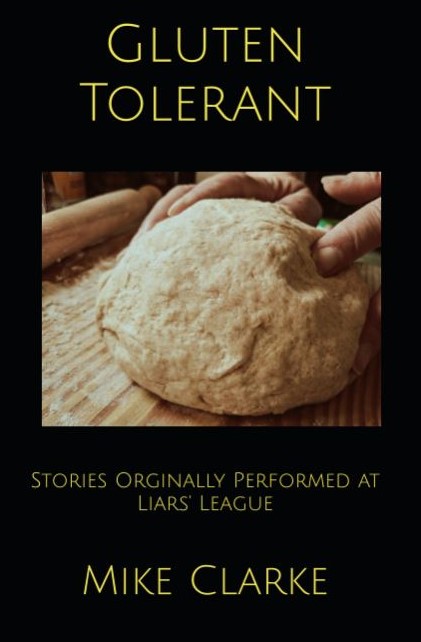
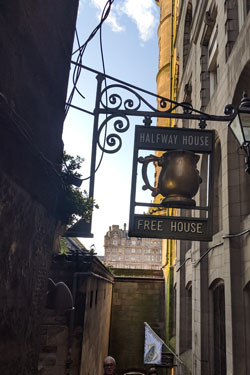
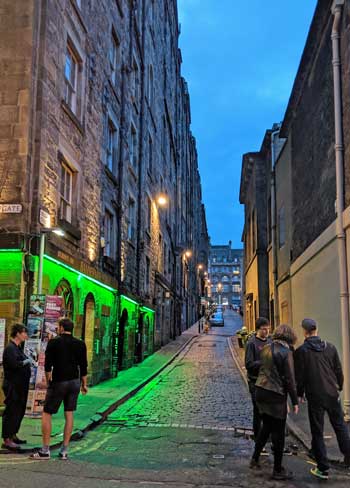

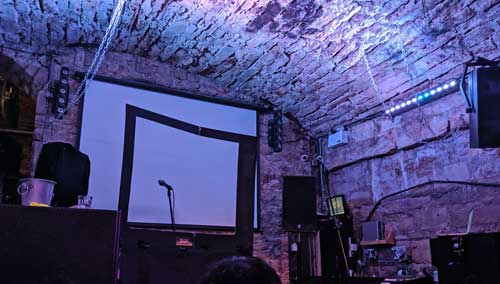
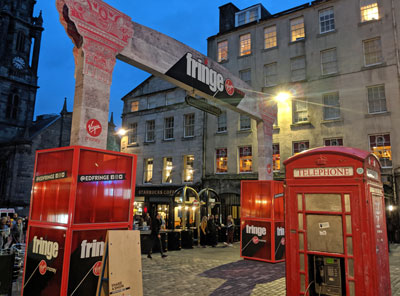

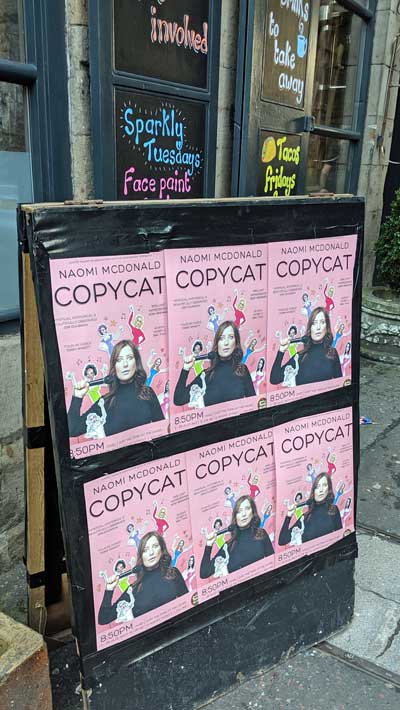
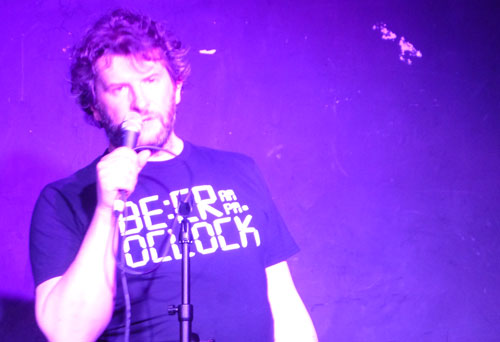
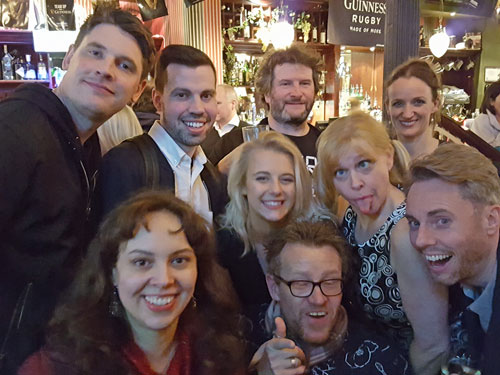
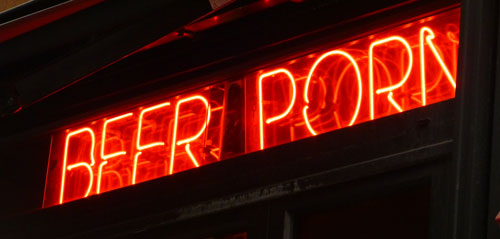
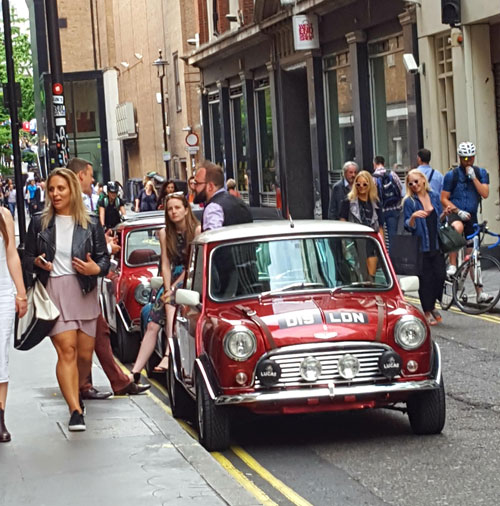
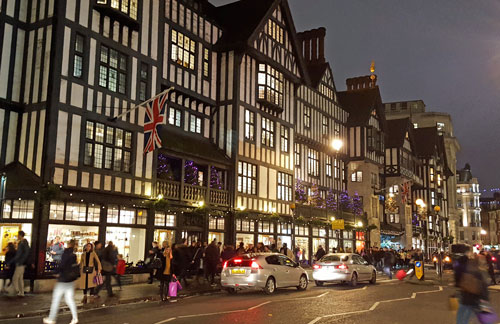
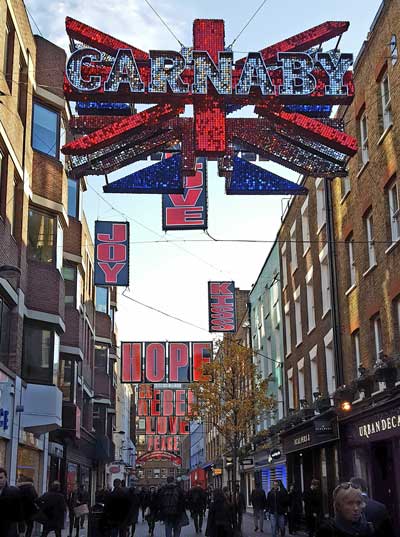
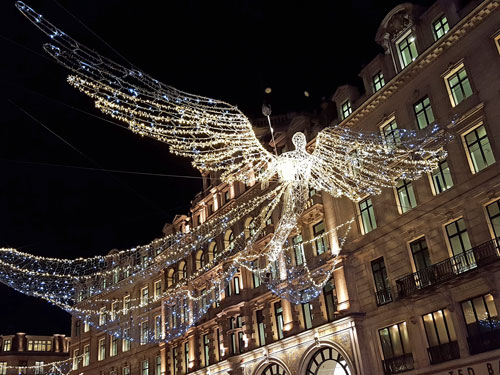
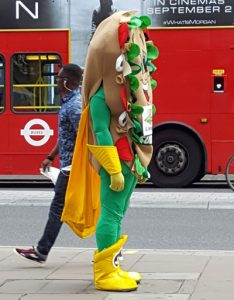


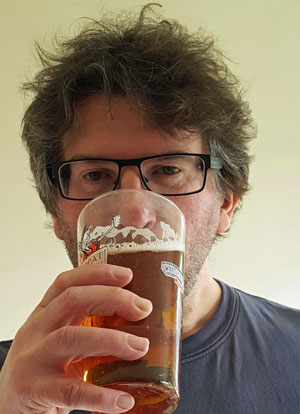
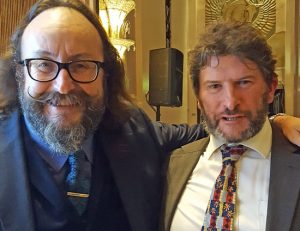
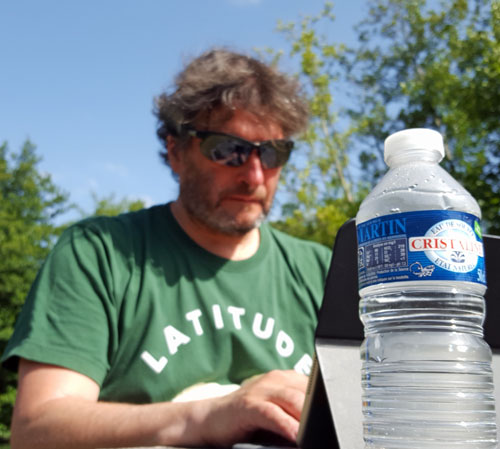
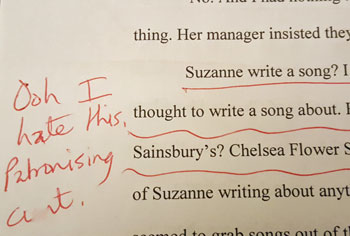

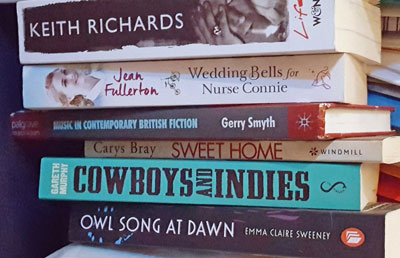
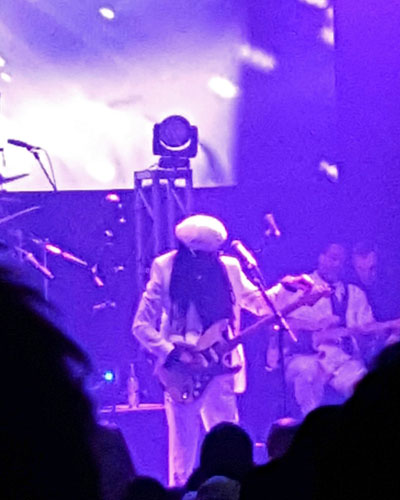
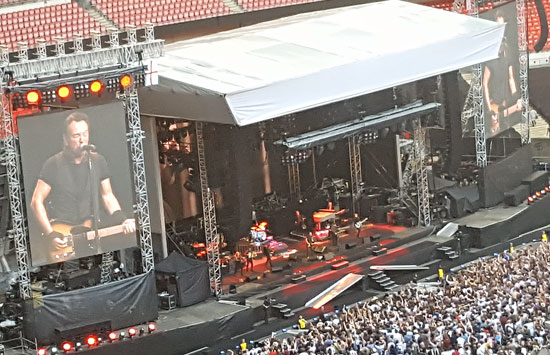

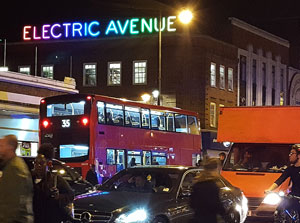
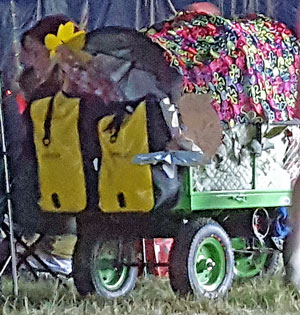

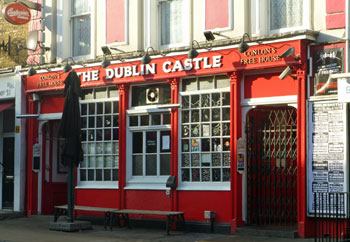
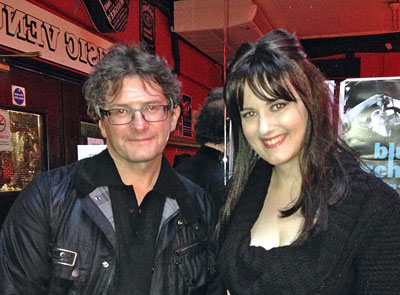
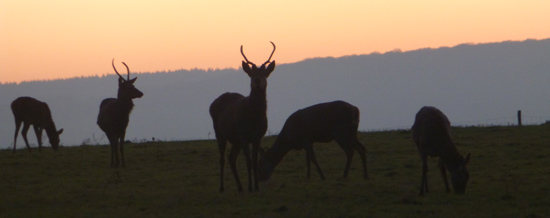

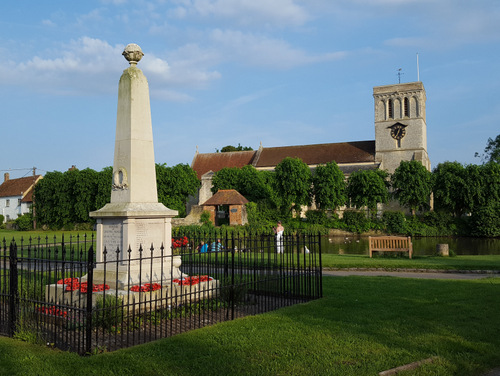
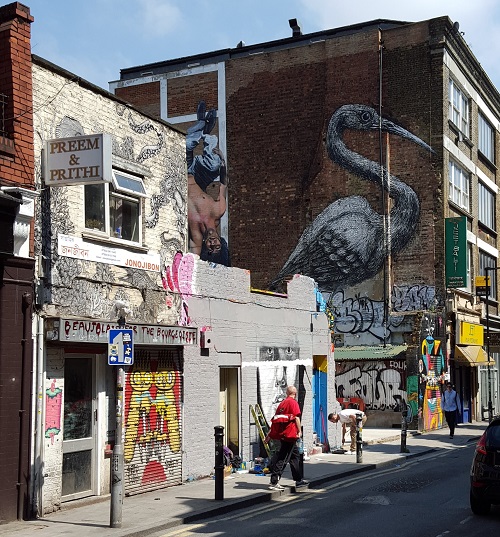
.jpg?1464595911)
.jpg?1464595941)
.jpg?1464595905)