Shoreditch By Overground

After the tutorial with Emily the weekend before last I decided to take a walk to see how things were around Village Underground as I’d not been there for a while. It was the first time that I’d had chance to visit the new Shoreditch station, which radically improves the transport links through the area. Only a week or two before I took a ride on the train, a new bit of line was opened between Dalston Junction (itself only re-opened for less than a year) and what used to be called the North London Line. This piece of newly re-instated line links to the old East London tube line at Shoreditch and that’s been connected to the rail network on the south of the river so that Shoreditch now has a remarkable train service  every 5 minutes with some trains running from Highbury and Islington to West Croydon.

The station is, as you would expect, very modern and, in a short time, seeing as it’s not far at all from the top end of Bishopsgate and the Broadgate development, could transform the character of the area in a short time. I’m not sure whether this would be good for my novel or not — I guess it could be a move behind property prices shooting up and pricing artists like Kim out into the country.

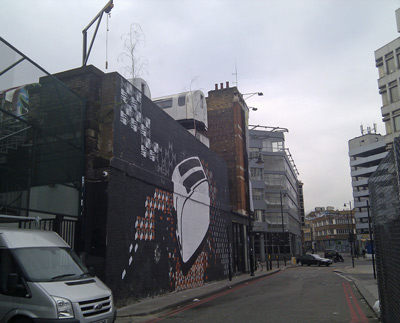
I looked out from the train as it left Shoreditch station and got an unusual rooftop level view of Village Underground (see below). I posted this photo on their Facebook page and they officially ‘like’ it.

Village Underground Viewed from the new London Overground

Village Underground Viewed from the new London Overground

The roof of Village Underground itself, where the tube carriages are placed, is actually part of a viaduct that carried trains into Broad Street station (which was next to Liverpool Street) until 1986. The railway bridges over Great Eastern Street and Holywell Street were only removed in the 1990s. A new viaduct was built crossing Shoreditch High Street and then joining the old track bed which runs directly north up to Dalston and this involved the demolition of an area opposite Village Underground to accommodate the curve of the track as it links the two together.

Holywell Street, which was a dead-end blocked off to traffic when I first visited Village Underground has now been re-opened as a red-route connecting the London Ring Road to Shoreditch High Street. So this area, despite looking like something of a neglected inner-city backwater, has seen a lot of change recently. Here’s the scene at ground level with the current toaster mural.

Holywell Street, Shoreditch

The City encroaches ever further towards Shoreditch and the Heron Tower, now the City’s tallest building, has been completed half a mile down the road. It’s the Broadgate Tower that looms most intimidatingly over Shoreditch High Street — here seen with the friendly shape of the Gherkin by its side. This photo was taken close to the church of St. Lenonard’s — famous for the line in the nursery rhyme Oranges and Lemons — ‘when I grow rich, say the bells of Shoreditch’. (I’m going to have to work in a few references to this.)

Shoreditch High Street and the City

I took the train from Shoreditch to Dalston Kingsland, a place I visited 20 years ago at night when it had no semblance of the gentrification that is hinted at today. From there I took the North London Line to Hackney Wick. I’ve been to Hackney before, which I’ve found nowhere near as intimidating as its reputation — there’s a good pub there called the Pembury Tavern, but never Hackney Wick.

Hackney Wick station is a desolate place, cut off by railways and road schemes, and I wouldn’t feel comfortable at all walking around there late at night — there’s just a boarded-up pub next to the station and a load of corrugated-iron motor mechanic shops of the sort you see on Eastenders. The Olympic stadium rose up quite incongrously in the background. I was told by Tam at Village Underground that Hackney Wick has the most artists per square mile (or whatever) in London (or maybe even Europe) but perhaps they were all round the corner somewhere as I didn’t see much artistic, although I could see why the rent might be cheap.

I walked around to the bus terminus, which at least had some houses and shops nearby, and got the number 30 from the start of its route all the way into central London — via Hackney, Dalston, Islington, King’s Cross and so on. I saw plenty of places on the route around Homerton which comfortably fitted the description of the flat where Kim lives at the start of the novel — they’re something of a contrast to where she’ll live at The Angel.

The Zeitgeist of the Segnits

I wandered into Waterstone’s in Staines (of past Ali G fame) a couple of weeks ago and was magnetically drawn to a book called Pub Walks in Underhill Country by Nat Segnit, which had the good fortune for a debut novel, to be on the 3 for 2 pile.

It had quite an attention grabbing cover adorned by various pubs signs, which immediately attracted my interest. I had a look through, partly out of dread that the subject matter would be very similar to my work-in-progress, which has a big pub theme. Fortunately it wasn’t — the novel uses a very clever device of parodying the sort of country rambling guides that balance the virtuousness of walking with the promise of indulging in a pint or two at completion and are published in mind-boggling permutations (e.g. Best Walks from Pubs in Bucks, Bucks Country Pub Rambles, 20 Pub Walks in Bucks, etc.).

I always flick through the local editions of these books when I find them, mainly to see check if there’s any that guide walkers through my village — and there’s usually at least one walk that does. Unlike many people, I’m always keen that people do come and visit my local area because it is extraordinarily beautiful in its understated way — if it wasn’t so accessible to London then the scenery might be more valued than it appears to be.

I’ve also written quite a number of pub walks myself, which have been published locally. I was quite surprised to find out that people had actually followed my routes — a local pub landlord took about 15 of his friends on one walk. They’re quite tricky to write as there are only so many variations to make on ‘cross over the field, climb a stile, go through the gate’ and so on.

I can see why it might be real fun for an author to take a character who writes these guides and slip in some personal digressions to this very restricted literary genre and weave a narrative out of this — which is the premise of the book.

My dad is a huge Alfred Wainwright fan and I’ve seen plenty of his idiosyncratic guidebooks and I’ve also seen quite a few Wainwright-inspired programmes, often featuring Julia Bradbury in some shape or form (before she got the Wanderlust and headed off to Germany). Wainwright had something of a curmudgeonly reputation and I seem to remember seeing a documentary about him years ago which suggested his attitudes towards the role of women in society, for one thing, did not share much in common with militant feminism. It’s a very clever idea to make a novel out of the conventions of the walking book genre.

I can see it’s also a very fertile subject to write about — recreational walking is incredibly popular. I saw plenty of hikers this morning as I went for a run that took me (via a bloody big hill) on a short section of the Ridgeway and they were all up there with their Nordic walking sticks. Underhill country isn’t the Chilterns but is apparently around the Malverns somewhere.

I was quite interested in Nat Segnit and Googled him and, strangely, in this era of authors and their social media platforms found very little — no blog or twitter — just some reviews, a couple of interviews and a brief biography on his agent’s page which tells us where he was born and went to university but not much else.

But he does have quite an unusual surname that I was reminded of when I flicked through a book that I’d been meaning to read in the detail it deserves since I bought it as a Christmas present for my sister and then thought was so good that I decided to buy a second copy for myself — The Flavour Thesaurus — by another person called Segnit — Niki Segnit.

I was looking through the acknowledgement page in The Flavour Thesaurus as I now tend to with books I like to try and find out who the agents and editors and so on are. The first person she thanked was her husband Nat who helped with her book ‘while he had his own to get one with’.  Ah, so these two authorial Segnits were fairly likely to be married to each other.

This might not have seemed a particularly remarkable co-incidence — I guess that writing can be such an anti-social activity that if  some people end up with a partner who’s a writer, especially a debut author who’s writing in time off from the day job, then perhaps a case of ‘if you can’t beat them’ may be the most harmonious solution. But it’s the subjects of the two books that I found particularly fascinating as both are very relevant to themes in my novel. As mentioned above, Nat Segnit’s book alludes to pubs and deals with the escape of the great outdoors. Niki Segnit’s book is a marvellously inventive variation of the endless popularity of all things foodie.

I may even have James in my novel getting hold of The Flavour Thesaurus and treating it like a bible which will give a bit of theoretical grounding to some bizarrely elaborate concoctions he’ll try and put on the menu. The book works a bit like one of those food-and-wine matching guides (I remember a classic line in a Hugh Johnson guide that suggested a two and three-quarter year old Italian Merlot was required to partner sausages — ‘or a red anyway’). But it’s food-with-food combinations that provide the books’ framework.

There’s a flavour wheel with 16 flavour categories (sulphurous, woodland, etc.) and which contain in total 99 ingredients or food components (onion, walnut, etc.). (The flavour wheel is very similar in principle to a painter’s colour wheel — again another connection with the themes in my novel.) The book is then structured into pairings of the these components — so you look up something you like the taste of — say horseradish — and the book lists some interesting ingredients to pair with horseradish — oysters or beetroot, for example. There are some very interesting pairings indeed but I won’t spill the metaphorical beans by listing them here.

This structure is also remarkably clever as it accommodates a serendipitous mix of scientific research on flavour of the sort Heston Blumenthal is a fan (Niki Segnit has a background working for big food companies), impromptu recipes and, my favourites, her own anecdotes and opinions. There’s a great story about her driving through Italy with a boyfriend with whom her relationship was souring which comes under the unlikely heading ‘Globe Artichoke and Bacon’. She may even have convinced me that the peanut, like its friend, the single kernel of sweet corn, is an ingredient that has some culinary merit and not just a cheap product of the American agro-industrial machine.

Niki Segnit is extraordinarily well read on her subject — with a huge bibliography of cookbooks and other food reference books. She references quite a few authors that are on my shelves, from salad and vegetable guru, Joy Larkcom to domestic goddess, Nigella Lawson. However, what infuses the the book, despite its lack of illustrations or sexy photographs of styled food, is a genuine love of food and the sensual pleasures it offers and, as such, a dog-eared copy would certainly merit a place in my fictional character’s kitchen.

The British At Work

I’ve been enjoying Kirsty Young’s BBC2 documentary series — The British At Work — a complementary series to a similar social history last year on the family. The episode just shown tonight took in the period 1964 to 1980 — the second half of which becomes increasingly distinct in my own memory.

What I particularly enjoyed about the programme was the music. I often loathe extraneous music piled on to TV soundtracks — more or less any sport documentary attracts it and it seems sometimes that producers like to signal that they’ve got A Big Budget on programmes like Doctor Who or Wonders of the Universe by plastering some bombastic orchestral music over everything at any opportunity.

But The British At Work used a nice selection of contemporary music — some well known (and quite apt lyrically) like Pink Floyd’s Time, Al Stewart’s Year of the Cat and Jethro Tull’s Living in the Past and others I would never have identified had there not been a really handy track listing on the programme’s page on the BBC website. (I’m glad I discovered through this that it was Steve Miller who did the ethereal Fly Like An Eagle.)

I’m already looking forward to next week’s episode because it was trailed with the outro from the Associates’ Party Fears Two — one of the oddest tracks of the 80s.

We’ve had an ongoing debate in the MA workshops about quoting lyrics from pop songs in things like chapter introductions and so on. If a writer even quotes a couple of lines from a song then the song’s publishers are entitled to for royalties, which might be OK if the book is going to sell a lot (royalties like this are often flat-rate) but a significant proportion of income for more modest sellers. Titles are safer — they’re not copyrightable — and if a reader recognises a quoted lyric then these may well be brought into mind by a mention of just the song in itself .

The programme was also interesting as it featured Charles Handy, who wrote some fascinating books in the 1990s on the future of work, such as The Age of Unreason and The Empty Raincoat — and I have a signed copy of his autobiography, having gone to an Association of MBAs function featuring him in Oxford. But I wish his prediction of the portfolio career would have become more widespread than it has so far, as it makes an awful lot of sense — and having writing as part of one’s portfolio might be the only practical way for all but the most best-selling writers to make a living (see this very interesting blog entry posted today by Martha Williams: http://wp.me/pMRZG-1Yg. )

Trouble in Causton

Brian True-May, the producer and co-creator of Midsomer Murders has been suspended by ITV over remarks in an interview in the Radio Times, which has just popped through my letterbox, in which he says ‘It’s not British, it’s very English. We are a cosmopolitan society in this country, but if you watch Midsomer you wouldn’t think so.’

This is a fairly unarguable observation about the programme but he then goes on to say ‘It wouldn’t be the English village with [ethnic minorities]. Suddenly we might be in Slough.’ He then says Causton in the series is based on Slough, although in the series both Wallingford and Thame (both places extremely unlike Slough) are used for filming the town. He then goes on to make the comments that probably earned him his suspension ‘And if you went to Slough you wouldn’t see a white face there. We’re the last bastion of Englishness and I want to keep it that way.’

This raises all kinds of general questions about drama and fiction and their representation of authenticity. There are plenty of books, TV programmes and films that concentrate on certain ethnic groups — one of my favourite TV series, Larry David’s Curb Your Enthusiam, largely features (and derives its humour from) Jewish characters. Most soap operas now have a sizeable proportion of ethnic minority characters that reflects the diversity of modern urban society so it might be argued that Midsomer Murders is similarly reflected the demographic of its location.

I’m particularly interested in this as my novel is set in notional Midsomer county. I’ve just submitted an extract to my tutor on the MA where the characters actually say that the pretty lanes and cottages that surround the Angel are used for filming ‘murder mystery things’. Midsomer county isn’t anywhere near the Somerset village of Midsomer Norton as many people might think — it’s essentially the Chilterns and a bit of adjoining Oxfordshire and Aylesbury Vale. (The proposed HS2 high speed rail line is almost going to run straight through Badger’s Drift — which is a village near Great Missenden called The Lee in reality.) The locations are of great interest — Joan Street runs a very informative website on this and has even published a book on the locations.

His comments, however, applied to the TV series rather than any particular real-life geographical area and Midsomer Murders is hardly the most gritty and realistic of dramas. It’s set in the present but its world is a stylised version of escapist nostalgia — a mix of every cliché about rustic rural England that probably stretches way back to Agatha Cristie, H.E.Bates, Stella Gibbons, Enid Blyton and many more. In that context, I don’t see that an absence of ethnic minorities is an issue, any more than it would be in The Darling Buds of May, and many of the ‘most English’ characters in Midsomer Murders are extremely loathsome. But, equally, it’s not right to claim that this is a good thing, which is what appears to have caused offence, even when done in a fictional context.

I live in a village right in the middle of it and I can tell Mr True-May that he has his facts wrong about pure English ethnicity. Just in two or three roads I know of at least two French people, a Ukranian, a Latvian and at least half a dozen people with Asian backgrounds (one has a business making home-made Indian chutneys and sells them at the local school fêtes).

Admittedly this is at the end of the village with less thatched cottages and more modern housing but if I drive up the winding lane in the morning towards the church and the chocolate box cottages with wishing wells in the garden then I often pass a very friendly black chap who walks a circuit of the village every day. It’s maybe under the UK average in terms of ethnicity but it’s certainly not all-white and I’m sure most people who live in Midsomer-like locations would find it offensive if Brian True-May’s comments were used to suggest there’s any more racism in the countryside than anywhere else.

If there’s a skewed demographic in the countryside, it’s nothing directly connected with race, it’s more to do with the age of the population — and this may inhibit social mobility more widely. Even in the Chilterns there are a lot of retired people in the prettiest thatched cottages and while there’s a fair number of school age children as their parents move out of more urban areas for quality of life, there’s a lack of affordable housing for people in their twenties.

In The Angel, Emma comes from the village but has had to work hard at her career and marry a similar high-achiever to afford a nice place to live. There’s no way Kim could ever afford to live there if she didn’t get accommodation with the pub and barman Gabriel lives with his very rich parents. The ageing demographic is a real obstacle for James as his geriatric diners prefer to have scampi and chips rather than some creation with palm hearts and pomegranate juice.

The question of reflecting the ethnicity of characters in my novel’s setting is something that has crossed my mind, especially as it features the pub as a meeting place for the whole village. I’d like to try and represent this aspect authentically and naturally but as a novel has a limited number of principal characters and a number of minor ones it’s easy to fall into a trap of thinking in terms of quotas.

The wider subject of integration into a different culture is, however, one of the major themes of the novel and I have a non-British protagonist who will hopefully explore some of these issues. Kim’s lived in London for a number of years and certainly feels quite comfortable in her identity as a Londoner — but move 40 miles away into Midsomer Murders land and she’ll find attitudes are quite different.

Also, she’s the nationality that it’s probably still most ‘permissible’ for the British to insult — even more than the French, Irish or Australians — she’s a German. She’ll have to put up with a similar sort of ‘banter’ to that which passed for comedy on ‘Love Thy Neighbour’  forty years ago. But she’s give as good as she gets and The Angel will be partly the story of the sort of integration in deepest, rural England that won’t be found on Midsomer Murders.

One fascinating fact is that Kim would very likely have watched Midsomer Murders (or Inspektor Barnaby as it’s called) in Germany (or her parents would) as its version of Englishness is exported to 231 countries. A Google news search on the Brian True-May story today brought up three German websites with the story — including this one from Stern — so a story set in this location definitely has international appeal.

And spring seems to have arrived here. The countryside is a beautiful place to live when the days are long and the sun is out but it’s horribly bleak during January and February — dark, wet. muddy, dormant. But despite the awful December weather, the bees (and wasps) were out today and I finally finished off the 12.75kg sack of bird seed that has seen through the winter countless robins, wrens, sparrows, blackbirds, starlings, various tits and finches and even woodpigeons and woodpeckers when the weather was at its worst. And if you listen carefully you can hear the newborn lambs bleating from the fields.

The Documentary on Books I Really Didn’t Like To Watch

A week last Saturday there was a documentary on BBC2 that was ostensibly about the sorry state of the world of books (riven as it’s meant to be by factionalism between literary and genre) but I found that, ironically, the programme itself served as an example of the inherent problems of a whole genre of television documentaries.

I’ve been meaning to blog about the three documentaries about books that were broadcast to co-incide with World Book Night and the Sebastian Faulkes series on the novel on the preceding four Saturday nights. Unfortunately I’ve had three pieces of writing to send out for tutorials or workshops in the meantime and had to submit my 118-page MSc dissertation at the start of last week.

Even so, Sue Perkins’ s programme ‘The Books We Really Read‘  was responsible for a minor fire-storm of tweets and provoked enough subsequent comment that its memory has maybe not yet totally escaped away into the ether.

Creative writing courses and their alleged ‘writing-by-numbers’ approach to novel writing came in for a bit of stick both in the Perkins programme and the following documentary, which profiled 12 ‘important’ debut novelists. Curiously, it seemed to me that it was the misapplication of a key creative writing class concept — plot — to ‘The Books We Really Read’ that made it grate far more it probably intended to.

One of the basic plots found across all fiction and drama is the quest whereby the hero sets out to achieve something, overcoming fear and obstacles on the way and thereby changing by gaining some self-knowledge.

It’s an archetype that’s been applied recently to documentaries, particularly the celebrity-led. This person is sent on a ‘personal journey’ which, naturally, progresses in true classic narrative plot style, from wariness or cynicism to growing familiarity, experiences a few challenges along the way, and ends with something of an epiphany. The Jamie Oliver school dinner documentaries were much in this vein as are the ‘Who Do You Think You Are’ documentaries where invariably something unusual or emotional is uncovered in the subject’s past.

This concept has been broadened into subjects where there is less personal involvement by the presenter and the concept is that the celebrity mediates between the subject and the viewer — the viewer gets signals of how we’re meant to react. This risks being patronising but can come off is the presenter is aimiable and sympathetic enough — the Al Murray documentaries on Germany were structured something like this.

This style of documentary making seems to have been what the makers of ‘The Books We Really Read’ had in mind but they appeared to spectacularly misapply the formula. The logic seemed to have gone: let’s do a documentary about how some books are considered easy to read and some scarily hard but it would be too patronising to have a presenter who was scared of literary fiction and was ‘improved’, Educating Rita style, into eventually enjoying it. Why not do it the other way round and have a presenter who affects only to enjoy literary fiction and expresses almost a fear of popular fiction — and in the course of the journey we learn that genre fiction isn’t all bad. Ironic and post-modern, huh?

This probably seemed a cleverly subversive idea but it also subverts the basics of the classic plot device it tries to exploit to the point where it worked against the programme. For the quest plot to work the reader (or viewer) must accept that the quest is credible and the hero must engender some sympathy or identification.

So to compare ‘The Books We Really Read’ with a similar, recent quest documentary — the Comic Relief documentary about Helen Skelton’s high-wire walking, we had Skelton working towards overcoming the fear of walking 60 metres in the air on a rope slung between two of Battersea Power Station’s chimneys whereas Sue Perkins was forced to read thrillers, crime fiction and romances. It might actually have worked had they approached the subject the other way round and followed an ‘ordinary’ reader’s apprehensions about tackling Perkins’s favourite author, Dostoyevsky — but that wouldn’t have been very innovative.

It was also inevitable that starting from a position of ostensible ignorance about popular fiction would portray the presenter as unavoidably snobbish. So we learned very early on that  Sue Perkins read English Literature at university and, inevitably (though I don’t see why), she had never read the type of dross that people choose take on holiday with them (cue interviewing people in an airport) but she’d judged the Man Booker prize instead.

This was obviously meant to set out the starting position from which she would mellow and ‘learn’ by the end of the programme but it sent the message that she’d be metaphorically holding her nose until persuaded otherwise. This wasn’t the best way of gaining sympathy for the hero’s quest and raised the question of what audience the programme was made for — maybe just fellow Oxbridge English graduates and probably not even the majority of those. (I’m not sure whether she mentioned it was Cambridge where she read English — sadly the programme is no longer available on iPlayer — but  somehow that fact has lodged in my brain, as probably was the intention.)

This positioning of the presenter took up a good five or ten minutes at the start of the documentary and it was entirely irrelevant to the subject. It’s a shame as the underlying hypothesis is fascinating and topical– is there a meaningful distinction between the sort of literary fiction studied at Cambridge and the type of books sold by the yard at the local Asda?

Perhaps trying to analyse popular taste in the arts using a highly personalised approach is inevitably flawed — it seemed to be at the root of the unsatisfactory aspects of ‘Faulkes on Fiction’.

The programme wasn’t above using a few documentary makers’ tricks to advance its agenda. We saw many of Lee Child’s fans queuing for his signature in a bookshop and many were asked about how they pictured his thrillers’ hero, Jack Reacher, who’s a rugged type, not unlike how Child himself appears in person. The implication seemed to be that his readers were like the sort of soap opera fans who run up to an actor in the street to berate the character they play’s actions — ‘How could you swap the baby?’

As always, ‘ordinary’ people were shown jostling in the public space of a shop whereas ‘the experts’ always sit in a quiet room with a nice table lamp in the background — or on the solitude of a park bench.

Child made a feisty contribution, his revelling in the ‘us and them’ divide between his genre and literary fiction seemed to fit the documentary’s pseudo-narrative opening chapter. He made the inflammatory assertion that literary fiction writers are unable to write genre fiction and the snobbishness of the literary establishment is because they know that bestselling authors could write literary fiction as easily as dropping off a log.

This claim could have been exploited better in a traditional documentary — by introducing counter arguments. Instead his arguments were apparently undermined simply by Perkins reading out passages of his prose in a silly voice. This is something she did for the work of several other authors.

Maybe Child’s arguments have already been discussed to death in various versions of the ‘is Dylan better than Keats’ debate on the likes of Newsnight Review?

But no doubt many of the readers of genre fiction agree with straightforward proposition that the writers who Perkins investigated have the talent to identify what the majority of readers want from a book and are rewarded by selling a lot of books and, presumably, making money whereas many literary fiction writers scrape by on Arts Council grants and the proceeds of prizes allocated by the literary establishment.

There’s always also a widespread suspicion of claims made about a work’s intellectual or aesthetic pedigree when the acclaim comes from a closed, elite group of arbiters. This is the classic ’emperor’s’ new clothes’ situation that applies even more to modern art, modern classical music and various other art forms where there’s a suspicion that reputations can be determined by a small number of influential critics who may be motivated by political or social factors.

The tone of the interviews followed the narrative arc of the programme — Child was confrontational, then Ian Rankin was emollient on crime fiction (conceding that armies of 70-year old detective spinsters stretched credibility). Sophie Kinsella, sitting agreeably in her pyjamas, was then able to make the assertion that allowed the self-knowledge aspect of the documentary’s ‘plot’ to reach its conclusion: Jane Austen wrote on subjects that are staples of modern chick-lit.

The logic of this argument was about the universality of human experience: one of the English language’s greatest novelists wrote about the difficulty for women of finding a good man — and so, for that matter, did Charlotte Brontë. This is very true but it’s also true that many of Shakespeare’s plays could be considered thrillers or fantasies and that, even, Austen’s Emma could be argued to be the first detective novel.

It’s not really an argument that equates a bit of Jilly Cooper with literary fiction but it seemed that the programme had come so far in its journey that it ended up arguing for the values of relativism that it had held in contempt at the outset.

The mention of the universal appeal of the basic romance story of the search for the perfect partner allowed the programme to reach its rather unconvincing — but inevitable conclusion — people liked bestsellers because they have a plot, which is something that, as everyone knows, literary fiction books don’t.

So in the end, the programme concluded that there were some good things about literary stuff — like the enjoyment of beautiful prose — and good things about thrillers, crime fiction and romances (well, perhaps, just one albeit the most important in any narrative work) and, actually, maybe they’re not too different after all and wouldn’t it be nice if they could, maybe, learn a bit from each other? Now that sounds like the basis for a programme I’d really like to watch.

Claire King’s Rules For Writing Novels

I was tweeting in pique at the weekend while watching Sue Perkins’s documentary on genre fiction — a programme that I’ll probably get around to blogging about more at length but I put a comment on The Art’s Desk’s review — click here to read it.  A couple of my tweets were picked up and replied to or retweeted by literary people, including one of the Independent’s Offical Top 100 Tweeters, Carole Blake and I picked up a few extra Twitter followers to add to my modest total as a result.

One of these is the writer Claire King and I followed a few links to her very interesting blog, which has a very sensible comment on the holy wars between literary and genre fiction that Sue Perkins’s documentary appeared to have stirred up.

However, I was most intrigued by the fifteen rules of writing that featured in another post: http://www.claire-king.com/2011/02/23/15-rules-for-writing-novels/

I’m sure that almost anyone who has been in a creative writing class will twitch in recognition at most them. It’s interesting to read the list of comments as it seems not every contributor seems to have inferred the same intention from the rules as I did. I particularly like number 7.

A few commenters have added rules from famous writers like Kurt Vonnegut and Jonathan Franzen. Franzen’s don’t seem to particularly helpful, more a manifesto for his own approach (particularly his phobia about the Internet) but I particularly liked his first: ‘ The reader is a friend, not an adversary, not a spectator’.

This tends to contradict most of his other rules imho but I believe it should be borne in mind far more in creative writing workshops than it is. A normal reader wants to like a book. After all they’ve paid for it (or gone to the trouble of borrowing it) and are prepared to invest a considerable amount of time with it. They’re not taking 3,000 words and examining every single one as writers and critical readers who review each others’ work for the best of motives. They’re not going to throw the book in the bin because a writer has used a lazy ‘then’ in a sentence (his rule three) but they might feel resentful if something on the macro level leaves them short-changed, like an unresolved and poorly developed conclusion to the plot.

Passing Time in James’s World

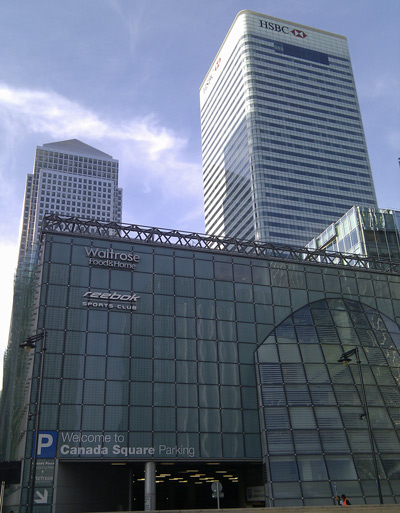
I was in Docklands a week or two ago and took a few photos of the sort of corporate world that James escapes from in my novel. Here’s Canary Wharf with a Waitrose he’d certainly approve of.

Canada Square
Canada Square

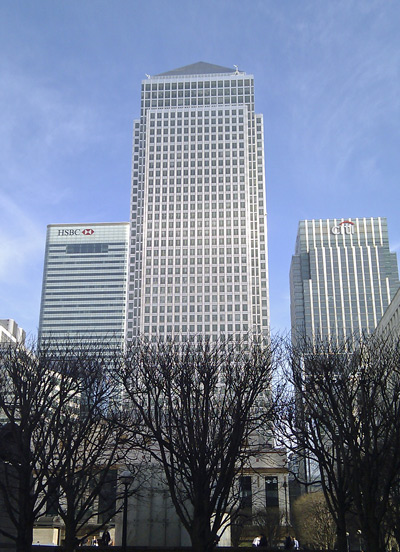
And here’s a photo I used in a pub quiz I set last night. It’s the symbol of Thatcherite regeneration — number one Canada Square or what everyone calls the Canary Wharf tower.

Canary Wharf Tower
Canary Wharf Towers

I travelled back from Canary Wharf to the London Eye by boat, which was surprisingly quick. I’ve just written something that mentions rabies and I was wondering if it’s such a big issue these days so I was pleased to see the sign below at the pier at Southwark which shows that it’s something that anyone arriving in this country will be aware of.

Rabies
Port of London Rabies Notice

The skyline of the City is going through a period of rapid change. When my novel starts the Heron Tower was still half built (it’s now the tallest building in the City) and the Shard was just a hole in the ground. It’s now (I think) the tallest structure in London — it definitely will be when completed. I’m going to have a reasonable period of time elapse between the sections I set in London and reference to the Shard and others might be quite a nice way of showing passed time.

The City from Canary Wharf Pier

The height of the Shard can be seen on this photo. I think the Heron Tower is the tall building on the right and the Gherkin is standing immediately in front of Tower 42, the old Nat West building.

Trouble at the Bull?

I’ve now got an even better reason for keeping up with events in Ambridge — there’s a plotline about the Bull that has resonances with the fate of the Angel in my novel.

I was getting a bit worried a couple of weeks ago that the plot might get too similar but Jolene looks to be seeing sense — although I’m not sure about Kenton. Good to see there’s a healthy interest from the Radio 4 listening public to after-hours shenanigans, though.

I’ll be listening carefully next Sunday as usual as I jog around my own bit of countryside in the Chilterns.

Behind Closed Doors

In W.H.Smiths in Marylebone Station I recently spotted a new novel by Lucy Kellaway, the FT’s management correspondent, whose debunking of management theory codswallop is always entertaining. Her last novel ‘Martin Lukes: Who Moved My Blackberry’ was my holiday reading a few years ago (if you don’t understand the joke in the title then you’re happily innocent of one of the more ludicrous management bestsellers of the past few years).

However, it was in the ‘Buy 1 Get 1 Half Price’ offer and, of course, the fallibility of my mind to marketing psychology meant I scanned around for the ‘bargain’ book to accompany ”In Office Hours‘ and succumbed to the temptation of a book I’d seen partially serialised in The Times a few weeks ago: ‘The Sex Diaries Project’ edited by Arianne Cohen.

(Curiously, this book has a relatively high sales ranking on Amazon and is number one in its niche category in the health, family and lifestyle section but no-one has posted a review so far — which is odd.)

The book is formed of around fifty diaries kept by British people in which the diarists recorded their sexual activities and thoughts — although most diaries spend more time reflecting on relationships than recording the mechanics of sex. Perhaps calling the book ‘The Relationships Diaries Project’ would have been less commercial but a third of the diarists record no sex at all (for various reasons) during their week. The diaries aren’t, of course, a representative survey of the population — there are probably a few too many ‘unusual’ diaries for that — but there’s a very varied spread of gender, age and sexual orientation.

It’s not particularly salacious or erotic — it’s tame enough to have been discussed on ‘Woman’s Hour’ on Radio 4 — I found an interview with Arianne Cohen on the BBC website. (It was quite amusing to hear Jenni Murray finely navigate the line between being over-euphemistic and speaking too frankly.)

I’d argue (honestly!) that this book is a very valuable resource for anyone writing a novel which emphasises the development of any intimate relationship between its characters. These are frank accounts of behaviour between real people written in the language they genuinely use. Almost by definition these activities are private — they’re not the kind of things a novelist can sit and wryly observe from a coffee shop. The diaries are published anonymously (although Cohen does a lot of checking to ensure they are not hoaxes) and, like diaries of the more conventional sort, the writers commit to paper much that they would never speak out loud to anyone else.

One assertion that Arianne Cohen makes in the interview, which is re-assuring to writers but also perhaps surprising given the tone of much of the debate on gender, is she believes that the male and female diarists ‘experience relationships in a very similar way’ and in terms of ‘minute-by-minute thoughts men and women are quite similar’.

Where the difference lies is that men express this experience somewhat differently — usually in a more explicitly sexual way. However, the female diarists are certainly just as capable of commenting explicitly on the sexual attractiveness of others. Maybe to emphasise the point, the gender of each diarist is printed in very small type. It’s sometimes easy to forget whether it’s a man or woman writing the diary.

Jenni Murray said she detected an undercurrent of misogyny in some of the male entries and Arianne Cohen agreed that around 15% of the male diaries showed a disturbing objectification of women. This might be summed up by the serial adulterer who also visited a prostitute almost every week and who seemed to believe his attitude to women was shared by most men. (It isn’t.)

On the other hand, it’s misleading and self-deluding to assume (as was possibly implied in the Woman’s Hour discussion) that infidelity is automatically linked to misogyny. In anything but the shortest flings, there are usually two people involved in the deception — in the case of (straight) male  infidelity it’s the despised ‘other woman’.  While the man may indeed be objectifying and using both women in a shallow way, it’s also equally true that his actions may be driven by passion and emotion — not a dislike of women at all.

This leads to the question of whether women can easily be categorised, as maybe they are in soap operas,  into the likes of predatory husband-snatchers or faithful home-makers. I’d guess it’s not so simple and there’s a continuum of behaviour that suggests, depending on circumstances and many other factors, that the majority of people could end up being either the ‘guilty’ or ‘innocent’ party in an episode of unfaithfulness.  I hope so as this is one of the main dilemmas for the characters in my novel.

The honesty and accuracy of the diary entries is perhaps vouched for by the frequency of the occasions where the diarists record masturbation. There really isn’t much kudos to be gained by an individual to record that they’ve masturbated — the nature of the activity itself means that anyone can do it and independently of any relationship. That people masturbate such a lot might be simultaneously the most enlightening and least surprising finding in the whole book — precisely because it’s an activity that is very rarely discussed or written about and only often in abstract, de-personalised, self-help terms.

But it’s the near ubiquity of the activity which is quite striking: it’s recorded at a similar sort of intensity by men and women, people who are single or in relationships, young or old (although not the very oldest). There are a couple of oddly touching anecdotes on the subject — one the man in his 60s who is unhappily resigned to the physiological challenges involved at his age and the pregnant woman who debates whether her unborn baby is technically a witness — and, if so, what does this mean ethically (she decides it’s OK).

The last point also stresses the privacy (usually) required. If the diarist is in a relationship, almost every incidence of what  is euphemistically called ‘self-love’ is kept hidden: people are aware that their partners probably do masturbate but the where and the when aren’t really considered, apart from one particular entry that stood out as the exception that proved the rule. (I was startled to read of some of the diarists nipping away from their work desks for the purpose.)

This revelation of the inevitable must be interesting to fiction writers — this is something your characters are pretty likely to do and it may reveal something of their inner-lives, unlike involuntary bodily functions that everyone does but don’t normally appear in novels. On the other hand, a solitary act of (another euphemism coming up — no pun intended) self-relief is almost, by definition, lacking in the drama that occurs when a sexual act is part of a relationship. I can see why masturbation is not a common event in fiction but the candour with which these diarists record it makes me wonder whether writers tend to shying away from using a fairly universal experience.

If every aspect of the book that’s fascinating to writers was discussed in detail  then this would be an even longer post than it already is (and I think it’s already the longest one on the blog — more of an essay than a posting). There follows a list of a few points that were particularly thought-provoking. Some are seemingly obvious and intuitive but that may lend credibility to the implication that the more apparently deviant attitudes are more common than might be generally supposed. Again, there’s no science to this list — it’s what struck me while reading the selection of  diaries.

  1. Ex-lovers feature a lot — both in people’s thoughts and in physical encounters. Many, many diarists long for a previous partner — and sadly many of these people are in other relationships with people they prefer less. This is often in spite (or because) of a recognition that any lasting relationship with that person is emotionally impossible (such as the newly-divorced woman pining for her ex-husband). Many report that sexual encounters with ex-partners continued on a sporadic basis long after the relationship finished. The ability to impulsively hook up with an ex has become much easier with new technology: mobile phone ‘sexting’ is another example of the greater intimacy and audacity people use with the written word. (I’m convinced that people tend to favour texting due to its privacy and asynchronous nature. There are a number of examples of where the utter simplicity of a text saying something like ‘Come over — I want to fuck you’ works very effectively for all parties and this brevity and directness is a lesson to writers.) The internet is another obvious tool (and Facebook is mentioned a lot in the book) for ex-partners to keep in casual contact. People tend not to talk about exes to their current partner — so again this is good, private, fertile ground for the writer.
  2. Many of the straight women describe an aspiration for sexual experimentation with another woman. This seems to be borne out of inquisitiveness and curiosity about whether this would be a different, maybe more sympathetic, sort of sensual experience than with a man. This was often acknowledged to be something that would remain in the realm of private fantasy although some expressed regret at having lost the opportunity to try it.  Straight male diarists seemed to have no interest in other men (except perhaps as an unavoidable consequence of group sex).
  3. When the respondents were interested in sex then there was little gender difference in the levels of desire recorded. However, it seemed in committed relationships that men were more likely view other people in terms of sexual attraction. Women, by contrast, tended to comment on others mainly when they were dissatisfied with their current partner.
  4. Traditional (or even stereotypical) roles seem to be preferred. To use a parallel from the dancing world (is it just tango?): it’s expected that the man takes the lead. This shouldn’t be misinterpreted as a green light for blatant sexism. It’s not — women want caring relationships with people who pull their weight domestically. However, effete ‘metrosexuals’ aren’t popular (there are various approving references to men behaving ‘like men’). Passive, indecisive, wimpy men appear to be held in almost universal contempt. (One woman complains she always ends up with docile partners which means that she ‘always seems to be the man’ in relationships.)
  5. Self-esteem is very closely linked to behaviour in relationships — sometimes directly when a person is suspicious of anyone treating him or her well because they don’t feel they have earned it or deserve it and sometimes people enjoy an inversion of status and control during which all their choice and self-determination is denied — something they curiously find empowering. The most bizarre entries are ‘dom/subs’ where the word ‘I’ is symbolically written in lower case by the submissives with their ‘Masters’ or ‘Mistresses’ referred to as He or She.
  6. Physical intimacy (feelings being safe, wanted, cared for) is perhaps more valuable to people than sex — particularly to those who have lost a partner through death or a traumatic split. However, there is powerful evidence of the beneficial effects to relationships of hormones like oxytoxcin or dopamine released during sex. Some diarists report deep frustration at their partner’s perceived withholding of sex over periods of days which ultimately comes across as near-loathing. Yet when they’re put out of their misery and have sex it’s a joyous experience and suddenly they record they love their partner very much. How long this effect lasts is questionable — I’d guess that anyone who internalises that their partner is using the restriction of affection perhaps as a power game is going to remain unhappy most of the time and that the humiliation of sexual rejection, whether deliberately or accidentally inflicted, probably contributes more to infidelity than any inherent predisposition.
  7. Availability often outweighs attractiveness: as the diarists are anonymous and there are no photos there’s no way of gaining an impression of their physical attractiveness but people’s own perceptions are hinted at widely, unsurprisingly women being self-critical about their weight and so on. While stunningly attractive people are often remarked on, sometimes people are far less selective about the choice of  the level of attractiveness of a potential partner than might be imagined — and this is not just men wearing ‘beer goggles’. One young woman, who would appear to consider herself attractive, describes her frustration that men appear to be wary of approaching her for fear of rejection. She correlates the increasing acceptability of potential partners with the length of time it was since she was last in a relationship and even makes an explicit plea via the diary for men to to be less reticent — saying that they would be shocked at the extent that ‘we can sometimes lower our standards’. This relates back to the point about exes and there are also plenty of examples where diarists describe incidents in their past when sex has often occurred spontaneously with an unexpected person.
  8. Volatility: people’s attitudes towards their partners are incredibly volatile. Two diary entries a few minutes apart can swing between radiant optimism and black despair or switch between profound love and vituperation — often as a result of a text, e-mail, casual remark or, sometimes, just personal contemplation. I’m not sure this comes across in a lot of fiction. Much creative writing workshop discussion focuses on rationally trying to examine the credibility of characters’ motives and actions — almost as if constructing some sort of probability decision tree. In reality people do not act impassively and deliberately — particularly not in emotional matters.
  9. There are more instances of  agreed ‘open’ relationships than I’d expected — both in the traditional ‘swinger’ style and those where partners were happy to allow each other to have independent sexual relationships (both casual and regular) with other people. Sometimes these were to accommodate bisexuality. This is the area where the editor says she was most surprised — and is happy to say she has reflected her discoveries in her own private life. However, I do suspect whether this is an area where the selection of the diarists has been a little skewed — but then I might be viewing this through my own moral conditioning?

The diaries encourage people to reflect on their lives in ways that are sometimes quite self-revelatory — re-appraising relationships. There’s also some speculation that’s quite thought-provoking about how one’s sexual experiences may affects one’s wider perception of the world.  A woman in her 20s who describes herself as bisexual and a masochist says: ‘I have a pet theory that much of the way men and women relate to each other, and hence how society is structured, comes from the psychological difference between penetrating and being penetrated.’ It might be physically fundamental but this may be at the root of many attitudes: I’d suggest that the vast majority of straight men aren’t able to even imagine the physical or psychological experience of being penetrated. This might make the fact that the experience can be extremely pleasurable for women quite mysterious and fascinating.

This relates, albeit anatomically rather than psychologically, back to an earlier post I wrote based on Graeme A. Thomson’s perceptive interpretation of Kate Bush’s work — the perhaps impossible desire to understand and experience what it is to be the other person in a relationship. Maybe a way for a woman to appreciate what her partner feels in being with her is to imagine how she herself might be touched by another woman?  Maybe? Who knows what goes on in other people’s heads and it’s why this book is so illuminating — revealing a few glimpses, albeit perhaps unrepresentative ones.

From a practical writing perspective, fiction writers would do well to study the diction used in the diaries. These are real people choosing their own words to describe their sexual experience. The editor believes that her British diarists are far more creatively verbose than their US equivalents — something that any reader would pick up from the styles of two publications I regularly read: Time and The Economist. (It’s also another reason why Stephen King’s views on brevity and adverbs don’t necessarily transfer without some refinement across the Atlantic.)

Nevertheless, there’s a refreshing absence of the sort of convoluted, obfuscatory prose that many writers might be tempted to use. People overwhelmingly describe their experiences as ‘we had sex’ (naughty passive voice there) or simply ‘we fucked’. Again, this is instructive for a novelist because, while people in polite conversation (for example at creative writing workshops) don’t generally talk in terms of ‘fucking’, these diaries show that’s the term that people most frequently commit to the page and, by extension, it probably indicates way that most people use in the privacy of their own minds. And, after all, filled also with all its hidden lusts and insecurities, one’s mind and imagination are the places where readers also engage with novels.