Oxytocin

There’s another story on the BBC website about the benefits of the ‘cuddle hormone’ — oxytocin. I referred to James’ view that human attraction was based on a whole mix of chemicals in the reading I did before Easter — and there was a quite a lot of feedback on whether the various things I’d referred to were hormones or not.

The story had links to an old web page from 2006 which caught my attention because it promoted something that was guaranteed to prevent fear of public speaking — which would be very handy for our reading evening on 30th June. It was titled ‘Sex “cuts public speaking stress”‘. It goes on to say ‘Forget learning lines or polishing jokes – having sex may be the best way to prepare for giving a speech. New Scientist magazine reports that Stuart Brody, a psychologist at the University of Paisley, found having sex can help keep stress at bay.  However, only penetrative intercourse did the trick – other forms of sex had no impact on stress levels at all.’ It’s all to do with something called the vagal nerve, as well as oxytocin apparently. (Maybe James can do some reading up on it?)

It doesn’t say how far in advance of the speech you have to engage in this therapy to make it most effective, though.

Three Universities in Two Days

I seem to be visiting a lot of universities recently. On Monday I went up to the Open University, where I met my MSc. supervisor and my ‘specialist advisor’ — both are a married couple of academics who work on the same area of research. My supervisor is Italian but has obviously lived here a long time so listening to her speech, which I tend to do on a weekly basis, is quite good practice for writing Kim’s dialogue. Strangely I was one of the few students (perhaps the only one) on the Milton Keynes campus because, despite having perhaps millions of students, none of them actually attend the OU itself on a regular basis — it’s all done at a distance (or in summer schools and the like).

Then it was straight down the M1 and A1 to City University on Monday.

Last night I went to the Wheatley campus of Oxford Brookes University. This was to go to an Association of MBAs networking event on creating a cv. Most of the other people there were students on the Brookes Business School MBA, most of them full time. It was quite interesting to chat to some of them afterwards about why they were doing the course — quite a few had enrolled due to redundancy and were looking to do something completely different (a little like James).

While I was there principally for non-writing purposes, it was also good background as the speaker, Corinne Mills, is a careers specialist. According to her consultancy’s website she’s been the careers expert on Chris Evans’ Radio Two show, Nicky Campbell’s Radio Five, on the Six O’ Clock News and in all sorts of print media. Unsurprisingly, she has an human resources background so I got myself re-familiarised with HR speak. I talked afterwards with someone who was MD of a leadership development consultancy (employing 18 people) whose business is to work with these terribly (self) important executives with massive egos — the world from which James has just been removed.

As it turns out, my existing cv seems to tick all the boxes already — probably linked to my ‘excellent written communication skills’ (as it no doubt claims dispensing with any modesty — as it must). Apparently 80% of cvs have spelling mistakes and 13% are seriously flawed in written content or presentation. There were a few classic, true-life errors quoted that passed the spell checker level of proof reading. One could apply to James though I might have to invent something original along the same lines if I wanted to use it in the novel: ‘My hobbies include cooking dogs and interesting people’.

The Eve of St. Agnes

I bought a copy of the latest Magma poetry magazine when I was in London last week. Its cover article was ‘Favourite Erotic Poetry’. I was interested to see how I poem I took along to the March meeting of Metroland poets was selected by a couple of the poets making their selection, including Blake Morrison. It was ‘They Flee From Me’ by Sir Thomas Wyatt, a 16th century poet who allegedly had an affair with Ann Boleyn.

One of the choices of the other poets was Keats’ ‘The Eve of St. Agnes’. The erotic element of this poem comes with the legend of the Eve of St.Agnes — a time when apparently young virgins would dream of the man who was going to sweep them off their feet in later life if they lay naked on their beds on that night (or some other tradition approximating to this). Keats is one of the most sensuous poets — I remember having ‘purple stained mouth’ from ‘Ode to a Nightingale’ being explained to me when I was doing him for A-level.

It was quite a revelation to come back to the poem after years — for some reason its phrase ‘a dwarfish Hildebrand’ has popped into mind quite regularly in the intervening time although I didn’t realise where it came from. In the poem Keats uses a couple of star-crossed lovers  — Madeleine and Porphyro. Madeleine is some sort of aristocratic girl, whose chambers are guarded by old nurses. The eroticism happens when Porphyro manages to wheedle his way past Madeleine’s protectors and hides unseen in her room while she strips off and prepares herself for the St.Agnes ritual.

Perhaps it was latent all along but I’d been toying with the idea of something similar at the start of The Angel. The idea is that Kim and James end up together in a similar sort of situation (except facilitated by the after effects of a drunken night out). I think I’ve worked out plot devices for both to be in the same situation. I won’t add more, partly because I need to think it through a bit further, and partly to keep a bit of suspense.

On a related subject, one of my coursemates — whose blog (Bren Gosling’s ‘Evolution of My Novel’ is referenced from the sidebar — wondered whether I was giving out too much of the plot of the novel on this blog. If anyone has any comment on that I’d be interested to hear it. I don’t think I give out enough information for my ideas to be copied and ripped off but it might be possible that anyone be following instalments of the novel (or even just waiting to read it when it’s finished in its entirety) might find some plot spoilers in here. (I’ve probably given the biggest plot spoiler to people on the course already with my short fire scene from last term.)

Here are a couple of stanzas of Keats’ ‘Eve of St.Agnes’ that allude to what might happen later in The Angel:

Full on this casement shone the wintry moon,

And threw warm gules on Madeline’s fair breast,

As down she knelt for heaven’s grace and boon;

Rose-bloom fell on her hands, together prest,

And on her silver cross soft amethyst,

And on her hair a glory, like a saint:

She seem’d a splendid angel, newly drest,

Save wings, for heaven: – Porphyro grew faint:

She knelt, so pure a thing, so free from mortal taint.

Anon his heart revives: her vespers done,

Of all its wreathed pearls her hair she frees;

Unclasps her warmed jewels one by one;

Loosens her fragrant bodice; by degrees

Her rich attire creeps rustling to her knees:

Half-hidden, like a mermaid in sea-weed,

Pensive awhile she dreams awake, and sees,

In fancy, fair St Agnes in her bed,

But dares not look behind, or all the charm is fled.

My Penultimate Workshop Reading

I read out my Chapter Three at our first evening workshop last night. I’d actually forgotten many of my misgivings about the piece and now I wish I’d ploughed ahead more over Easter and been able to submit the next chapter — which will move fast from place-to-place and start to build a bit of intimacy between James and Kim.

The first two chapters were comparatively much faster paced and had a lot more action as well. However, it seemed to be necessary to use the third chapter to slow the pace to seed a lot of plot elements and themes: Kim was given more reasons to get away (health, debts), it established James liking of cooking and explained why Kim would be a good person to try and get to run a pub. I also tried to dampen the reader’s expectations of a possible romantic involvement between the two in the next chapters.

I was concerned that I might have been accused of homophobic stereotyping as I added at a late stage an idea that James might think Kim was a lesbian, based on the ‘a little knowledge’ principle. I actually did quite a bit of research on body piercing (which James had supposedly read about in Time Out) and one person wrote on the script — ‘like a Prince Albert’. Obviously Kim wouldn’t have one of these (click if you want your eyes to water like James’ did) but she may have slightly less spectacular piercings. (I did once know someone who had a Prince Albert.) There was a discussion about whether James would be quite so ignorant of gay culture as perhaps he came over but no-one objected to sowing this seed of doubt in his mind as a plot device, which was a relief. I’m still not sure whether I’ll continue with it but my objective is to have them both bond together without cranking up the sexual aspect.

I took the attitude that if I sent out a piece of 2,600 words that was basically just two characters in a confined space then I’d be doing well just to sustain people’s interest to the end.

I deliberated about sending out one of the first two chapters, which had both come back from Alison with positive feedback, but I thought that might have the effect of both wasting her time by going over familiar work and it would also perhaps be fishing for compliments on work I knew she generally liked.

Maybe I should have done this as, in the event, I felt I got quite a negative reaction to this new piece from Alison. I think her comments were generally fair in that the piece was probably too long to sustain pace and that Kim’s voice didn’t come over as distinctly German — I was a bit annoyed with myself that at a late stage I’d cut and pasted a bit of Kim speaking German (translating musical chairs) out of the extract it  to use in the next chapter. However, at least one person had picked up on parts of the dialogue where she is struggling to find the correct vocabulary and the speech patterns of young Germans who are fluent in English are not actually that different to many native speakers — they’re quite close to American English.

So I think the way that I’d read out the extract probably did no justice to any subtleties in the dialogue.  And I’m not much good at reading aloud anyway so me rushing it must have been really bad — and I was hampered a bit by wearing contact lenses that are not good for reading close up — at times I was struggling to read my 12 point Times New Roman, even though I’d written it myself!

Paradoxically the pace would probably have come over better if I’d have added in some dramatic pauses and the like. On the other hand, I was quite struck by the number of comments, both written and spoken, that said they’d read through it quickly and easily and thought it had a good pace but then seemed to have second thoughts on hearing it read out.

I’m not sure it’s going to help people write novels, though, if we get encouraged to write prose that sounds better read out loud than on the page — you could understand that with poetry or drama. I’m a bit perplexed by that aspect of the course — it’s not much good for someone writing prose fiction if someone says ‘now I’ve heard you read it out then it seems better’ as the ordinary reader will never hear it read, they just have to go with what’s on the page. Perhaps it’s to prepare us for the reading event at the end of the course?

An average reader isn’t going to read the prose three times over in order to fully appreciate it or have the experience of the dialogue being brought to life by a lively authorial reading. That’s why I find the written comments enormously useful as they generally tend to be more individual observations. I find we don’t really get long enough to hear others’ comments and my tactic is to hear people out and listen as much as possible, although I was dying to say ‘yes, but wait for the next bit’ or ‘that was explained in the chapter before’ a few times.

I respect everyone’s opinions, though I don’t necessarily agree with everything. I think I was quite loose with the use of adverbs in some parts of the extract but I’m not sure that a zero tolerance policy towards them is entirely necessary — sometimes they can be used very effectively in the free indirect style to establish a character’s POV.  I think perhaps I have a prose style which makes the odd bit of ornamentation stand out.

One point I was very pleased about was that the rest of the students were very divided about James. One or two people loathed him with a passion while others thought he was potentially quite nice. Some thought him a blundering clown and others a straight banker. This shows that he’s got contradictions and people seem to be reacting to him like a real person. Also, a lot of that chapter was very close to his point-of-view and some objected to him looking at Kim supposedly as a sexual object and how dare he make judgements over her appearance — but this is all going on in his mind. Unless he’s being very unsubtle in his observations, she isn’t going to know any of this unless he cares to tell her. The controversy is such that I even got an e-mail of support from someone the day afterwards in support of him.
‘Sweat Me Garlicky’

We had to take along a published poem (by someone else) to Metroland Poets last night on the theme of ‘Poems to Read Aloud’. There was a very varied and entertaining selection ranging from ballads by Walter Scott to Edwin Morgan’s famous ‘Loch Ness Monster’s Song’.

I made a choice in about five minutes flat but was quite pleased with the poem that came to mind. It’s ‘Cooking with Blood’ by Linda France, which is featured, along with an interview with the poet, in the Open University’s ‘Creative Writing’ course (A215). Click on this link for the poem and an opportunity to hear her read it out.

Again there’s a link with The Angel as it’s all about cooking (in the section I’m workshopping on Monday James tells Kim about his passion for food). It’s also dedicated to Delia Smith in a way. Delia is someone I’ve loved even more since her famously tired and emotional appearance on the pitch at half time at a Norwich City game.

I get the feeling she’s far less prim and proper than supposed ‘edgier’ cooks like Nigella and Jamie Oliver (who I think, to use Kim’s vocabulary, is a bit of a tw*t).

‘Cooking with Blood’ was inspired when Linda France was looking through the index of a cookery book, probably Delia’s, and found all kinds of exotic names for dishes and techniques. What people found quite remarkable when I read the poem was the amazing use of these names as verbs in the poem. ‘Wouldn’t we sausage lots of little quichelets’, ‘She played en papilotte/for just long enough to sweat me garlicky’, ‘I’ve stroganoffed with too many of them’, ‘[I] triped
myself into a carcass’.

Making imaginative use of verbs (and, in fact creating new verbs like this) is something that I don’t really do enough of in my own writing — probably because I do it too quickly. I’ve got the opportunity to experiment a little in this way in my next chapter when I get James and Kim completely plastered. I’d like to try and hint at their altered states of consciousness by attempting to play with language in the same sort of way.

The poem also appeals to me as it’s very sensual. There’s clearly a link between food and sex in the poem (even as far as talking about procreation) but it’s amusing and thought-provoking: ‘After I’d peppered her liver, stuffed her goose/
and dogfished her tender loins, she was paté/in my hands’ and ‘We danced the ossobuco;/her belly kedgeree, her breasts prosciutto.’ I think this poem must have tapped into my subconscious quite deeply as I tend to return to similar elements in my writing: people say it’s quite physical. I tend to write a lot about what people do with their hands and their body appearance.On Monday in the workshop I’m sure it will be noted that James is something of a compulsive breast watcher (well, he’s done it twice once with each of the women). I’ve played this up deliberately for mild amusement but I’m starting on the journey to finding my writing ‘voice’ and I think I’m always going to have a theme of the physical and sensuous. I’ve done the same in ‘Burying Bad News’ with Frances imagining herself and other people with physical attributes of grape varities. It’s interesting as I’m not a touchy-feely type person in normal life at all — I just seem to write about it.

One of the women poets was surprised that ‘Cooking with Blood’ was written by a woman as she thought its tone was quite male. Perhaps that’s down to the physicality of its approach as opposed to the more metaphysical, spiritual tone she might have expected in a poem with a similar message written from a more conventionally ‘female’ point of view. I’m not so sure there really is such a gender bias in reality between male and female writers. At least three of the male novelists on the course are writing from female points of view and Eileen writes in a very convincingly masculine voice in her novel extracts. However, there’s no doubt that many readers form expectations about reading a novel just by reading the gender of the author. That, famously, is why J.K.Rowling is known by her initials — the publishers didn’t think their initial market of teen boys would want to read a book written by someone called Joanne.

Metroland

In another interesting, perhaps subliminal, connection with the underground, I’m a recently joined member of a group called Metroland Poets. As might be inferred, this is a group of poets from Metroland: the area made famous (or perhaps notorious) as being opened up to development by the Metropolitan line in the early 20th century, when it stretched way past Aylesbury up to Brill (the village that Tolkien used as the inspiration for Bree in ‘The Lord of the Rings’). The poets come from a bit wider afield — mainly Bucks and adjoining bits of Berks, Herts and north-west London.

Metroland is associated with John Betjeman and there are many famous advertisements were displayed on the underground to try and encourage people to relocate to the expanding suburbs and commute into London. Vast swathes of north-west London were developed into oceans of semis between the wars although a little further out of London the commuters had higher aspirations. Places like Chorleywood, which were described by Betjeman as the “essential metroland” and the “gateway” to the Chilterns, are typified by detatched, mock-Tudor mansions.

I was thinking of writing a transition chapter between inner city and countryside and the Metroland associations help, especially with confirming the geography that I want to use. The novel is absolutely not about the suburbs or suburbia but they can’t be totally ignored. James will have commuted through the suburbs for several years but Kim will be quite unfamiliar with them.

I want to write a bridging chapter where she sets off from Marylebone, in itself a small outpost of country values in central London (ironically Chiltern Railways have been owned by Deutsche Bahn for a few years). She won’t know what kind of a place she’s going to visit and she’ll look out of the window at the inner-Metroland of dense development around Harrow, which she’ll sort of understand. Then when the train gets out towards the more affluent suburbs like Moor Park and Rickmansworth she’ll start to become horrified and not a little intimidated by the huge gardens with ornamental pools and rockeries the size of small mountain ranges — real Jerry and Margo Leadbetter territory. As she gets towards Amersham she’ll be grabbing the odd bit of relief when suburbia eventually gives way to genuine fields but she’ll still be quite let down that it’s all one commuter dormitory after the other even 35 minutes or so out of London.

But then, once the underground signalling cables eventually stop after Amersham (where the Metroland poets meet), she’ll have a moment of epiphany: she’ll see a view somewhere around Great Missenden that will take her breath away and from then on she’ll realise she’s left suburbia and the metropolitan consciousness behind. After the exit from London was so long and drawn out she’ll be astounded that such beautiful countryside can be found relatively close to the capital. (This is what the government has just announced it wants to plough its HS2 High Speed Rail line though.)

She’ll be met off the train by James (and perhaps Emma) at the nearest station to The Angel: Wendover. Ironically, this was described (according to Wikipedia) as the “pearl of Metroland”. So a nice piece of circularity seeing she starts off in a tube carriage. (I’ve also already written a scene for ‘Burying Bad News’ that’s located at Wendover station where Frances is pursued by journalists when she goes to get a train.)

Sneaker Pimps

More odd musical/novelistic connections: one song I belatedly discovered is by a little known band called The Sneaker Pimps. Even though I only heard it properly on a compilation last year it dates back to 1996. Given my recurring themes in The Angel it’s probably not a surprise (but one I only just realised) that it’s called ‘6 Underground’. It’s more than just the title that resonates — it’s also the general feel of the track (a sort of soporific shuffling beat) and the lyrics.

There’s a bit of a refrain alternating ‘underground/overground’, which is quite apt but I particularly like the sense of contempt hidden behind a veneer of patience. I especially like the couplet:

‘Don’t think because I understand that I care/Don’t think because we’re talking that we’re friends.’

And I like the nihilsm of:

‘Talk me down, safe and sound/Too strung up to sleep/Wear me out, scream and shout’

The intonation of the singer, who’s now called Kelli Ali, fits in my mind the sort of attitude that I’ve tried to depict in Kim in the extract that I’ve written to send out for my reading when we come back after our Easter holidays on Monday. She’s massively in debt, been betrayed by someone who she thought was her boyfriend, is hungover and has to entertain this City banker type who she thinks feels quite sorry for himself as he’s just been fired — but she needs his money. She’s only really prepared to be as civil to him to start with as is strictly necessary (‘don’t think because we’re talking that we’re friends’) but he disarms her by his childish enthusiasm and honest compliments to the point where he wins her round and actually manages to get her to drop a lot of her front too.

I’m not too sure what I think about what I’ve sent out to the rest of the class overall. It’s 2,600 words (a little over so Alison might shut me up again) and it’s just two people in a confined space in real time from one POV. It sows a lot of backstory and primes the rest of the narrative though, after the initially more dramatic scenes of the first two chapters. (Most of the class haven’t seen these but Alison has — and she’s given me feedback on them so I’m not going to get her to sit through me reading those again.) The reader will find that James is into cooking, that Kim is in a bad state (asthmatic. in debt), that she works in a pub part-time, that James doesn’t find her very attractive (bloodshot eyes, dirty clothes, spotty) — he’s surprised at one point that she has a female shape.

Yet the two of them both want something from the other. James wants some sort of validation and approbation of his appreciation of art and music. Kim wants to keep her head above water professionally and financially: she’s also in a situation from which she could be persuaded to escape.

I found the video for the song on You Tube so here it is. (Note the nose piercing.)

I came across an autobiography of Kelly Ali, the singer in the Sneaker Pimps (at the time of ‘6 Underground’ anyway). It’s quite fascinating and she has the same kind of voice and philosophy that I imagine Kim to have, with a few important differences. Seems the other pimps were posh kids from the north east — one of them and his father were accomplished fine wine tasters and could identify reds from tasting them (more echoes of my writing there, especially from ‘Burying Bad News’.).

Life is a Rollercoaster

Actually I’m not such a fan of Ronan Keating’s song (even though it was co-written by Dido/Belinda Carlisle/Stevie Nicks Svengali Rick Nowels) but I was struck on a visit to Alton Towers on Friday about the parallels between rollercoasters and narrative in fiction.

Theme parks are strange places: they’re physical manifestations of the human desire to be entertained that is normally fulfilled mentally by books, films, TV — even other art forms like painting and music. It’s probably no co-incidence that theme parks tend to re-use the narrative of familiar stories and fairy tales to bridge the gap between engineering and customer experience. The most successful rollercoasters and rides have some sort of story invested in them — whether it’s a general theme, such as riding the Congo River Rapids,  or something more specific, such as the recent rebranding of Alton Towers’ Spinball Whizzer as Sonic (the Hedgehog) Spinball. (This involved the theme park painting the ride blue and putting up a statue of Sonic the Hedgehog outside the ride — and they had the nerve to describe it on their park maps as ‘New’.) There’s a genuinely new ride at Alton Towers, which has a strong narrative theme — they brand it ‘Th13rteen’ and it apparently has some associated story about wraiths. (I don’t know the story to that one as I’ve not been on it).

Disneyland in its various manifestations is an obvious example of the connection between stories and narrative and these kind of rides.

On first thoughts, it seems like it’s an unlikely connection between the engineering of a steel rollercoaster and a narrative story but there are many parallels. Often novels are analysed by sketching a simple line graph that might represent something like intensity of plot events. This often looks like a sine wave on an oscilloscope but also quite like a rollercoaster: a narrative needs some variation in its pace so there are peaks and troughs. The classic Hollywood screenplay is constructed with plot points about 25% and 75% of the way through the script so conforms quite well to the pattern.

A rollercoaster is similar but must also work within the laws of physics, which tends to mean that it starts with a steep climb to charge the cars with potential energy, which is then discharged through drops with gravity bringing the heights of the curves closer to the ground as the ride goes on. However, this is not always the case and several rides will use traction in the middle to supplement the energy — as log flumes tend to do. The best rollercoasters will play tricks with the riders’ expectations — either by some sort of disorientation or sensory deprivation (like being in the dark).

The thrill element of the rollercoaster will exploit the riders’ sense of physcial danger. I’ve not been on Oblivion at Alton Towers but this seems to be a classic example of fear as the car teeters for a second or two sixty feet above a near vertical drop into a tunnel that’s about another 60ft deep underground before plunging  down underground. While the people on these sort of rides are obviously physically involved, they also know that there should be absolutely no danger. I would guess that a lot of a novel’s (or film’s) appeal is the vicarious engagement the reader has with the characters who will usually be in some dangerous predicament (physical or emotional). In the end the reader knows it’s only a story, in the same way that they know a rollercoaster is safe, but the skill of the author/designer is in trying to conceal that artificiality.

There seem to be a lot of parallels between coasters and narratives — they’re a continuous line of events designed to thrill or entertain by managing and subverting expectations that are quite primordial in the human psyche. The riders of a rollercoaster and readers of a novel will willingly surrender themselves to the skill of the designer or writer in the expectation of receiving gratification that derives from being temporarily removed from the ‘real world’ and having their norms and expectations challenged.

Transvestite Roofer From Banbury

Truth can be much stranger than fiction and I heard a superb example tonight. I’d driven up to a pub in a village called Stewkley, which is almost in Milton Keynes (though people there would not like to be associated with MK too much).

I was chatting to someone who’s a regular at the pub and he and his wife told an amazing story about a transvestite roofer (with huge hands) who used to come all the way to their village pub from Banbury (probably a good hour’s drive) to hang out in his provocative and skimpy clothing. (The logic he used was that he wouldn’t be safe, in various senses of the word, nearer his home — he apparently had a wife and three children who were in the dark about his alter ego.)

I ended up having a first hand account told to me by the landlady of an incident that ended the chap barred from the pub — and it wasn’t a case of prejudice and bigotry as he’d obviously been made to feel welcome in the pub for quite some time before the inciting incident, as novelists say. I may re-use this story for ‘The Angel’ in some form. It shows there’s nothing quite like getting out into the field to do your research.

Themes and Influences

Going back to Emily’s point about how themes emerge the more that one writes, I’ve realised I’ve unwittingly used some fascinating influences. I’ve just been writing, very slowly, a scene where Kim paints in her tube carriage studio and decides whether she likes James or not. Watching artists at work is not something I’ve properly researched yet but I found myself writing about gestures like her putting a brush to her mouth and nodding her head from side-to-side. I’ve realised where my mind dredged this up from — a rather famous Cadbury’s advert from the 1970s which can now be seen again on You Tube.

I’ve also given Kim a liking of religious choral music, partly because I have some of it on the computer and it’s randomly played as I’ve been writing. I did, however, buy the Classic FM CD ‘Music for the Soul’ last week which has Vaughan Williams’ ‘Fantasia on a Theme by Thomas Tallis’ (apparently the third best loved piece of classical music in the country). I’ve seen this performed twice now — once at the Proms for the fiftieth anniversary of RVW’s death (in 2008) — and this really is music for the soul. Heard live, the bass strings resonate through your body. What’s special about the CD is that before the Fantasia is the original theme by Tallis which RVW used as the basis for his work — called ‘Why Fum’th In Fight?‘. It’s quite extraordinary to hear the theme sung and then elaborated by the string orchestra.

I may have Kim be inspired by the Tallis Fantasia later in the novel. I wanted to write it in the current scene but it’s getting quite long and I need to get the characters moving. Instead she plays John Tavener’s ‘Song for Athene’ (the 20th century Tavener, not Tallis’s contemporary). Of course this is most famous from being the music to which the Princess of Wales’ coffin was carried out of Westminster Abbey and was accompanied by the most striking images of the black and white tiling on the abbey floor. There’s also another connection between Tavener, Tallis, Vaughan Williams and Westminster Abbey. The part of Westminster Abbey where the choir sang ‘Song for Athene’  is where Thomas Tallis is buried and Vaughan Williams’ ashes are interred, which I’d not known until I did a bit of research.

I realised that I’m spontaneously generating quite a lot of references to cathedrals and other religious themes. St Paul’s is going to play a part in the story and so will the village church and churchyard (think about Emma). But it’s probably no co-incidence that this is happening with a novel that’s called The Angel — whether the title is a symptom or a cause of this is an interesting question but it all seems to tie in quite uncannily.

I also read on the Guardian’s Book Blog that angels as a general literary theme are meant to be the Next Big Thing, replacing the current vogue for vampires. I’m not sure this is a great thing for my title, seeing as my angels are on pub signs and are symbolic — not the scary sort made notorious by the likes of the famous Stephen Moffat Doctor Who episode — ‘Blink’. I do like the title, though. I’ve even worked it into the dialogue — from recently written chapter two:

He shrugged.

‘Yes, sorry about your job too,’ Kim said.

‘I’ve got the cash for you, though.’

‘You’re an angel,’ she said. ‘Come up and take a look around.’

HR People

I’m a fan of Scott Adams’ ‘Dilbert’ cartoons and I particularly like his view of HR people. One quotation goes something like ‘I hired a new director of Human Resources to handle the downsizing. I needed somebody who acts like a friend but secretly delights in the misery of all people.’ I know people regard the transformation of personnel departments in the 1980s into Human Resources departments regard this as a metaphor for a shift from paternalistic employers of the post-war corporatist era into Thatcherite sweatshops that regard humans as machines (or resources). All the while the managers (and HR people) proclaimed ‘people are our greatest asset’ (until they don’t want them when they become an expensive liability). I liked the Dilbert cartoon where the pointy-haired boss suddenly admitted that people weren’t the company’s greatest asset — they were sixth. When asked what was above people, he revealed it was carbon paper.

I guess most HR people go into the career with the best of motives but they must get pretty brutalised by the calls on them made by many managers. At the top level they are often drawn into highly secret board level plans to take an axe to the workforce (and to advise how to do it as cheaply and quickly as possible while remaining within the law) but at a lower level they will have to work to expedite the petty vindictive feuds of bad managers who decide to persecute someone they don’t like. In this case they’re between a rock and a hard place — incur the wrath of the manager if they don’t sack someone or join in with the bullying. No wonder they’re so keen to try and do the nice, fluffy things like dreaming up company-wide motivation programmes where employees (usually managers) are sent away to hotels for interminable Power Point presentations, after which they are given the opportunity to either drink themselves stupid in the free bar or engage in casual sex with each other (or both).

I think my somewhat cynical view of the typical relationship between employer and employee — or between the serfs and global capital — is showing through here! (This is a view, by the way, that has been confirmed by having done an MBA ). However, it’s all great stuff for a character in a novel. Emma will work in HR and the requirement for her to go and stay over to organise these shindigs in country house hotels will allow a bit of freedom for James and may also give her an opportunity to get a bit of revenge in kind for what she suspects (wrongly, at least at first) her husband is up to with Kim.

I was able to give Emma a bit of thought as I happened to attend a workshop run by The Corporate Infrastructure Forum on ‘Involving the Business In IT’ (something that IT people, generally being more sensitive and reflective souls than other professions like accountants or lawyers or HR people, often sit around navel gazing about: ‘Why does no-one love us?’) This started with a presentation by a chirpy researcher (with a PhD) who’d been working on a project called ‘Sustainable Organisational Performance: What Really Makes the Difference’ for the Chartered Institute of Personnel and Development (CIPD), which is the professional organisation that any self-respecting HR person belongs to (Emma will, of course). It’s all very admirable stuff, which will probably come as a revelation to many managers, about how happy and motivated employees will tend to work harder and so their employers will have consequently better businesses — aligning objectives, balancing short and long-term objectives, concentrating on the employees’ ‘locus of engagement’.

While the presenter didn’t look particularly how I imagine Emma, it gave me quite an opportunity to pick up on the vocabulary of the field, current thinking, even things like how she would use her hands to make points quite empathetically, as the speaker did. Overall, despite her faults, Emma will be professional, conscientious and good at her job — even if does involve delighting in all human misery. I had another thought, which I must add was entirely unrelated to the woman making the presentation, that Emma may have a fondness for having sex in public places — which will be good for a plot device and I think she’ll also be quite voracious. Also, it may help James introduce Kim (and the reader) to the geography of the village and its locality — I’m thinking of places like stone circles or iron age hill forts as Emma will also have a bit of a new-age side to her and like to tap into the energy of these places.

That Big Shiny Thing in the Sky

Not sure what happened but there was this huge, bright, shiny thing in the sky, which was strangely blue itself, over the weekend. I’m sure there was something other-worldly about it as it attracted me outside and away from any work on my novel.

Actually, this seems to be the worst thing about this time of year. I had great intentions about how much I could do this weekend but various things like the Grand National, the village horticultural show (at which my cheese straws got 20 out of 20 marks!!!) and the weather in general meant that I got sod all done in terms of words committed to paper/disk.  However,  I did a lot of thinking about novel writing. I have quite a lot now written in my head.

I watched the end of the South Bank Show Revisited where Melvyn Bragg went back to interview Ian McEwan on the occasion of his new novel ‘Solar’ being published and comparing it with an earlier interview from 1981. In the earlier interview, when he would have been around 33, McEwan came over as rather ostentatiously cerebral and pretty unlikeable — something he admitted himself now he’s mellowed into middle-age (61). He also turned up on an edition of The Book Show on Sky Arts with Mariella Frostrup that I got round to watching. It’s quite a good programme and features an impressive guest list of writers. Joanna Trollope was interviewed on the same programme (I was quite interested in this as someone on my course described my novel as a kind of male Joanna Trollope, which was compliment but made me wonder if describing it like that would make a publisher run a hundred miles).

There was an interesting discussion after a feature on Sally Vickers’ study (I have one of her books, ‘Mr Golightly’s Holiday, which was well-reviewed in the Economist but I’ve yet to read it). It’s not a tiny, dark, massively cluttered small space like mine which is barely possible to enter, let alone work in, but seemed huge and light with windows giving panoramic views overlooking most of London. Her method of writing was to get up in the morning and sit in her study, still in her night-dress and work until she thought she’d written enough and then get dressed and get on with the rest of her day: her logic being that she was more in touch with her  unconscious, creative side having just rolled out of bed. She also said she didn’t ever plan her books: she just started with a scene and wrote. Joanna Trollope was fascinated as her methods were exactly the opposite. She treated writing like going to work, having to get everything together and in order for the day before starting, and she is also a detailed planner. I guess the styles of the two writers reflect their different approaches. I think I’m more in the Trollope camp of planning and having an idea of where I want to go and also feeling like I need the discipline of deadlines, etc. However, when I can manage it, I do like getting up very early and writing. I think I tend to write more easily then and late at night, although this may be more to do with having less of the sort of distractions around that so displaced my efforts over the weekend.

Masterchef

It’s Masterchef final day and I watched it after Manchester United’s referee-induced ten man capitulation to Bayern Munich — which might bring a smile to Kim’s face but not mine (btw she supports Chelsea).

I watch the programme occasionally with a morbid fascination — partly due to the stilted formulaic presentation where Greg Wallace and John Torode always have to shout at each other about one finalist. The other reason is to why these mad people actually want to be chefs. One of the finalists is a paediatrician who, no doubt, earns a six figure salary from working about three and a half hours per week, twenty weeks a year for the NHS while running a private practice at £1,000 an hour. However, it’s good that there are crazy people like for whom food is a passion as that’s what James is going to have a go doing at The Angel so they’ll make his decision — to invest his redundancy in a pub — quite credible. (In fact, he’ll tell Kim that he’s been a failed contestant on a programme like Masterchef — and he won’t be lying.)

Yet all these people maintain they have a passion for doing a job that is inherently financially unstable, involves very anti-social hours and requires high levels of skill for little guaranteed financial reward. I’ve always thought these people must be barking mad.

Compare them with those who would-be novelists — the people who expend huge amounts of effort sitting in front of a computer screen on their own, investing time, most of which involves anti-social working, in something that may never be seen by more than a handful of people — even if it defies the odds and is published.

Makes you wonder who’s really the most crazy doesn’t it?

Kim

In The Angel my main female character is called Kim. She was called that before I decided to make her a German and I’ve not changed the name yet and I’m not inclined to at the moment. It’s quite an androdgynous name in also being used for men but probably the most notable current uses are American actresses like Kim Cattrall and Kim Basinger — such is the influence of American culture that Kim could probably be a genuine name in Germany (though I’ve not come across many although Wikipedia says Kim Basinger has German and Swedish ancestry). It also has an oriental manifestation as both a first name and surname — think of North Korea.

The name is often shortened from Kimberley, which has a South African association with the town or city of that name, which apparently was named after one of the Lord Kimberleys the derivation of whose name will be discussed below. (Incidentally, the Guardian’s obituary of the fourth Earl of Kimberleyshows him to have been a rather colourful character: ‘Johnny Wodehouse, the maverick, six-times-married fourth Earl of Kimberley, who has died aged 78, was as arrogant in his politics as he was in wasting his considerable inherited fortune on gambling, womanising and alcoholism.’ The current Earl is, by contrast, a computer programmer.  I’m not sure what it is but there’s something about that I like. )

Interestingly, my Kim has a history stretching back about eighteen months. She was in a short story which was reworked into a screenplay for the Open University Advanced Creative Writing course and she cost me marks as previously recounted by making ‘Twat’ her opening line. When I was thinking of The Angel she popped up again as a partly developed urban, ‘edgy’ character.  I still wasn’t sure why I’d called her Kim, though I had come across a female one of the South African variety in an office situation – who I’d heard a few stories about but never properly met (oddly enough I just saw her in the work gym today).

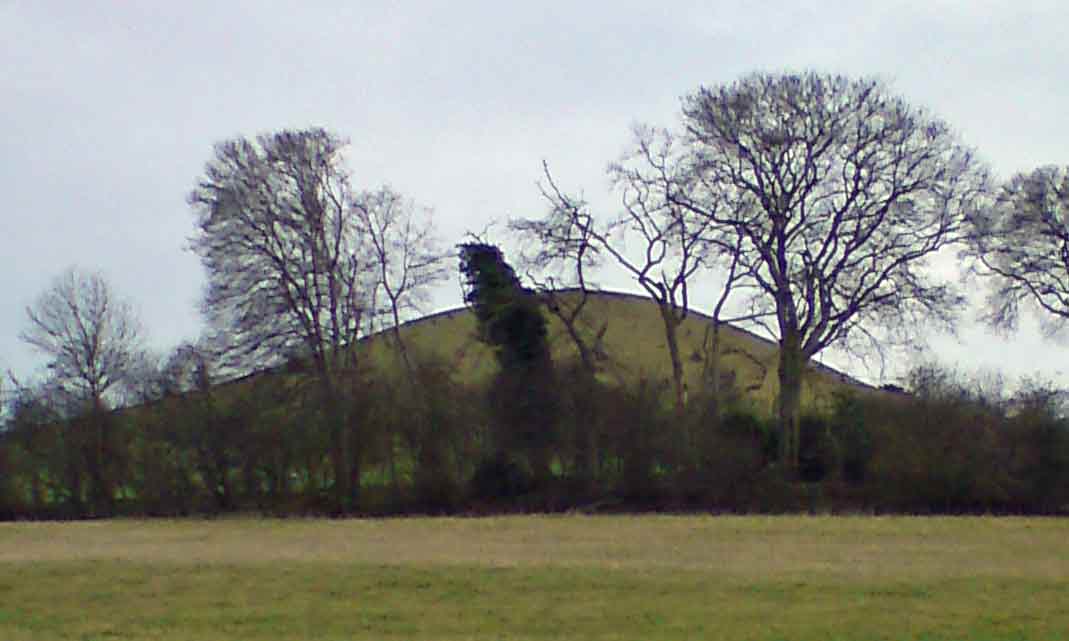
So I’ve been wondering why I’ve persisted with an androgynous, non-Germanic Christian name for a character who has little in common with stars of Hollywood slightly erotic film and TV (unlike Emma who’d clearly love that sort of thing). I realised that it’s blindingly obvious and goes back to the etymogical origins of the name as in Lord Kimberley. It comes from ancient English and means royal fortress and Kimberley (or Kimblerly) means field of the royal fortress — and they are both derived from the place name Kimble in Buckinghamshire, which itself was named after one of the most ancient English kings, Cymbeline, of the Shakespeare play and the remains of whose castle are still in evidence in a field in Little Kimble. (In a further twist to the power theme I think I’m right in saying that the land on which Cymbeline’s castle stands is actually part of the nearby Chequers estate.) I have to say I find something quite transcendent about the immediate vicinity of the castle — often the weather seems to change as you pass. Here’s an interesting ‘fact’ about the castle from a website on the Ridgeway, which passes close, as do both route of the 7,000 year Icknield Way — the most ancient road in Europe — ‘Legend has it that if you run  seven times round  Cymbeline’s Castle on the Chequers  Estate, the devil will appear’.

Cymbeline's Castle from a Distance

And The Angel pub is located in a fictional place that’s not too far away at all from Kimble. In fact The Swan at Great Kimble is one of the pubs which will lend attributes to The Angel. So Kim sticks for me because the name is so intrinsic to the location of the novel. I’d never twigged that before but it seems so obvious in retrospect. Of course, Kim is going to explore the area all around here and draw spiritual and psychic energy for her art. I’ll avoid her running round the castle a full seven times though or my careful plotting will go awry.

I’m working on making it plausibly German — perhaps an Anglicised contraction of her real German names or a conscious multi-culturally inspired identity?

Beacon Hill as Tor
Beacon Hill Doing A Good Impression of Glastonbury Tor

Looking for Inspiration

I wrote quite a bit in a short time up until the last Saturday workshop — around 7,000 words of the beginning of ‘The Angel — two sizeable chapters or perhaps three or four shorter ones. I tend to like shorter chapters myself when I’m reading a book — it leads to a feeling of having achieved more as a reader. However, the style I’ve written in tends to change point of view between James and Kim (in fact for the first chapter more than POV — the whole scene changes as they are apart). That might make for chapters that are too bitty or too obviously in parallel. No need to worry so much about that at the moment, though.

I also wrote about 4,000 words for Swan Supping — mainly a walk and the Beer Diet attached to a previous post — and submitted a 3,500 word assignment for my MSc. (However, there is a serial called ‘The Gravediggers’ Arms’ in Swan Supping, now in its fourth part, by a Charlie Mackle that concerns someone called James taking over a pub — a bit of a protoype for ‘The Angel’.) This probably came off worst in terms of quality. I’ve had it marked and got 60%, which is ok, but based on initial comments from my supervisor I’d hoped to bullshit a bit more effectively but she’d found me out in places and I realise I’ll need to put more time into the next one, which actually counts towards the course marks. Even so, I suppose I’ve taken the first steps to doing it, which is probably the biggest obstacle in these sort of things.

Given that about 3,000 words of The Angel’s extracts were written a week or two before then that’s about 11,000 words done in the space of just over a week. Since then I’ve found it quite difficult to get myself going again. I note from Bren Gosling’s latest blog post (that I note enviously was written from Sicily) that he’s also finding it difficult to start up again after the culmination of last term. In an effort to re-invigorate myself I’ve gone back and looked over the comments that coursemates made on the scripts of the extracts I read for my third reading, back at the end of February. That was two scenes — one of James and Emma looking over a spreadsheet about finances and one the fire scene with James and Kim. The comments were, without exception, really supportive and generous. Some queried a few practical things (volume of fire alarm, is dopamine a hormone? and so on) and made some constructive suggestions. A few comments recurred among several readers — ‘dialogue is always one of your strengths’, ‘the characters’ voices seem real’, ‘believe in the finance speak’, ‘fast-moving’, ‘a page turner’, ‘want to find out what happens next’, ‘deft and sly humour’ and there was also one comment that praised the prose, which I particularly liked as the writing wasn’t particularly showy in those sections. Most comments said this was the best section yet and how it was hitting its stride — which makes it all quite infuriating to find it quite difficult to make myself sit there and grind out more of it unless I have some deadline looming.

I’ve rewritten the ends of the two threads from James and Kim’s POV inside the tub carriage where he turns up on the morning he’s been fired to pay £500 for a painting that she tried to sell for £1,000 the night before at a viewing. This was the end of the chapter I submitted to Alison as my supposed 4,000 novel opening (it’s more likely to be the end of chapter one and start of chapter two). The rewritten part is just practical scene-setting for the 1,000 or so words I’ve managed since then. These, in themselves, tend to set up the rest of the day, which will be the long-anticipated bender (subject to much procrastination in writing terms). He’ll find out she’s in serious debt and she’ll reveal she makes ends meet by working some shifts in a pub (hardly on international art collector circuit money). I’ll also try to describe how Kim looks. It’s important that she’s not too good-looking but she has to have the capability of developing into someone he does find very attractive in the end (Jane Eyre similarities again). She’s also got to look fairly good from a distance in a soft-focus sort of way (I have some plot ideas about this) so he’ll get close up to her and find a few off-putting things like imperfect complexion, unhealthy pallor, bony face exaggerated by piercings and so on — all stuff that can gradually melt away.  

The bender scene will also pack in quite a lot of character exposition. I’m hoping I can get away with this by moving fast from location to location but I do have concerns that I’ll have perhaps an opening 15,000 words or so that almost entirely concentrates on the two principal characters over a period of about 30 hours in London. I raised this at my tutorial with Alison a week last Saturday and she seemed to think it was ok. I’ll end up following this introduction with an extended time period during which the two characters team up and build up their business, which will be quite a contrast. However, there will be quite a nice symmetry in that I plan the ending to be in London with a similar fast pace, though I may have to insert extra plot elements to bring it up to anything like 15,000 words.

Speaking of Alison’s tutorial, I specifically asked in advance about some concerns that I had and she replied in pencil on a printout of the e-mail in amusingly laconic fashion. ‘Is the scene with James fast-moving enough? ‘ [YES] ‘Are the ones with Kim on her own too slow?’ [OK — WITH EDITING — NB. I’m personally still a little concerned about these being static especially when I continue the action later in Village Underground.] ‘I’ve intercut the two threads in this extract and wonder whether this is a valid approach.’ [YES] ‘I’m also interested in what you make of the location for Kim — it’s a bit unusual but is it clear?’ [YES — GREAT]. And the real paranoid ‘is it any good question: ‘Overall, would this set up a story that readers would be interested in?’ [YES]. So I take all that as not a bad endorsement and really a call for myself to bloody get on with it.