The Hokey Cokey seems to possess the same level of serious reasoning as did last week’s unconvincing and desperately tactical David Cameron speech on an ‘in-out’ referendum on British membership of the EU. His gambling with the country’s political relationship with its nearest neighbours and biggest trading partners infuriated and depressed me but it may not be such a bad thing for my novel Contrary to his short-termist intentions, I suspect he’s raised the political profile of one of its main themes.
While there’s little overtly political in the novel (or this blog), the plot and characters unavoidably raise issues regarding Britain’s relationship with Europe (and, to some extent, the rest of the world). The novel also goes further – highlighting the differences between London and the rest of the UK – which are probably more marked in many significant ways than between London and other European capitals. That London is both an amazing cosmopolitan city as well as the country’s capital is something that Cameron is likely to be aware of himself. But this is a realisation that the engineering of this referendum is designed to disguise in its simplistic pandering to the those holed up in the Home Counties who see London in terms of bearskins and red phone boxes.

So, if Cameron’s speech provokes a prolonged debate the differences between ‘us’ Brits and ‘the foreigners over there’ then the novel might happily chime in with the cultural zeitgeist (how backbench Tories and UKIP must hate that word) – at least in the run-up to the election.
The Angel’s two protagonists, Kim and James, are German and English respectively. She sees herself primarily as a European, influenced by her university experiences in Berlin, but like many Europeans I’ve met myself recently in London, she’s also a committed anglophile who loves the city’s cultural diversity and unrivalled artistic opportunities. Being absolutely fluent in English, there’s no reason she sees to prevent her living here for the rest of her life.
James could only be English – on one hand a rugby-playing bloke but intelligent and enquiring with a self-deprecating attitude to British culture that’s led him into a fascination with the sophistication of Europe. In his case he has a voracious appetite for the techniques of French and Italian cooking and is beguiled but intimidated by modern art.
In a reflection of its setting and the times, the novel also has plenty of other ‘foreign’ characters — Poles, a Romanian, an American and others – and they aren’t just confined to London. However, Kim finds that attitudes can be quite different in the English commuter countryside – the kind of seats represented by the Eurosceptic Tory MPs who sadly seem to have forced Cameron’s hand into the current bodge.
(In reality, the setting for The Angel could well be David Lidington’s Aylesbury seat. Ironically he’s the current Minister for Europe and will be tasked with the thankless task of trying to dream up what on earth to renegotiate with the EU. I know he’s not actually a rabid xenophobe, having met him in person quite a few times – I know him well enough to have exchanged hellos in St. James’s Park.)
She is at first amazed, but quickly becomes accustomed, to being quizzed by amateur enthusiasts about German military strategy in the Second World War – a conflict she thinks has as much relevance to her as the Battle of Hastings does to the English. During the novel she develops a deeper understanding of English character and how that has influenced the culture of London she so value. But, equally, with her über-liberal Shoreditch and Hackney beliefs and behaviour she challenges and changes the reactionary UKIP sympathies of the middle England types — not just towards Europe but also towards their other traditionalist cultural mores.
In common with, I’d guess, the vast majority of most of the EU citizens who fill the tubes and buses in London, Kim would be incredulous that a vote on the UK leaving the EU could seriously be contemplated, especially as it is so contrary to her everyday experiences.
She’d find the referendum prospect unsettling, as well as irrelevant, grudging and ungrateful – not necessarily at face value but for the insular, sneering saloon bar bigotry that oozes from the pores of some of its xenophobic proponents. Also, thinking of an episode of German history that she does know well, as an entartete Künstlerin she’d worry about the divisive cultural implications of ‘us and them’ attitudes, which could be the thin end of a very nasty wedge.
Not that Kim thinks the core EU countries have got everything right. After all she’s moved to London and likes it here on the periphery outside the Euro and the Schengen Zone.
It’s more that, as someone who sees the wider picture, she despairs when short-term politicking and parochial, self-delusion threatens the relative harmony of one of the most remarkable achievements in history. A previously fractious continent that spent much of the first half of the last century destroying itself has peacefully worked together — and if the worst thing the Eurosceptics can say is the EU prevents our junior doctors working a hundred hours a week then that can’t be too bad. She’d agree with the Swedish Prime Minister who tweeted in response to Cameron: ‘Flexibility sounds fine, but if you open up to a 28-speed Europe, at the end of the day there is no Europe at all. Just a mess.’
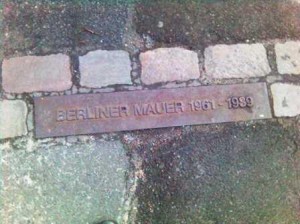
Also, part of her predicament at the start of the novel is a result of the huge amount of immigration into London in the past few years – as an artist she’s being priced out of even the lower-cost areas of the capital.
As I mentioned in a previous post, when I told the German organiser of an exhibition in Shoreditch of German artists that I was writing a novel about a German artist working in Shoreditch, the first thing he asked was what she did for money. When I said she lived in Homerton, he said that was still expensive for an artist (perhaps why all of the artists he represented hadn’t made a move to London).
I was talking about rents for rooms in shared houses with my ex-City course-mates last week (we had lunch at an Old Street restaurant so trendy the chefs wore trilby hats). Apparently in Hackney rooms in unlovely shared houses are going for the upper hundreds per month – a very significant chunk of a yet-to-be established artist’s income.
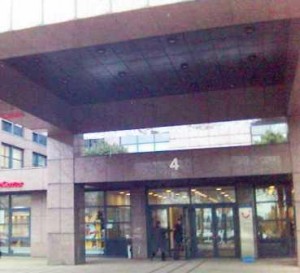
Part of the reason the novel has a European theme is that I worked for nine years for the corporate headquarters of a pan-European company. For most of that time it was German owned — a member of the Frankfurt DAX30. I mostly had German managers and got to know many German colleagues very well. In fact one of the reasons why I was recruited was that it was thought I’d ‘get on well with the Germans’.
For years I travelled on average every other week to Europe, – usually walking into work through the impressive marble lobby in Hanover (it also had a conference room suite featuring modern artworks). But I also visited virtually every other large Germany city and most other large European capital cities (as well as out of the way places like Oostende and Enschede and debauched conferences in Tenerife and Dubrovnik that provided almost enough material for novels in themselves).
But more tediously, it was often my job to try and sit in meetings and try to get all the nationalities to agree on something — usually a common approach to an IT project. One English colleague compared my job with being an EU negotiator, which to him was his idea of purgatory (there were quite a number who were peeved for years that the British company had been taken over by The Bloody Germans).
One of my tasks was to look beyond the bluster and try to identify what were true cultural differences between countries’ markets and what was common to all — which where the value is unlocked in multi-national companies and the EU itself but it also threatens comfortable vested interests.
Often people argued that they should be allowed to do whatever they liked in their countries because they were just so unique. At a peer level, there wasn’t much voluntary co-operation and the countries only tended to reach collective agreement when either offered cash to do so or be told so by the Vorstand (the board), who crucially had the power to fire a country’s manager. That’s why the idea of a looser, á la carte EU seems like a pipedream to me (and most intelligent Eurosceptics know it).
It was often infuriating but was always fascinating to observe national cultural differences – which sometimes lived up to stereotypes (often, one suspected, intentionally) .
- The Germans wanted everyone to do things their way – but were so sensitive to accusations of bulldozing their preferences through that they were prepared to argue endlessly until they achieved what they thought was a consensus (usually via attrition).
- It was hard to get the French to turn up – they thought if they didn’t show then they could carry on doing what the hell they liked, which is what they always did anyway.
- The Belgians and Dutch participated like good Europeans but took a delight in being as awkward as they could to the Germans.
- The Scandinavians were organised and a little aloof, often taking pleasure in showing how they’d quietly been beavering away and come up with a solution in Stockholm in the time everyone had been holding meetings elsewhere just to talk about doing it.
- The British politely endured the protracted debates beloved of the Germans but then would react by then trying to prove them wrong by going out and wasting loads of money by ‘doing something’ in the sake of Anglo-Saxon entrepreneurialism – even if the JFDI attitude always resulted in some pathetic cowboy joke of a solution that was doomed to failure. This played into the hands of the Germans — who ended up winning most decisions just by tenacity and doggedness (perhaps that’s a metaphor for the EU as a whole?).
But it was almost taken for granted that we all conducted our meetings in English. The Germans occasionally talked amongst themselves in German but this had the disadvantage that the Dutch could usually understand them. It’s ironic that, probably more than political or economic union or the Euro, what has bound the countries of Europe closer together at a practical and a commercial level is the ubiquity of the English language, which despite its inconsistencies and irregularities can be understood, even if spoken quite basically.
Proficiency in English is a source of great pride to the northern Europeans, in particular, and being less than fluent was a large career barrier. I noticed that most Germans I met who’d been born after the mid-1970s were exceptionally fluent in English — even speaking with a slight American accent. Dutch and Scandinavians of all ages were completely fluent.
I’m in awe of all the Europeans who speak and write English so beautifully and precisely, although I was always surprised at the amount of English used natively within Europe. It’s quite common to see German billboards or products displaying some English word prominently – like, ‘Cool!’ or ‘Sexy’ – and only have the small print in German.
And, of course, a large proportion of popular entertainment – songs on the radio, films and TV and a lot of books – are either in English or dubbed or translated. In this vital regard Europe looks towards the UK – and the Olympics didn’t do this any harm. In today’s Times (firewalled) there was a story about how the Spanish have fallen in love with all things British to the extent that some middle-class parents speak exclusively to their children in English.
Native speakers, because we don’t have the near necessity of learning English to be able to interact with other Europeans, probably take a lot else for granted in terms of cross-European co-operation. The golf club Farages have no comprehension of how the single market (which even they are not lunatic enough to want to leave) only works because of the standardisations, agreements and protocols that have to be agreed.
For a small island on the edge of Europe, Britain has had an astonishing and incredibly positive effect on the rest of the continent – as is evidenced by the huge numbers of EU citizens who want to take advantage of their right to live here (especially the huge numbers of French in London). And I think this is appreciated by the vast majority of UK voters who don’t see Europe as anything like the issue that Cameron seems to suppose.
(Such is the way democracy works, many Tory MPs in safe seats know the threat to their own longevity comes not from the electorate but the ageing reactionaries who form their constituency selection committees – and does Cameron really think these people are going to be appeased enough by his referendum promise to drop their opposition to his more liberal policies, like gay marriage? Similarly, most British newspapers have no influence outside the UK, so their proprietors certainly favour more power to be ‘repatriated’ to the politicians they are able to lobby for their own interests.)
Because of the undisguised schadenfreude (oops another foreign word) with which the Euro’s troubles have been viewed by the Eurosceptic lobby, there’s no chance of the UK joining monetary union, meaning a de facto two speed Europe is already evolving. I cannot see any constructive reason for Cameron to then bring up the question of Britain doing anything so destructive to its self-interest.
It’s also ironic that the likes of UKIP and the extreme Europhobes tend to be those who go on endlessly, seventy years after the event, spouting about the bulldog spirit of the Second World War in order to justify an isolationist attitude to Europe. When they invoke this country’s ‘finest hour’, don’t they realise that was when Churchill vowed to fight back to make to make Europe a better place? ‘If we can stand up to [Hitler], all Europe may be freed and the life of the world may move forward into broad, sunlit uplands.’ And with the anniversary of the start of the First World War looming next year, the cemeteries in France and Belgium full of British white crosses are testament to this country’s ultimate commitment to Europe – now we’re in the broad, sunlit uplands, that’s something far too important to throw around in party political games.