Olympic Legacy?

The last few postings on this blog have been about the fast-fading memories of the 2012 Olympics and it might be asked what relevance  photos and discussions about the Olympics have for blog about writing a novel. Fair question — but I’d reply ‘everything’.
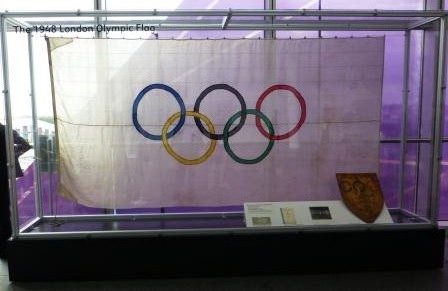
The Flag from the 1948 Olympics (and Possibly the 1936 Games) -- Wembley Stadium
The Flag from the 1948 Olympics (and Possibly the 1936 Games) — Wembley Stadium

One of the novel’s themes is identity — one of the two protagonists is non-British but sees herself as a Londoner. One source of conflict is how she deals with the difference between London and the rest of Britain — the cosmopolitan international city contrasted with the timeless English landscapes only forty miles away (and less than an hour and a half’s travelling time as I demonstrated with a nifty one train, two tube and car journey away from Blackfriars after coming into London on a Sunday for the women’s marathon).

It’s also been fascinating, from a writer’s perspective, to observe how the city has been
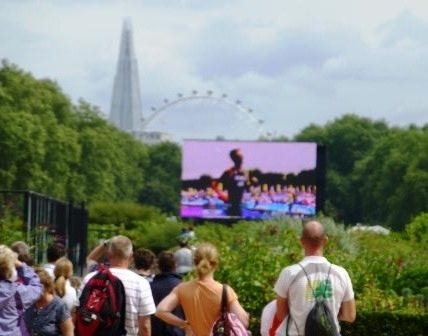
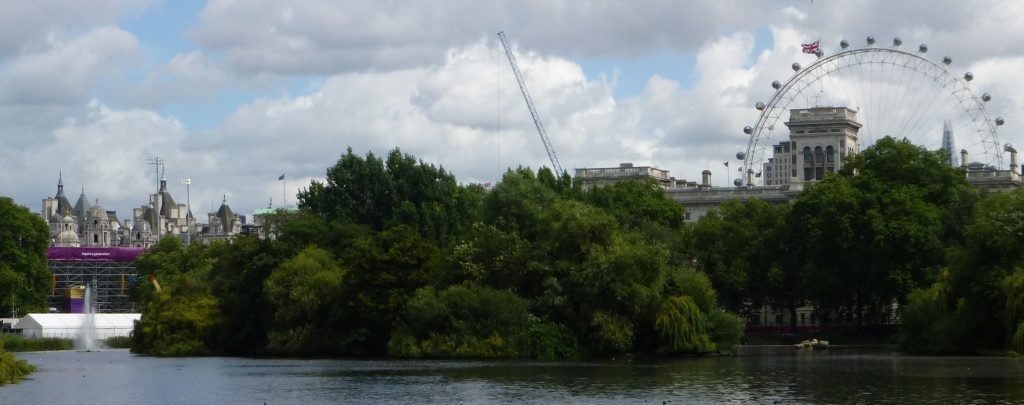
Three Modern Icons of London -- The Shard, the London Eye and Johnny Brownlee Getting Triathlon Bronze on the Big Screen
Three Modern Icons of London — The Shard, the London Eye and Johnny Brownlee Getting Triathlon Bronze on the Big Screen

transformed from the territory of sharp-elbowed suits into a uniquely welcoming environment. The streets and tubes have been full of people obviously enjoying themselves so much — not just international tourists but plenty of British visitors who’ve come to enjoy London. It’s wonderful to see the pleasure people take in being photographed next to Big Ben, Buckingham Palace or, bizarrely, some of the Wenlock and Mandeville figures that have been dotted around London on the Mayor of London’s strolls.

Perhaps my favourite aspect of the Olympic and Paralympic period has been the almost ubiquitous ‘games makers’. I’ve travelled to plenty of tourist cities (I used to work for British Airways) but I’ve never seen anything remotely like this small army of volunteers in stations, tourist sights and near Olympic venues whose sole objective is to welcome and help people to the city.
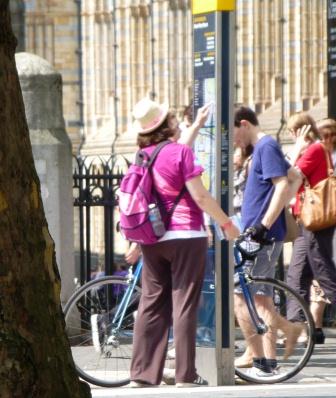
A Games Maker Points The Way -- Exhibition Road
A Games Maker Points The Way — Exhibition Road

And they’re still doing it. I was given a free copy of this week’s Time Out by a games maker in Covent Garden this week and the ‘Boris’ maps they’re handing out are brilliant.

Whenever I’ve seen the volunteers I’ve feel completely humbled — and grateful that they’re giving such a good impression of the country to visitors that are here. This parallels the incredibly positive image of London that’s been projected via the Olympic media coverage to people around the world.

I wondered how long the interest in London would last after the Olympics but they appear to have been so successful that London will retain its interest as a city for a very long time for people all over the world.

One of the most intriguing aspects of the Olympics is how much London 2012 would
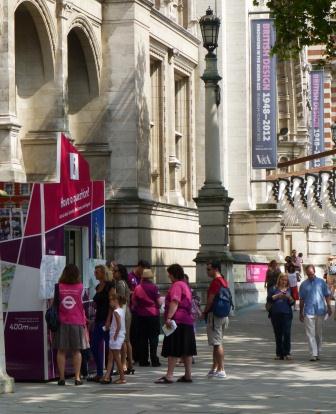
Do You Have A Question? Outside the V&A

represent the rest of the country – London being seen by the rest of the country already as something apart and privileged (albeit that the Olympic Park is situated in some of the poorest boroughs of the country on any measure). This could have been a valid criticism until the medals started coming in and that the importance of achievement on home soil was — and our first wasYorkshire’s Lizzie Armitstead’s silver on Sunday in the women’s cycle road race (of which I saw the start and almost finish – see photos on my Olympic photo page).

The athletes who ‘medalled’ (to use that jarring verb-noun mutation) have come from all parts of the country — from Jessica Ennis’s Sheffield to Andy Murray’s Dunblane to Ben Ainslie’s Cornwall to Greg Rutherford’s prosaic Milton Keynes.

It was weird for me to discover that Mo Farah comes from Feltham (where I worked for four years and used to drive past Farah’s school almost every night) and that he trained at St. Mary’s College in Strawberry Hill, Twickenham for ten years, while I was living just up the road.  My personal connections are tenuous at best but I guess millions of people are doing the same up and down the country — which hopefully proves a point about a sense of ownership.
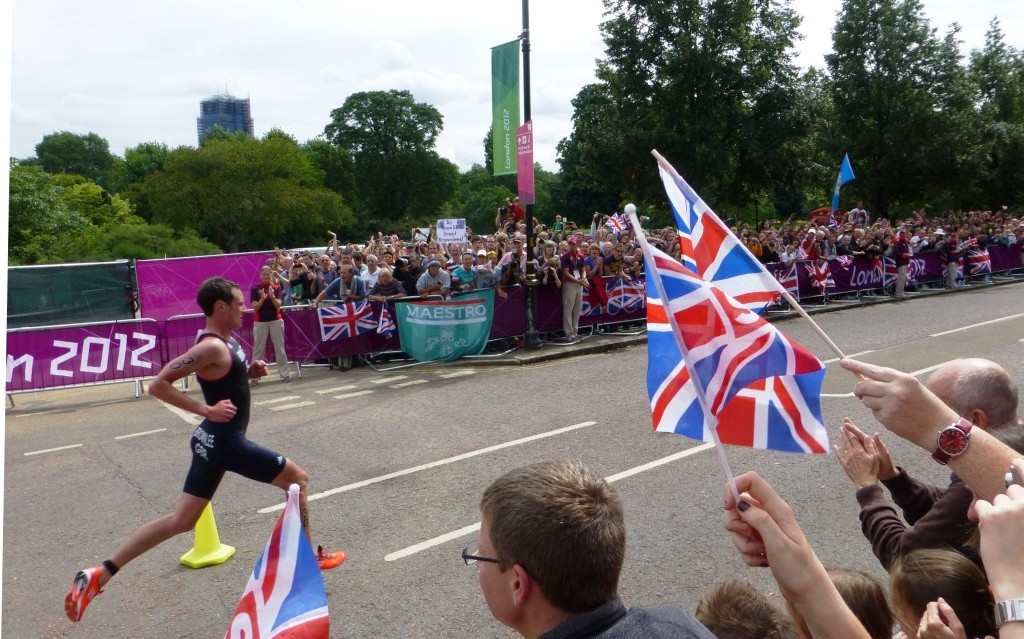
Alistair Brownlee Running Towards His Gold in the Triathlon

The theme of identity — the question of ‘who are “we”‘ — might perhaps be the most lasting legacy of these Olympic games (and ‘we’ as the British appear to be extraordinarily unified, at least from the media coverage) — and that’s a big issue in my novel.

Setting is also important in the novel. I’m not sure why but I was on the Jubilee Line heading for Westminster to find a place to watch the women’s marathon and I decided to switch at Bond Street to the Central Line and head to St. Paul’s instead. Co-incidentally, I’ve been revising a part of the novel where my characters walk around St. Paul’s, which was a good move in terms of getting good places to watch the runners come past. The marathon route followed closely, if not identically, the route that my characters take around the Blackfriars/St. Paul’s area.
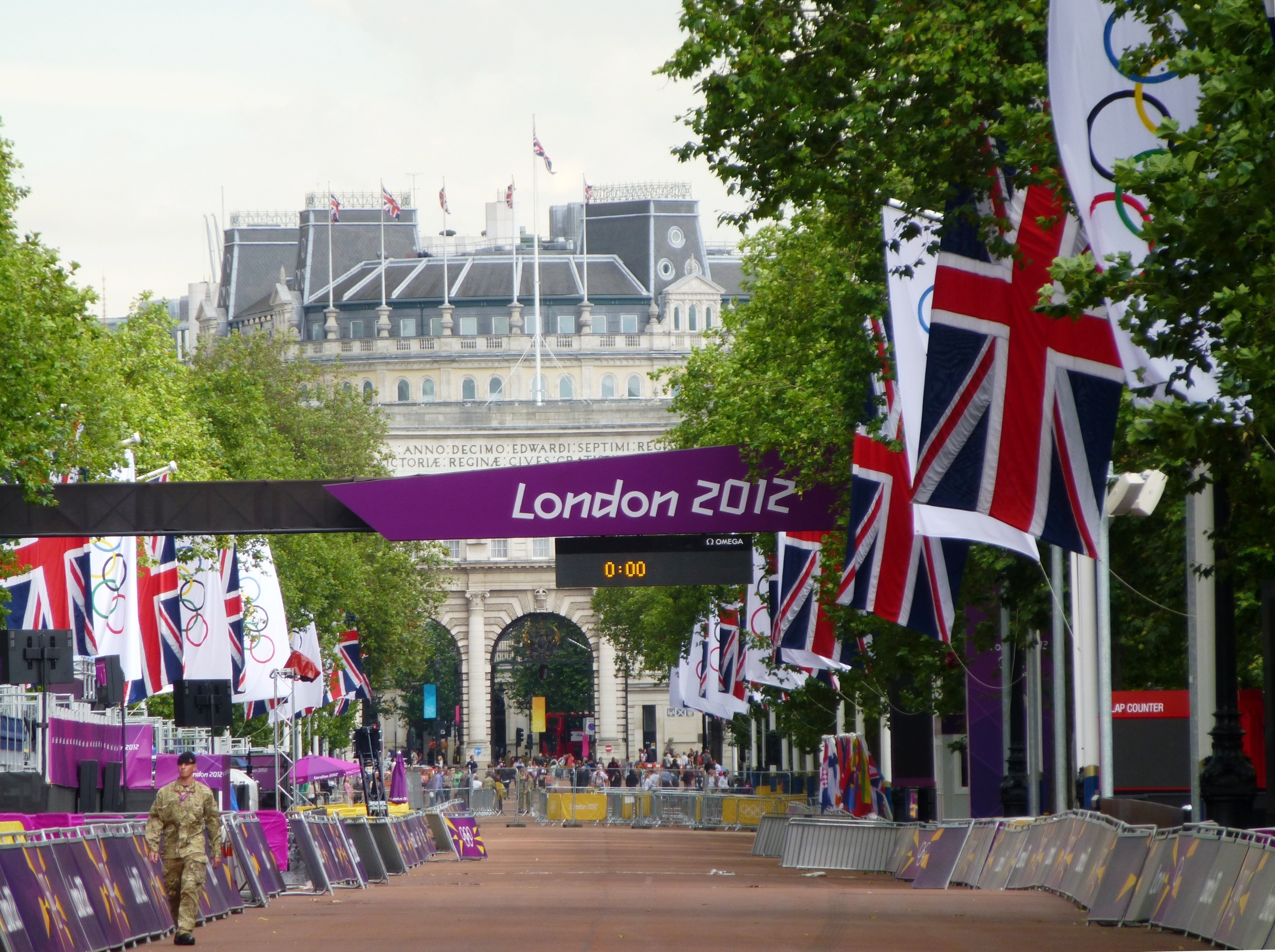
The Finish Line on the Mall

Sport is also drama in a very pure sense — with commentators and competitors using the same lexicon as writers do about constructing narrative — with expectations, twists and tuns, surprises, sub-plots, etc,.

The BBC are very good at creating montages of these sporting moments but, for me, there was one that transcended them all. It was when Gemma Gibbons, the Judo player from Charlton, exceeded her expectations by winning her semi-final bout with a single move. She started crying and looked upwards, mouthing ‘I love you, mum’. Her mother died of leukaemia eight years before, having pushed her daughter into starting her judo career. It was a candid moment that must have made anyone who’s ever lost a parent break sown in a similar way.
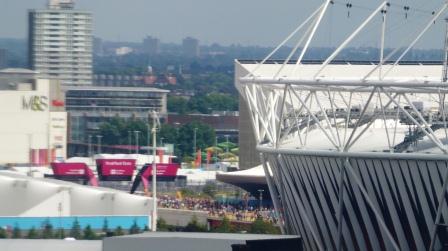
Some Very Lucky People Down There

Then there’s the parallel of novel writing with sporting achievement. I was reading a conversation on Twitter today between some literary agents who were making the point to writers that novel writing is more like a marathon than any other event, which certainly seems true in my case.

There are plenty of parallels between these athletes training away in anti-social hours for four years and undiscovered writers who similarly toil with no guarantee of reward for their efforts — and also of the odds against achieving success. I’m not sure they stand up in detail but there are certainly morals of perseverance, determination and self-belief that can apply to writers as much as athletes.
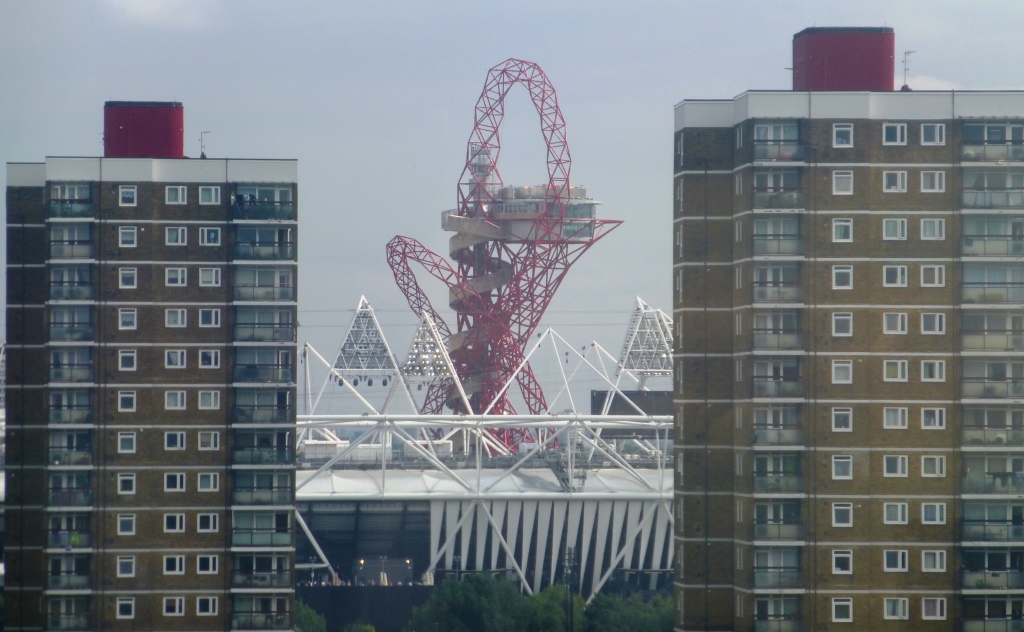
The East End -- Then and Now
The East End — Then and Now (from the BT Observation Wheel, Victoria Park, Hackney)

But one thing Olympic athletes have that writers don’t is an organisation like Sport England — whose various programmes in identifying talent have given financial and coaching support to those they’ve identified as having promise. That’s the opposite of the literary world where writers invest in their own training and there’s comparatively tiny government funding to help nurture new talent.

Coming third in the medal table, perhaps the sporting approach works?
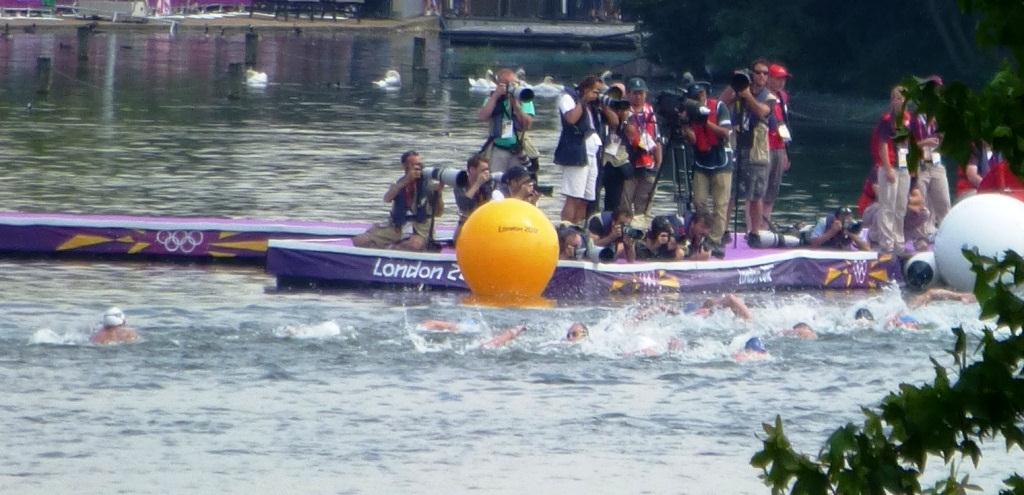
Mad Men in the Serpentine

Bonkers

The Hottest Ticket in Town

While ‘unbelievable’ seemed to be the word applied an unbelievable number of times to British sporting achievements, ‘bonkers’ seems the  most appropriate description to apply to the cultural and social impact of the Olympics – especially after that closing ceremony. Its astonishingly uninhibited chaos mixed flashes of genius with the heroically tacky and cheesy – and slightly sadly probably showed a more accurate reflection of British popular culture than the mesmerising Opening Ceremony.

It feels a world away now but the Opening Ceremony set the tone for what appeared to me to be a staggering transformation in the collective mood – certainly in London.

London 2012 -- Doubters
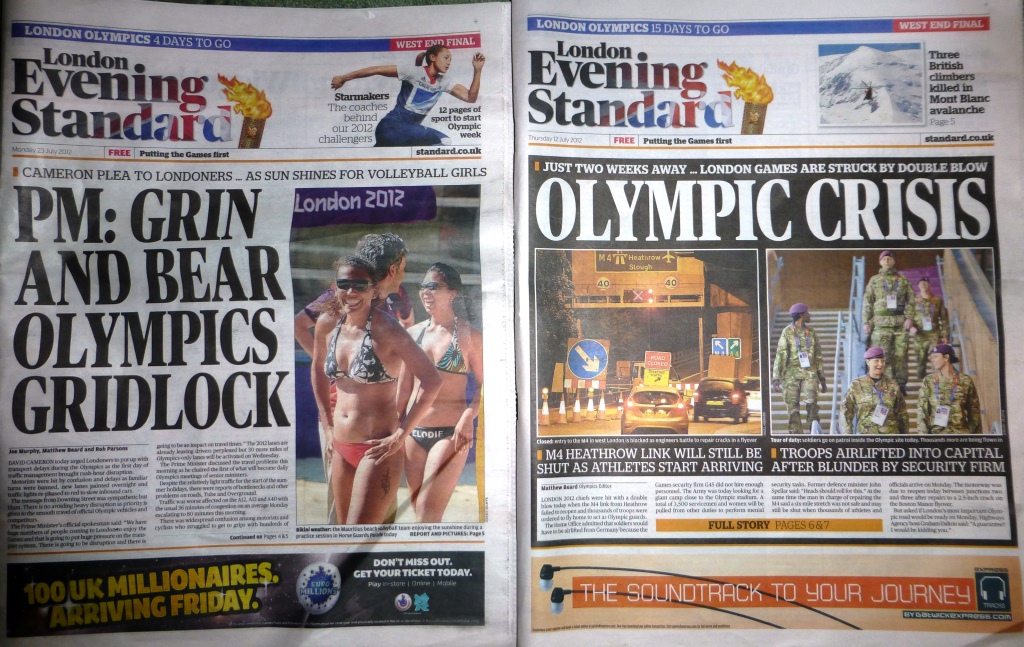
What We Were Warned About.

What seemed to make the change in mood of the last couple of weeks genuine — and profoundly touching — was the collective astonishment – we couldn’t believe that we were pulling it off.

Beyond the worries about crowding and traffic there were at least a couple of major problems that could have occurred at this Olympics: terrorism and rioting. Fortunately neither the events of July 2005 or August 2011 were repeated. But we all collectively held our breath and by the end of the games all the doubts, warnings and cynicism were forgotten. Instead we all went bonkers.

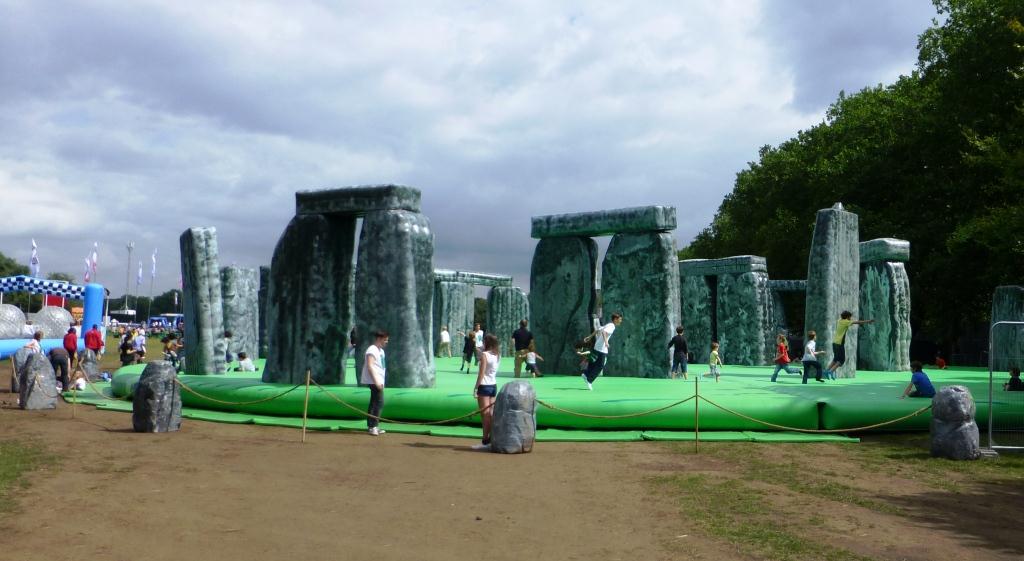
Walking around LondonI was reminded of the title of the Jeremy Deller retrospective earlier this year at the Heyward Gallery – Joy in People. And very serendipitously I came across Sacrilege, Deller’s bouncy castle Stonehenge in Victoria Park, Hackney (it only stayed a day in any one place inLondon on its cultural Olympiad tour). I also saw another piece of British bonkerness in Victoria Park – the eccentric Universal Tea Machine.

Jeremy Deller's 'Sacrilege' -- Victoria Park, Hackney
Jeremy Deller’s ‘Sacrilege’ — Victoria Park, Hackney

Back to the Opening Ceremony, the first point when I realised that I was watching something really spectacular was an overhead shot of the molten iron circle being symbolically beaten by foundry workers. I thought ‘Hold on that looks a bit familiar’ and the shot cut to two glowing objects moving overhead from the edges of the stadium. Then the molten ring lifted and everyone knows what happened next — the Olympic Rings of Fire were assembled above the stadium.

(I haven’t heard it mentioned elsewhere but I picked up a definite nod to Tolkien’s Lord of the Rings with the green and pleasant land turning into a furnace of fire-beaten rings.)

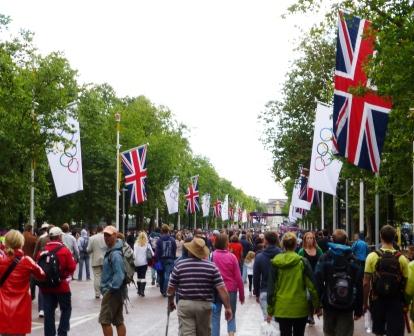
The Mall As It's Never Been Before
The Mall As It’s Never Been Before

More anything else, for me,  in the incredible show, it summed up the essence of creativity — taking a symbol as familiar as the Olympic rings and presenting it in an entirely new, innovative way. It was as masterful as reading the denouement of a brilliantly plotted novel — a moment of unexpected, revelatory insight into what came before.

The Opening Ceremony drew on skills in which it was generally acknowledged that Britain was almost uniquely good at – creativity, innovation, contemporary music and design. Although with Britain third in the medal table (and writing just after the closing ceremony) perhaps we should put sport higher on our list of national strengths.

Skills in which Britain leads the world – such as advertising and television – both based on the creative manipulation of imagery – and this has been transferred to the games. It’s amazing to consider the attention to detail involved in London 2012’s branding. The presentation of the venue has been amazing.

The colour scheming of the games has been meticulous – and brilliantly successful in an understated way. The largely restrained palate of colours used for the games was clever: an aqua blue, orange, yellow and the two most prominent – the bright pink and deep purple. These colours don’t clash with many, if any, flags and they simultaneously convey both excitement and informality (the pink) with a stately  self-assured competence (purple).

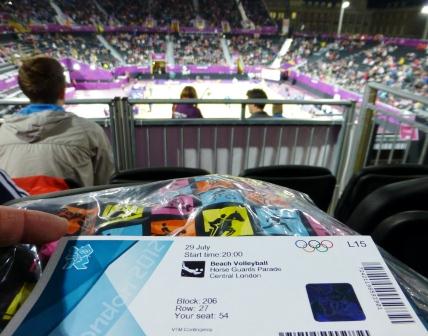
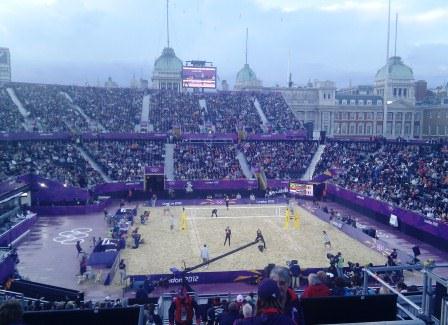
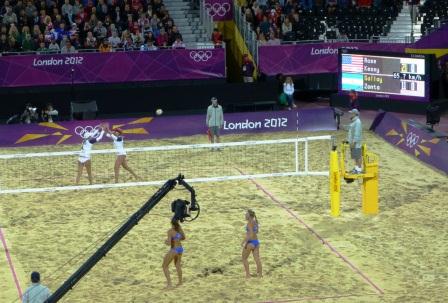
What An Arena -- Beach Volleyball on Horse Guards Parade
What An Arena — Beach Volleyball on Horse Guards Parade

No venue has used design to appear as stunning as the unlikely temporary beach volleyball arena on Horse Guards Parade, which I was lucky enough to get tickets for on the first Sunday of the games. It’s a shame the security fences mean that it’s been difficult for non-ticket holders to get a view of the stadium.

It has seated an incredible 15,000 people and was constructed in the few weeks between Trooping the Colour and the Olympics – and I can say from personal experience it was no ramshackle affair. It had to be solidly built to cope with the energies of the crazed, conga-dancing crowd.

The Horse Guards Conga -- It Felt This Blurry Too
The Horse Guards Conga — It Felt This Blurry Too

Beach volleyball has been one of the revelations of these Olympics – I’ve read several newspaper articles which, in pre-Olympic times, might have sneered at the event’s supposed frivolous, if not outright exploitative, image but they’ve all concluded that the Horse Guards stadium has provided wonderful entertainment – and that the players are also serious athletes.

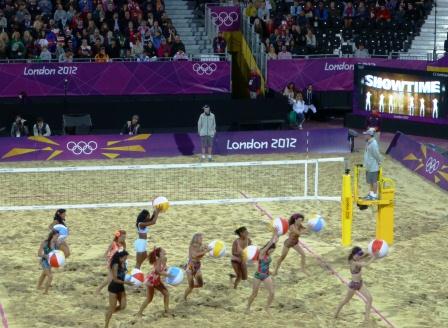
I’m normally someone who would run a mile from an event with cheerleaders and similarly mandatory jollity. But faced with the rather un-British beach and tan culture. Londonreacted in the best of British traditions – it took the piss out of it. The staging of the event was staged with such exuberantly over-the-top genius that it even used the Benny Hill theme tune – not to accompany the knowingly camp dancers but for the volunteers who levelled the sand – ‘The Rakers’ (who sounds like an American college basketball team).

The Cheerleaders Play With Their Balls

The atmosphere was infectiously surreal – four second blasts of music accompanying the action and absurd crowd participation (a bizarrely eclectic mix of Blur, LMFAO, the Beach Boys and, of course, Dizzee Rascal himself), I doubt many London audiences would jump out of their seats as readily to perform a huge conga around the stadium and when Madness’s One Step Beyond boomed around the seat of British government at 11pm on a Sunday night there were 15,000 pairs of arms moving up and down in unison.

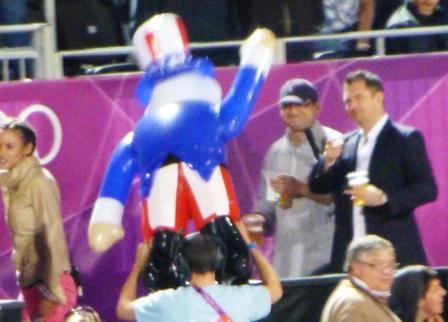
Uncle Sam at the Beach Volleyball
Uncle Sam Made An Appearance at the Beach Volleyball

After a while  the over-the-top announcer’s voice became extremely familiar and once the penny dropped there was no doubt – it was the man himself – Peter Dickson – the ridiculously hyperbolic Voice-Over Man from the X-Factor, Britain’s Got Talent and many other programmes. He’s the voice that always seems to announce that this week’s warbler is the ‘biggest selling female artist in the history of the universe’.

USA v Argentina -- The Sporting Action
USA v Argentina — The Sporting Action

Like everything associated with the rest of the event, Peter Dickson hammed it up spectacularly: ‘I hear the Prime Minister has an early morning tomorrow and he’s asking if we’ll we turn the noise down?’ (Incredibly cheesy but the bizarre location demanded it.) No guessing what the crowd’s answer was.

The setting of Horse Guard’s parade, with the purple-decked stadium, a rectangle of beach sand in its centre and Nelson’s column, Horse Guards, Big Ben and the London Eye visible on the skyline provided an iconic image.

Sitting in the ‘Downing Street End’ of the stadium I wondered what other country would site a beach volleyball stadium within 50 yards of its government’s centre of executive power? Only one that was bonkers. And that sums up the genius of these Olympic games: I had one of the most enjoyable nights of entertainment I can remember in a long time.

There are 15,000 Crazed People Lurking on the Left

And Were We Ready?

I posted my last blog post about 30 minutes before the Opening Ceremony of London 2012 a little misty-eyed with expectation and anticipation.

It feels like an awful long time ago now but, walking around central London, I’d had the feeling that the rhythm of the preparations in London had started to step up to a point where there was an odd conjunction of the organisational pulse quickening and the rest of the city relaxing into a mood that is probably best described as ‘joyous’ (an instance where Seb Coe’s choice of adjective was perfect – no Twenty-Twelve management speak). It felt exciting – as if we could really allow ourselves to believe that London was on the brink of staging something momentous.

And it did. It bloody well did.

Boris Johnson’s ‘are we ready’ speech has been answered with one yes after another. London has delivered beyond perhaps anyone’s expectations.

These 2012 Olympics have been absolutely wonderful – brilliantly conceived and executed. I’ve enjoyed this last two weeks so much and I’ve loved almost every aspect of the games.

In fact, as far as the purposes of this blog are concerned, I’ve loved it too way too much — my writing has virtually gone on hold as I’ve watched the events on television and mingled with the crowds in London and taken in as many of the events as I could (two ticketed and four of the free events). I’ve drafted long blog posts on what I’ve enjoyed but been to busy enjoying the events to edit them (hopefully I can post some more before the end of the games).

So in writing terms, I’ve been a little like Phillips Idowu – I’ve gone AWOL. I’ve done some revising but missed yet another notional self-imposed deadline for getting my first draft edited down.

But, to look at things in the zeitgeist of national positivity, I’ll never get the chance again to experience the city that the novel’s largely about in such a uniquely relaxed, celebratory mood – and to enjoy a genuine mood of euphoria which, after all, isn’t often something that features in many novels. So I’m convincing myself it’s writerly time well spent.

I’ve taken loads of photos — some of which I’ll use in later posts — but I’ve put them all on a page in the blog to give a visual impression of what I’ve been enjoying so much (there are a few surprisingly good ones). Click here to view.