Chilling Out with Kim

I’m currently sitting opposite the Pacific Ocean in one of the most pleasant and laid-back places in the world — Santa Barbara’s beachfront. However, I’m not doing a touristy travelogue and my enjoyment of the relaxed atmosphere is interspersed with virtual panic-attacks about the amount of money it costs to be here.

But I’m here because this place (as very attentive readers of this blog may have realised)  is somewhere that’s ingrained in my psyche as I spent an academic year here as part of my undergraduate degree course — although it wasn’t here in chic downtown Santa Barbara (see photo below — taken from my hotel balcony) but the more rough-and-ready student ghetto of Isla Vista.
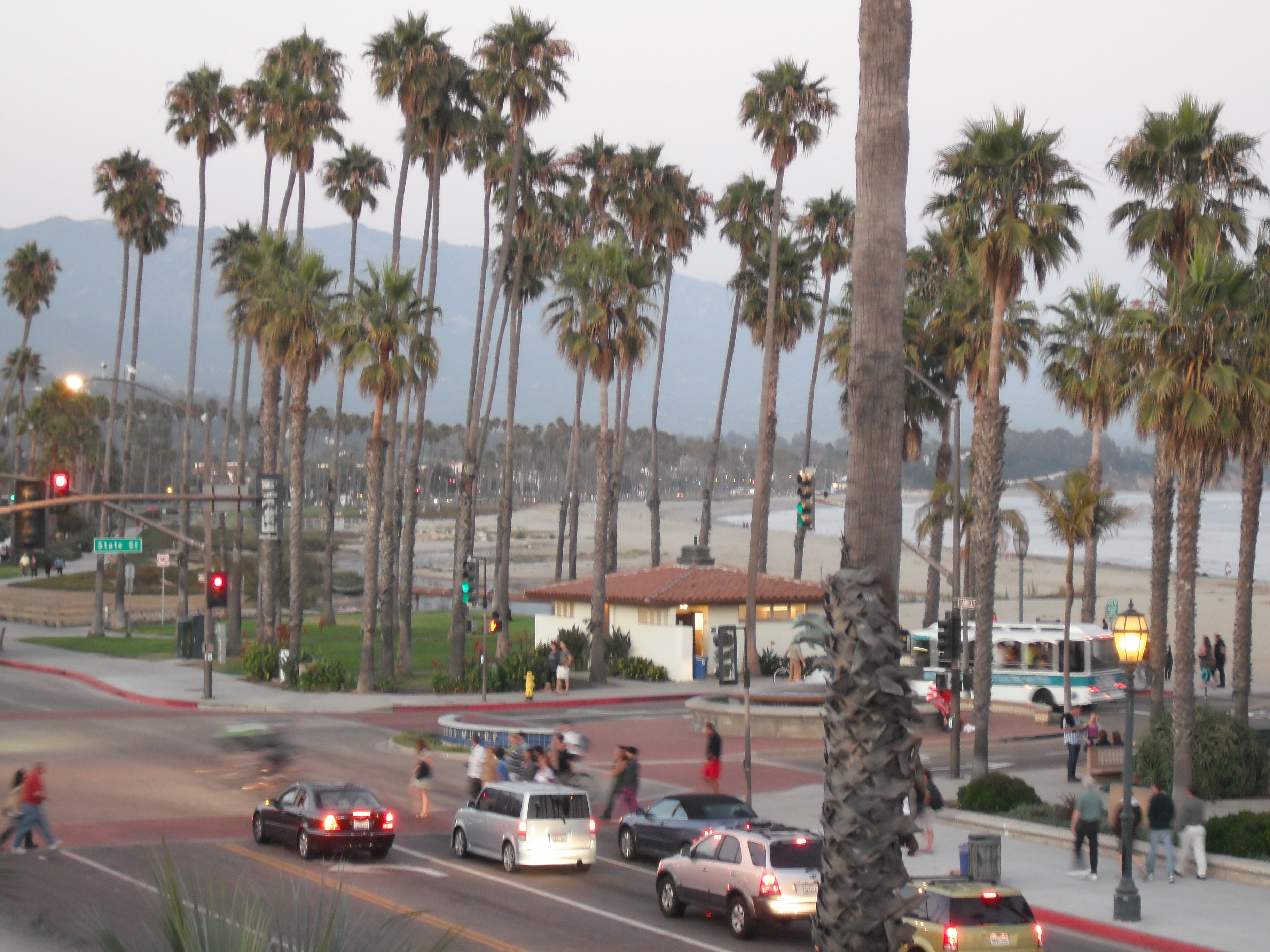
Cabrillo Boulevard, Santa Barbara

Isla Vista is a community of at least 10,000 students (possibly many more) and very few other people. I ended up living almost in the middle of it — in an apartment that bordered on its central business district (if that’s what various student bookshops, liquor stores, fast food businesses and so on can be called).

While this sounds quite anarchic and hedonistic, I probably reacted against it all to a large extent when I arrived — for one thing I was so young that it was illegal for me to buy alcohol, which was something very constricting for someone on the third year of a British university course.

I’m quite astounded now at how I managed to cope — aged 20 — being deposited on the other side of the globe in the days before the internet and e-mail. This was when phone calls home were so expensive you made them once a month and when national news came via the reading room of the university library’s periodical collection rather than a few clicks on a computer.

Perhaps, if anything, this experience of being transplanted between cultures has given me an appreciation of what British culture looks like from the outside — which is perhaps a theme of the novel.

Moreover, while it sits at odds with my northern English upbringing and redbrick (British) university roots, there’s always going to be something in me of the chilled-out Californian. I spent the best part of a year with the TV stations I watched most being the local KEYT Santa Barbara ABC franchise but also the local Los Angeles stations — while the names of suburbs in LA might seem a little random to many with a superficial knowledge of the area, I’ve gained mine from effectively being a local for a year.

Not that this has much to do at all with the profoundly English themes in my novel but hopefully the work I did here in Santa Barbara (especially the screenwriting courses) will seep subconsciously into the novel — or perhaps more overtly as I’m wondering about converting a character into a Californian.
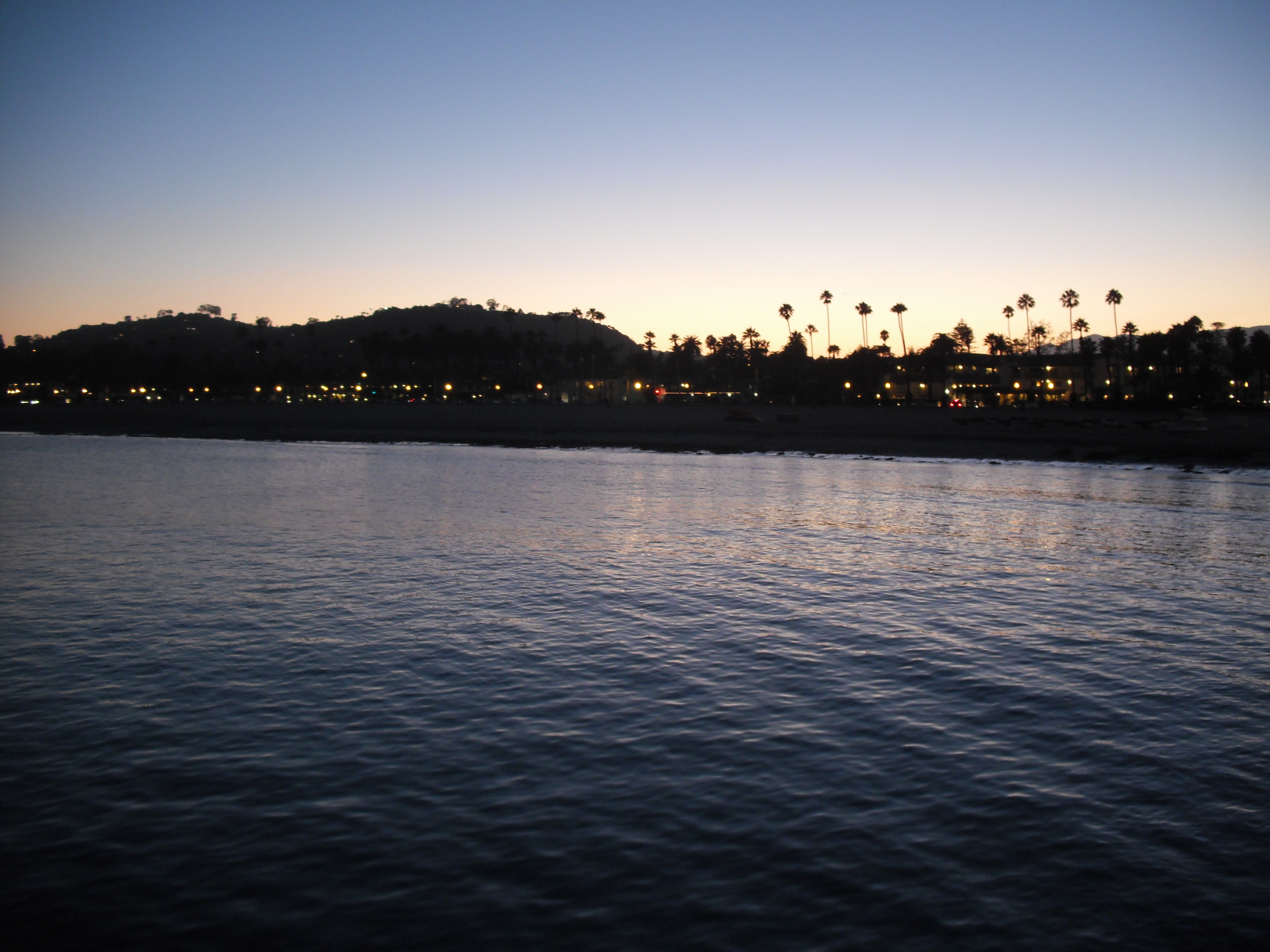
Santa Barbara from Stearn's Wharf at Nightfall

And Santa Barbara (or Montecito — the other end of town to the university) is home to large numbers of movie, and other, stars. In a very tenuous Kim connection apparently the second biggest celebrity wedding of the year took place a mile or so up the road — Kim Kardashian who’s apparently very famous for being famous married a basketball player. This is all the sort of stuff that Emma disdains interest in but by which she’s actually fascinated.

So, appropriately, it’s on to Hollywood and Beverly Hills today (where, ridiculously, the internet costs extra in the hotel so I may be quiet a while).

And I’ve been very slow in picking this up but perhaps the biggest subconscious influence of all is how my novel’s title is an almost literal translation of the biggest city in California — Los Angeles — the Angels.
SFMoMA

It’s not some sort of weird business school acronym but the local shorthand for one of the best art galleries in the US — the San Francisco Museum of Modern Art.

It’s a little confusing as, according to the guidebooks, a very similar acronym — SoMa — is used to refer to the district of the city (South of Market [Street]) where the modern art museum is located.

The entrance fee for SFMoMA is $18 — which should make us based in around London very grateful for the free entrance to Tate Modern — the SFMoMA’s equivalent. I used a ticket that had been bought for a package of attractions — like cable cars and the Fisherman’s Wharf aquarium — so had about half an hour to look around the San Francisco collection of 2oth century artistry.

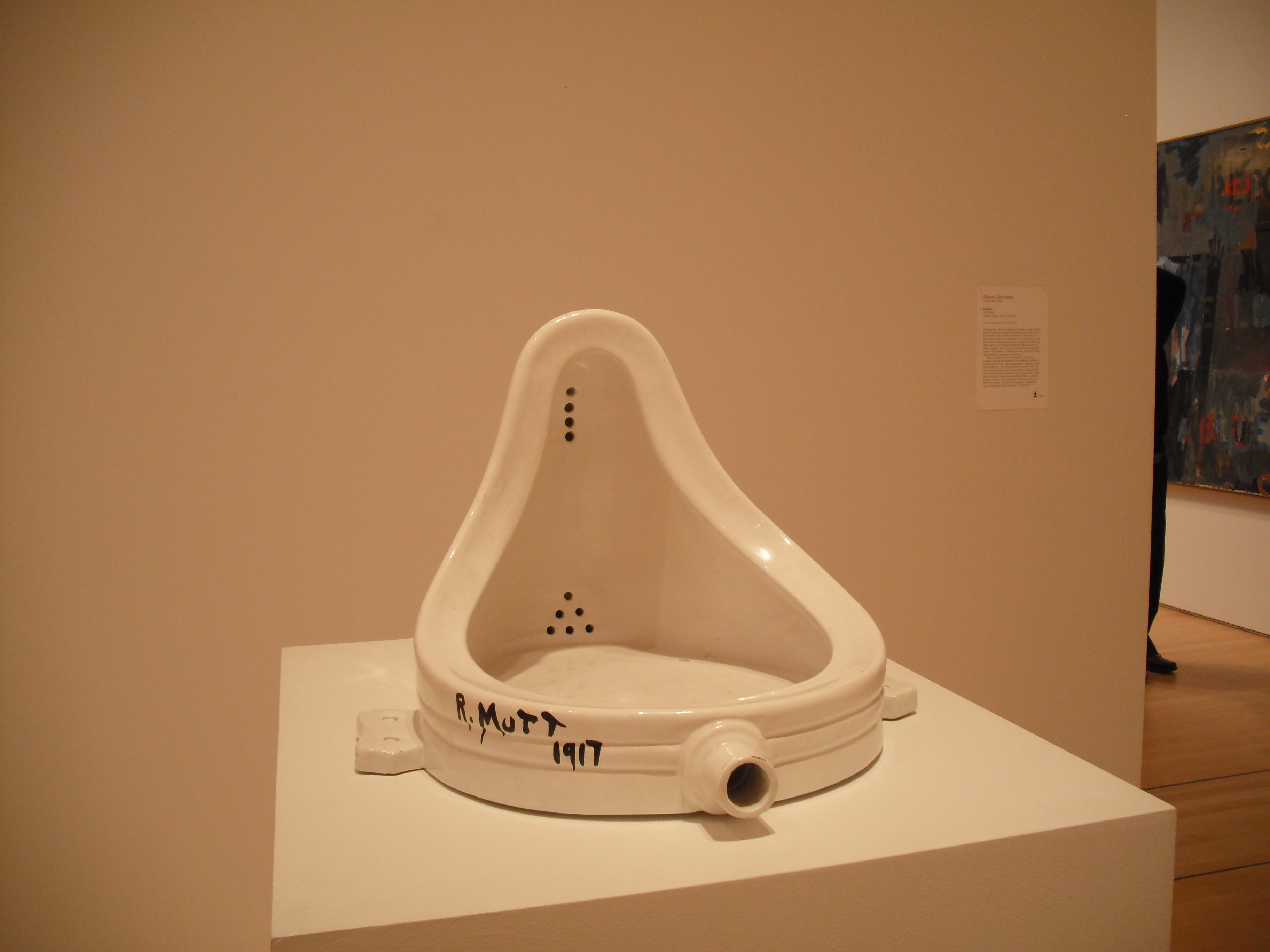
The museum has an example of one of the most seminal exhibits in modern art history — Duchamps’ Fountain. This is the famous urinal that was meant to be submitted to the New York Society of Independent Artists show in 1917 (although it actually wasn’t exhibited) as an example of how virtually anything could be considered modern art.

I was quite excited to see it in the San Francisco museum but apparently it’s not the original but one of eight replicas made by Duchamp in the 1960s, which are all on show at prestigious modern art museums (including the Tate).

So it’s a pretty iconic piece — the original piece of shock-value modern art that provoked millions of ‘I could do better than that’ comments over the last century…and it would obviously be well known to Kim.

 Duchamps's Urinal

Duchamps’s R. Mutt Urinal

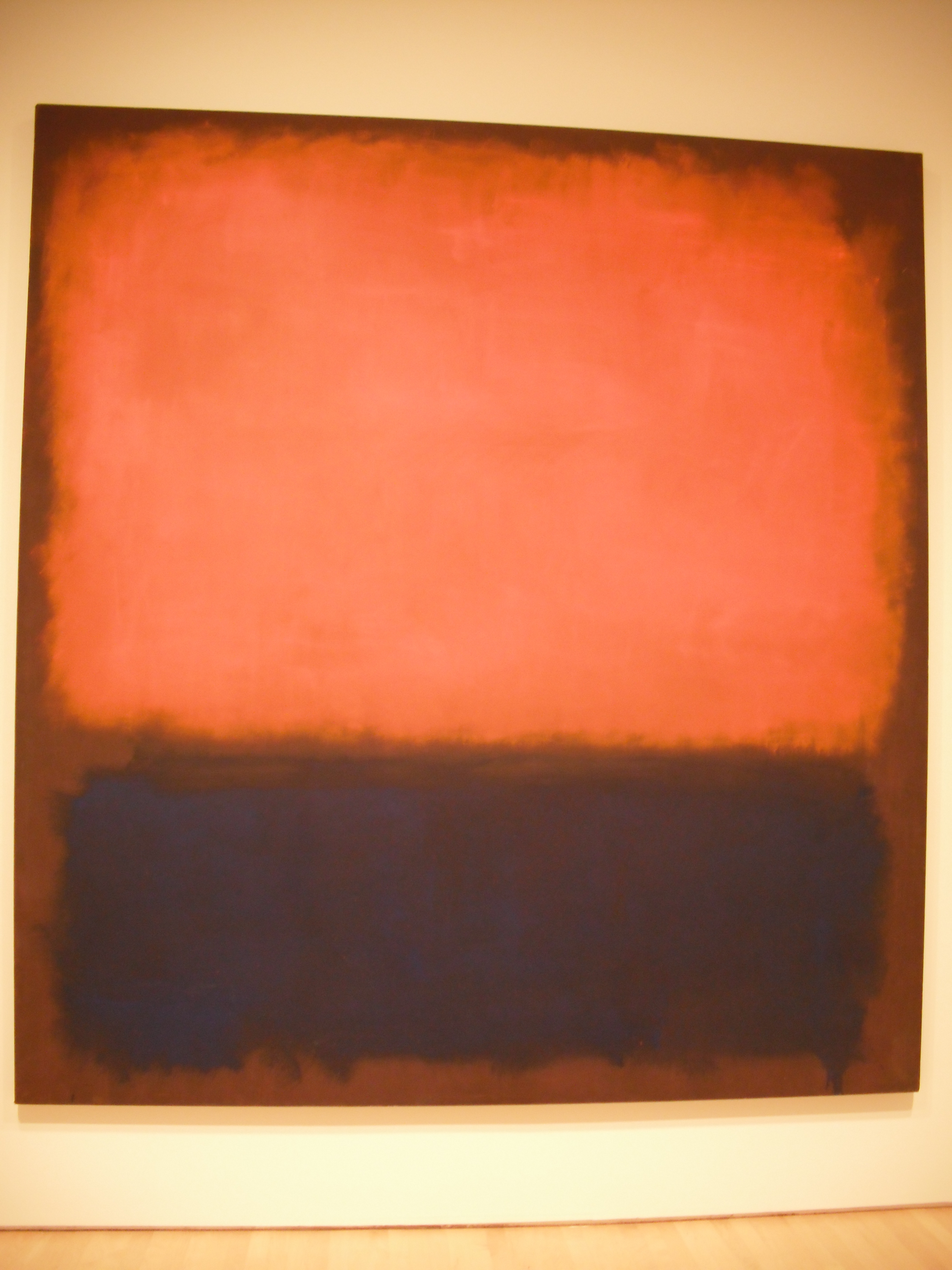
A definite original in the gallery — and one that Kim would enjoy — is a Mark Rothko painting — Number 14.  It seems that Rothko painted a few different works with the same title. This one is from 1960 and is in red and purple. I was persuaded of the significance of these Rothko blocks of colour by the Simon Scharma BBC documentary and, as this blog I’ve found online quotes of the artist, it’s easy to see that the paintings have an effect of  “serenity about to explode.”

Mark Rothko -- Number 14

Serenity about to explode — that would be an apt description to work to for the first part of my novel.

Tasty British Exports?

I knew Gordon Ramsay had branched into US TV stardom with Hell’s Kitchen but I didn’t expect him to turn up on the second hour of US TV cookery primetime as main presenter of the American version of Masterchef – all on Fox TV.

It was the semi-final last night and the contestants were sweating over their lemon meringue pies — I wonder whether it’s actually possible to send up this TV genre.

Somewhat serendipitously Masterchef  had imported its floppy-haired, bearded, Johnny Depp-spectacled French judge — someone who I’d watched this time last year and blogged about when the programme was on when we were staying in Brittany. In its hyped-up introduction, the US show claimed that Masterchef is a TV phenomenon all over the world — India and Israel were mentioned.

What did seem telling was the contestants seemed much more openly competitive than those in the UK original, who almost seem embarrassed to get through. In the US version, they slag each other off like Apprentice contestants (who only seem to do that when goaded for pre-publicity — in the tasks the British Apprentice contestants are remarkably nice to each other).

Or perhaps Americans are just more honest — a big difference perhaps between British and US writing? I always think American writing is more direct — much more emphasis on active and imaginative verbs (as Stephen King would recommend) whereas British writing is typically more discursive. This doesn’t mean good British-style writing is bad — just different — compare the styles of Time and The Economist.

Ironically, given last week’s events, the British versions of these programmes seem to show a country more at ease with itself than the US — which has been brought almost to bankruptcy by the brinksmanship of its politicians, whereas in Britain they entered a coalition.

And on the other channel in the room next door were Piers Morgan and Sharon Osborne on America’s Got Talent. On second thoughts perhaps not all British exports are that tasty.

Senseless

Having written a post about what a vibrant, international city London is — and having written a significant number of words for my novel that use London as a setting — I’ve been feeling physically sickened by the events over the past few days.

Many of the locations for the looting and arson (the criminal behaviour doesn’t even deserve to be termed rioting, let alone protesting or demonstrating) are places I know reasonably well, having worked there for a while (like Croydon) or been there recently to enjoy a drink (Clapham Junction and Hackney). (I was also in the Bull Ring shopping centre a couple of weeks ago which has also been broken into and looted.)

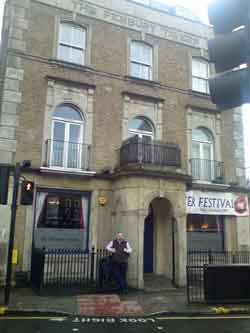
Pembury Tavern
Pembury Tavern, Hackney

As mentioned in a post below (with the bike photo) I was in Hackney around six weeks ago and started off an afternoon pub crawl at the Pembury Tavern.  This pub is apparently very close to the Pembury Estate which was a trouble spot last night.

The main flashpoint was apparently in Mare Street, which I travelled along on the number 30 bus a few weeks before and is very close to the Globe in Morning Lane, which was our next stop after the Pembury.

I won’t offer any in-depth opinion on the reasons behind the disturbances here except to observe, in the context of this novel and blog, that I’d been surprised that Hackney seemed to be nowhere near as intimidating a place as some people like to portray it and I enjoyed going there. But I’m also glad that I’ve already done that piece of research. Given the difficulties of throwing off a reputation for being insalubrious, it’s deplorable that the actions of a very few idiots will have so damaged the areas where they live — the physical damage can be rebuilt but the reputational and psychological damage will live on for decades. Areas like Ealing and Enfield are suburban enough to withstand the damage but the more deprived areas like Hackney and Tottenham will suffer more and a lot of the good that the Olympics promised to bring to these areas in terms of regeneration will have been outweighed.

Ironically, at the same time these events have unfolded I’ve been working on a couple of parts of the novel that discuss the living in the city versus the countryside question. I’ve been asked in feedback sessions why Kim, an artist living in Hackney and working in Shoreditch (thankfully spared from the trouble), would ever contemplate leaving those places to set up in bucolic Buckinghamshire.

This is a tension that runs through the novel but I do think it’s credible that she would want to move — and the causes of the recent disorder give some reasons why. As with elections in the 1980s, when everyone said publicly they despised the Tories but enough secretly voted for them out of self-interest (not me by the way), the debate about housing location is similar. Lots of people like to claim they like living in an ‘edgy’ area and few declare a love for the suburbs. Yet it’s an established demographic phenomenon that middle-class, university-educated people tend to leave London in large numbers in their thirties — particularly when they’ve had a family.

Also, while I recently read an article in the Sunday Times magazine (that I can’t link to because it’s a pay-site) about how some of today’s well-connected modern artists are doing quite well financially, I doubt if Kim would ever be able to come close to be able to afford to live in the sort of village where The Angel is the local. Such ridiculous property prices are a problem in the countryside where the preponderance of commuters and the retired creates demographic problems of another sort. But if Kim is given a cost-effective way of getting out of London, then I think she’d certainly consider it — which also gives the opportunity to leave behind problems of other sorts.

What’s most unnerving about the anarchy on the streets is it affects people’s sense of personal security — and, while, in

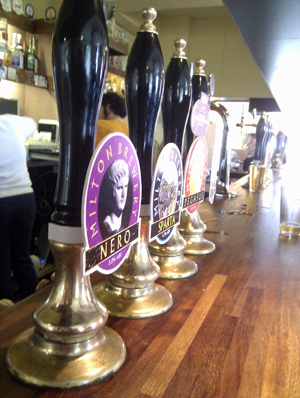
Pembury Tavern Handpumps

reality, the number of people causing trouble is very small, the psychological repercussions are profound. I’ve also been asked in workshops what attracts Kim to James.  One of the main reasons is, apart from his indefatigable admiration of her work, is that he boosts her own sense of security — something she doesn’t admit even to herself for much of the novel. A sense of one’s own personal security and physical vulnerability probably isn’t anything that’s going to be very honestly discussed in workshops but it’s something that, I suspect, deeply connects with a reader in the one-to-one situation that engages reader with a text.

I got too depressed about events to carry on watching rolling news on the television (which I think must examine its own role in the spread of copycat criminality) but have seen some hopeful reports about communities cleaning up and reclaiming the public spaces so here’s a photo of the Pembury Tavern’s line up of beers on its bars. I hope to go back soon.